Why Do Dogs Bond With Humans: The Science Behind It
Dogs bond with humans because they are biologically wired to seek social connection, and human care reliably rewards that instinct. Over thousands of years, dogs that were calmer around people survived and reproduced more often, which strengthened the traits that make dogs attentive, affectionate, and responsive to us.
In the United States, where dogs are often treated as family members, that bond is reinforced every day through feeding, play, training, and routine. The result is not just affection. It is a real social relationship built on attachment, trust, and repeated positive experiences.
Why dogs bond with humans
Dogs bond with humans because humans meet core canine needs: safety, food, social contact, and predictability. A dog quickly learns that people provide what matters most, and that learning shapes behavior over time.
This bond is also supported by domestication. Dogs evolved from wolves, but unlike wolves, many dogs became better at reading human signals, such as pointing, tone of voice, and facial expression. That skill helps dogs fit into human households and keeps the relationship strong.
A key part of the answer is attachment. Many dogs show attachment-style behavior similar to human infants, such as following a person, checking back during stress, and seeking comfort from a familiar owner. That does not mean dogs think like people, but it does mean the relationship has a deep emotional structure.

The biology behind the dog-human bond
Dogs bond with humans in part because of brain chemistry. Positive interactions with people can increase oxytocin, a hormone linked to social bonding in mammals. This is often called the "bonding hormone," and it helps reinforce calm, connected behavior.
Oxytocin and reward
When a dog gets petting, praise, play, or food from a trusted person, the experience can activate reward pathways in the brain. The dog learns, "This person makes good things happen." Over time, that association becomes stronger.
This is one reason routines matter. A predictable schedule for meals, walks, and attention gives dogs a sense of security. Security lowers stress, and lower stress makes bonding easier.
Selection for social skills
Dogs were not simply tamed by chance. The dogs that did best around people were more likely to stay close, reproduce, and pass on those social traits. Over many generations, selection favored dogs that could live successfully with humans.
That is why dogs often outmatch other animals in reading human cues. They are not just friendly. They are adapted to human social life.
Why human behavior strengthens the bond
Dogs bond with humans faster when humans act consistently. A calm voice, steady routine, fair training, and regular attention all help a dog feel safe. Safety is the base of trust.
What dogs learn from people
Dogs learn very quickly which humans are predictable and which are not. A person who feeds, plays, and trains in a clear way becomes important to the dog. A person who is rough, inconsistent, or frightening can weaken trust.
Here are some human behaviors that often strengthen bonding:
- Feeding on a regular schedule
- Using positive reinforcement during training
- Making time for walks and play
- respecting the dog’s space when it is stressed
- Offering touch only when the dog is receptive
What weakens the bond
A bond can weaken if a dog experiences fear, harsh punishment, neglect, or chronic stress. Dogs that feel unsafe may avoid people, shut down, or become clingy in an unhealthy way. In those cases, the issue is not lack of love. It is lack of trust.
| Human behavior | Likely effect on the dog | Bonding result |
|---|---|---|
| Predictable care | Reduced stress | Stronger trust |
| Positive reinforcement | Better learning | More engagement |
| Harsh punishment | Fear or confusion | Weaker bond |
| Inconsistent attention | Uncertainty | Slower attachment |
| Regular play and walks | Social reward | Stronger connection |
Why some dogs bond more strongly than others
Not all dogs bond in the same way. Breed tendencies, early socialization, life experience, age, and personality all affect how a dog connects with humans. Some dogs are naturally more independent, while others are highly people-focused.
Early life matters
Puppies that are gently handled, safely exposed to people, and taught that humans are dependable usually bond more easily. Early negative experiences can make trust slower to develop. That is especially true during a puppy’s sensitive developmental period.
Breed and temperament play a role
Some breeds were developed to work closely with people, such as herding or companion breeds. Those dogs may seek more human contact. Other breeds may be more reserved, especially if their job history favored independence.
Still, breed is only part of the picture. Individual personality and training often matter just as much.
Rescue dogs may bond differently
Rescue dogs can bond very deeply, but the process may take longer. A dog with an unknown or difficult past may need time to learn that a new home is safe. Once trust is built, the bond can be very strong because it is grounded in security.
What the bond looks like in everyday life
A bonded dog usually shows attachment through behavior, not just affection. It may follow you from room to room, look at you for guidance, relax when you are near, or get excited when you return home. These are signs that your presence matters.
Some common bonding behaviors include:
- Seeking eye contact
- Leaning against a person
- Bringing toys to the owner
- Relaxing nearby
- Responding quickly to a familiar voice
- Showing distress when separated for too long
These behaviors do not all mean the same thing in every dog. A nervous dog may cling because it feels insecure, while a confident dog may stay close because it enjoys companionship. The context matters.
Common misconceptions about why dogs bond
Dogs do not bond with humans only because we feed them. Food is important, but it is not the whole story. Dogs also bond through touch, routine, play, and emotional safety.
Dogs also do not bond because they think humans are just other dogs. Research suggests they understand humans as a distinct social partner. They may still use dog-like social tools, but they also respond to human communication in a special way.
Another misconception is that bonding always looks like constant closeness. Some healthy dogs are affectionate but not glued to their owner. A confident dog may bond strongly while still enjoying space.
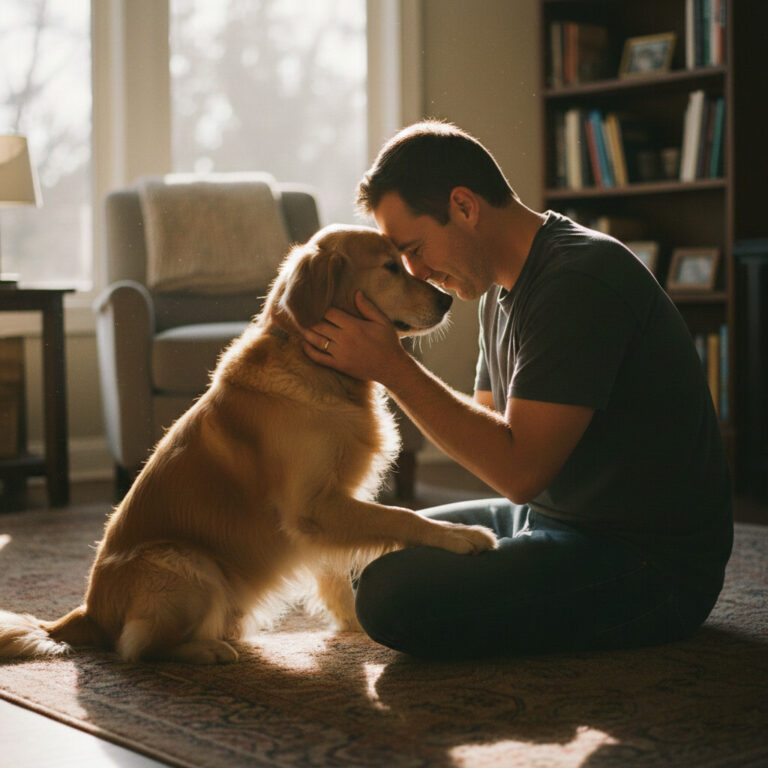
How to build a stronger bond with your dog
The strongest bonds are built through repeated, positive experiences. You do not need fancy tools. You need consistency, patience, and respect for the dog’s comfort.
Practical ways to build trust
- Feed and walk your dog on a routine.
- Use praise, treats, or toys to reward good behavior.
- Speak calmly and avoid sudden movements when possible.
- Let the dog choose contact sometimes, instead of forcing it.
- Make training short, clear, and rewarding.
- Give your dog daily social time, not just basic care.
Signs the bond is growing
A dog that trusts you more often becomes easier to guide, calmer around you, and more interested in interaction. You may notice faster recall, less tension during handling, and more relaxed body language. That is the practical payoff of bonding.
If your dog avoids touch, seems fearful, or does not respond to care, the issue may be stress, pain, or prior trauma. If the behavior is persistent or severe, a veterinarian or qualified behavior professional can help rule out medical causes and create a plan.
When bonding problems may signal a bigger issue
Sometimes poor bonding is really a health or behavior problem. Pain, hearing loss, anxiety, and past abuse can all affect how a dog relates to people. A dog that suddenly becomes withdrawn or reactive should be checked by a veterinarian.
Watch for signs like:
- Sudden avoidance of people
- Growling or snapping during handling
- Loss of interest in play or food
- Excessive clinginess or panic when alone
- Changes in sleep, appetite, or energy
These signs do not always mean the dog "does not love you." They may mean something is wrong physically or emotionally. Safety comes first.
FAQ
Do dogs bond with one person more than others?
Yes, many dogs form a stronger bond with one primary caregiver, especially the person who feeds, trains, and spends the most time with them. Still, many dogs can bond with several people in the same household.
How long does it take for a dog to bond with a human?
It varies. Some dogs bond within days, while others need weeks or months. A dog with a difficult past may need longer, but steady care usually helps.
Can a dog bond with more than one human?
Yes. Dogs are social animals and can form real attachments to multiple people. The strength of each bond often depends on time, care, and consistency.
Why does my dog follow me everywhere?
Following can be a sign of attachment, curiosity, learned routine, or anxiety. If your dog also relaxes when you are busy, it is often normal attachment. If the behavior seems distressed or intense, anxiety may be involved.
Do dogs know we love them?
Dogs may not understand love in exactly the same way humans do, but they do recognize warmth, safety, tone, touch, and reliable care. Those signals help them feel secure and connected.
Conclusion
Dogs bond with humans because biology, learning, and daily care all point in the same direction: people are a source of safety, reward, and connection. That bond is real, and it grows stronger when humans are consistent, patient, and kind.
If you want a better bond with your dog, focus on trust first. Feed on time, train gently, and make your dog feel safe. In most cases, connection follows naturally.