Why Do Dogs Eat Fig Leaves: Safety Guide For Dog Owners
Dogs in U.S. homes and yards may eat fig leaves because they explore with their mouths. A dog may also like the texture, smell, or taste of a plant. Some dogs chew leaves from boredom, hunger, stress, or a need to graze.
Fig leaves are not a safe snack. Leaves from edible fig trees (Ficus carica) contain a milky sap that can irritate a dog’s mouth, skin, and stomach. Other plants called “fig,” such as fiddle-leaf fig, may also cause irritation. A small bite may cause no signs, but a large amount or repeated exposure needs prompt veterinary advice.

Why Do Dogs Eat Fig Leaves?
Dogs eat fig leaves for several common reasons:
- Curiosity: Dogs use their mouths to inspect new objects.
- Plant grazing: Some dogs eat grass and leaves as part of normal exploring.
- Boredom: A dog with too little play or exercise may chew nearby plants.
- Taste or texture: Fresh leaves may feel interesting to chew.
- Hunger: Dogs with long gaps between meals may seek other items.
- Stress: Anxiety can lead to repeated chewing.
- Pica: Pica is the repeated eating of non-food items. It can have behavioral or medical causes.
- Easy access: A low branch, fallen leaf, or indoor plant may be hard for a dog to resist.
Eating a leaf does not always mean that a dog is sick. Still, repeated plant eating deserves attention. It may point to poor enrichment, stomach upset, an unbalanced diet, or another health issue.
Do not assume that a dog eats leaves to make itself vomit. Dogs may vomit after eating plants, but that does not prove that vomiting was the goal.

Are Fig Leaves Toxic to Dogs?
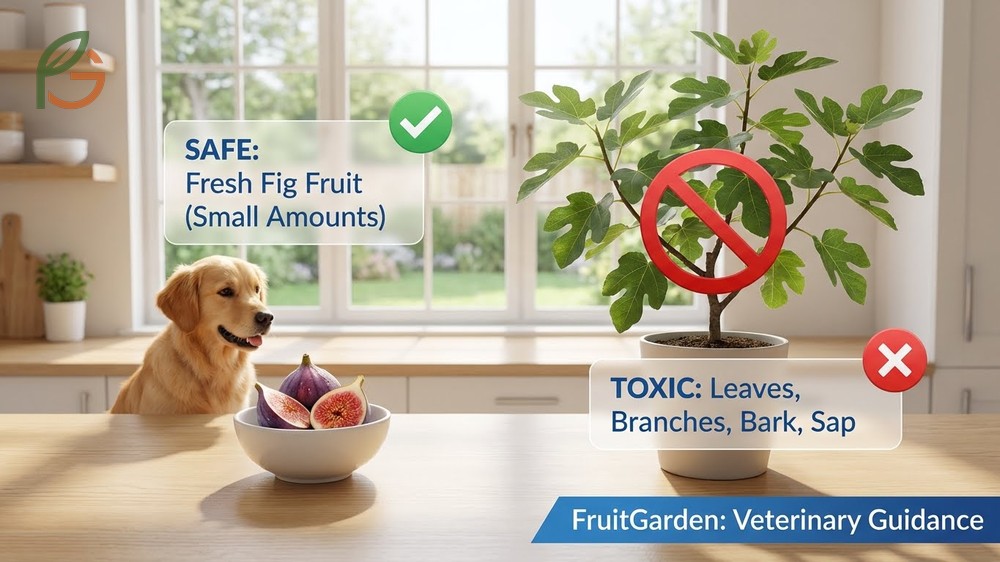
Fig leaves can be harmful to dogs because fig plants contain irritating sap. The sap includes substances such as ficin and may irritate the mouth, skin, and digestive tract.
The ASPCA lists the common fig (Ficus carica) as toxic to dogs. Reported signs include:
- Drooling
- Pawing at the mouth
- Lip or tongue irritation
- Vomiting
- Diarrhea
- Reduced appetite
- Skin redness or rash after contact
- Eye irritation if sap reaches the eyes
The risk depends on the plant type, the amount eaten, and the dog’s size. A small dog that eats several leaves may face more risk than a large dog that takes one small bite.
The term “fig leaf” can also describe leaves from other Ficus plants. Fiddle-leaf fig, rubber plant, and weeping fig are different plants, but their sap may also irritate pets. If you are not sure which plant your dog ate, take a photo or save a sample for identification.
Fig leaves versus fig fruit
The fruit and the leaves are not the same risk.
Ripe fig fruit may cause stomach upset because it contains natural sugar and fiber. Dried figs are more concentrated and may cause digestive trouble if a dog eats many of them. Fig leaves contain plant sap that can cause local irritation.
Never use the fact that people eat figs as proof that every part of the plant is safe for dogs.

What Should You Do if Your Dog Ate a Fig Leaf?
If your dog ate a fig leaf, stay calm and follow these steps:
- Remove the plant. Move your dog away from the tree or houseplant. Pick up fallen leaves.
- Identify the plant. Take a clear photo. Note whether it is a common fig, fiddle-leaf fig, rubber plant, or another species.
- Estimate the amount. Record how much your dog may have eaten and when it happened.
- Check the mouth. Look for redness, swelling, plant pieces, or heavy drooling.
- Offer fresh water. Let your dog drink if it can do so normally. Do not force water into the mouth.
- Call your veterinarian. Ask for advice, especially if your dog is small, ate several leaves, or has symptoms.
- Watch closely. Keep your dog under observation for new signs.
Do not make your dog vomit unless a veterinarian tells you to do so. Home methods such as salt, oil, mustard, or hydrogen peroxide can cause harm. Do not give human medicine without veterinary direction.
You can contact a U.S. animal poison service for guidance:
- ASPCA Animal Poison Control Center: 888-426-4435
- Pet Poison Helpline: 855-764-7661
These services may charge a consultation fee. Your veterinarian can also help decide whether your dog needs an exam.

When Is Eating a Fig Leaf an Emergency?
Seek urgent veterinary care if your dog has trouble breathing, severe swelling, collapse, weakness, repeated vomiting, bloody diarrhea, seizures, or cannot swallow.
Call a veterinarian promptly if you see:
- Continuous drooling
- Repeated pawing at the mouth
- Vomiting more than once
- Ongoing diarrhea
- Swelling of the lips, tongue, or face
- Eye pain or frequent rubbing
- A widespread skin reaction
- Extreme tiredness
- Refusal to drink
- Trouble swallowing
If sap entered your dog’s eye, rinse the eye with clean, lukewarm water for several minutes if your dog allows it. Avoid pressure and do not use eye drops unless a veterinarian recommends them. Then seek veterinary advice.
Some signs may appear soon after chewing the plant. Others may develop later. A dog that looks normal after a small bite may still need monitoring.

How Can You Stop a Dog From Eating Fig Leaves?
The safest solution is to block access to the plant.
For outdoor fig trees:
- Fence the tree or use a secure garden barrier.
- Remove fallen leaves each day.
- Keep pruning waste out of the yard.
- Use a leash until your dog ignores the plant.
- Teach “leave it” with safe treats.
- Add shade, toys, and scent games in other parts of the yard.
For indoor plants:
- Place the plant in a room your dog cannot enter.
- Use a stable, high stand only if your dog cannot reach it by jumping.
- Clean up dropped leaves at once.
- Check plant labels before bringing a new plant home.
- Keep plant soil and fertilizer away from your dog.
Training works best when paired with management. A cue such as “leave it” may fail if the dog has free access to a tempting plant all day.
Provide daily activity that fits your dog’s age and health. Walks, short training sessions, food puzzles, and supervised play can reduce boredom. Ask your veterinarian before making major diet changes or adding supplements.

When Does Leaf Eating Suggest a Health Problem?
Occasional chewing may be normal. Repeated eating of leaves, soil, fabric, or other non-food items may suggest pica or another problem.
Arrange a veterinary visit if your dog:
- Eats plants every day
- Swallows large amounts of leaves
- Chews many non-food objects
- Loses weight
- Has chronic vomiting or diarrhea
- Seems unusually hungry or thirsty
- Has low energy
- Shows signs of pain
- Develops a sudden change in eating habits
A veterinarian may review the diet, behavior, dental health, stomach signs, and overall health. Do not assume that a vitamin deficiency is the cause. Pica can have several causes, and testing is needed to find the right one.
Keep a simple record of what your dog eats, when it happens, and what signs follow. A short video can also help a veterinarian assess repeated behavior.

Common Mistakes to Avoid
Assuming one leaf is always harmless
The amount matters, but the plant type matters too. A small bite may cause mild or no signs, while several leaves may cause more trouble.
Waiting after severe symptoms begin
Breathing trouble, facial swelling, collapse, and repeated vomiting require urgent help. Do not wait for the plant to “pass” when serious signs are present.
Using a home remedy
Salt, oil, milk, and forced vomiting can make the situation worse. Use instructions from a veterinarian or a recognized animal poison service.
Confusing plant names
“Fig” may refer to a common fig tree or a decorative Ficus plant. Photograph the plant so a professional can identify it.
Punishing the dog
Punishment may increase fear and does not remove the cause. Block access, redirect the dog, and reward calm behavior near plants.
Key Takeaways
- Dogs may eat fig leaves from curiosity, boredom, grazing, stress, hunger, or pica.
- Fig leaves can irritate a dog’s mouth, skin, eyes, and digestive tract.
- Common signs include drooling, mouth irritation, vomiting, diarrhea, and skin redness.
- Remove the plant, identify it, estimate the amount, and call your veterinarian for advice.
- Do not induce vomiting or give home remedies unless a veterinarian directs you.
- Prevent repeat access with barriers, training, clean-up, and better enrichment.
- Seek emergency care for breathing problems, severe swelling, collapse, seizures, or repeated vomiting.
Frequently Asked Questions
Can one fig leaf kill a dog?
A single small bite is unlikely to cause severe poisoning in many dogs, but risk varies by plant, dog size, and amount eaten. Fig leaves can still cause irritation and stomach signs. Call your veterinarian if your dog has symptoms or ate more than a small amount.
Are fresh fig leaves worse than dried fig leaves?
Fresh leaves contain sap and may cause mouth or skin irritation. Dried plant material may still cause stomach upset if eaten. Neither should be offered as a treat.
Can dogs eat figs?
Small amounts of ripe fig fruit may cause fewer concerns than the leaves, but figs are high in sugar and fiber. Too much can cause vomiting or diarrhea. Dried figs are more concentrated. Ask your veterinarian before giving figs to a dog with diabetes, digestive disease, or weight problems.
Should I give my dog grass after it eats a fig leaf?
No. Do not try to treat plant exposure by giving grass or another food. Remove the plant and ask a veterinarian what to do.
Why does my dog keep eating leaves?
The cause may be simple grazing or boredom, but repeated leaf eating can also relate to stress, pica, stomach problems, or another medical issue. Improve supervision and enrichment, then arrange a veterinary check if the habit continues.
Conclusion
Dogs may eat fig leaves because plants are easy to reach and interesting to chew. The behavior is often linked to normal exploration, boredom, grazing, or stress. However, fig leaves and other Ficus leaves can irritate dogs, so they should not be treated as safe food.
Remove access, watch for symptoms, and contact a veterinarian or U.S. animal poison service when the amount or plant type is unclear. If leaf eating repeats, address both the environment and the dog’s health.