Why Do Dogs Love Their Owners: The Real Reasons
Dogs love their owners because they form a real social bond that combines attachment, learned trust, positive association, and daily care. In the United States, where many dogs live as full-time family members, that bond often looks like affection, loyalty, excitement, and a strong preference for being near one specific person.
This is not just sentiment. Research on dog behavior and dog-human interaction shows that dogs respond to familiar people with attachment-like behaviors, especially when those people provide food, safety, play, routine, and calm attention. In plain terms, your dog does not only “like” you. Your dog has likely learned that you are the center of comfort and security in its world.

What does it mean when a dog “loves” its owner?
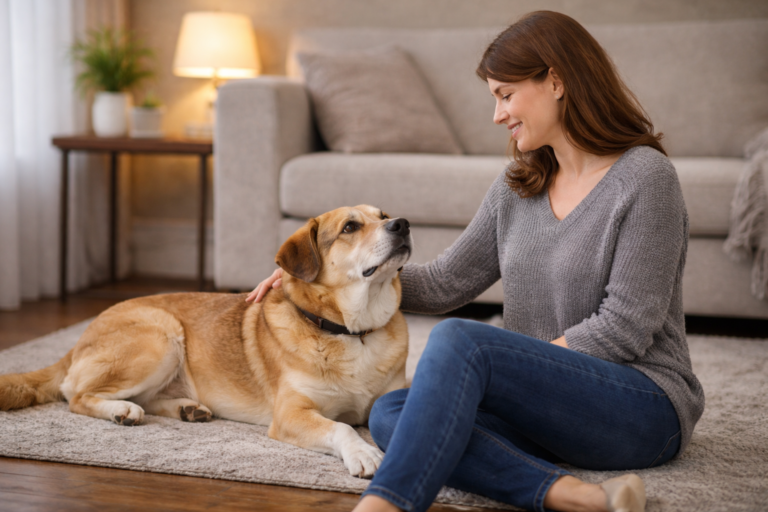
A dog’s love is best understood as attachment, not human romance. Dogs show affection through behavior: following you, leaning on you, greeting you with excitement, seeking eye contact, and calming down when you are near.
That bond is rooted in domestication and learning. Over thousands of years, dogs evolved to read human social cues and to rely on people for care and protection. Today, many dogs treat their owners as a trusted social partner, much like a child depends on a caregiver for safety and reassurance.
Common signs of attachment in dogs
Dogs often show love through a pattern of everyday behaviors, including:
- Seeking proximity to you
- Greeting you enthusiastically
- Relaxing when you are present
- Looking to you for cues
- Following you from room to room
- Bringing toys to you
- Choosing you over strangers when stressed
These behaviors do not mean every dog expresses love the same way. Breed tendencies, early socialization, age, health, and past experience all shape how a dog shows attachment.
Why do dogs become attached to owners in the first place?
Dogs become attached because owners provide survival value and emotional safety. Food matters, but the bond goes far beyond feeding. Daily routines, gentle handling, play, training, and consistent responses teach a dog that one person is reliable.
That reliability matters a great deal to dogs. When a dog can predict what happens next, stress goes down. When a dog feels safe, it is more likely to approach, relax, and seek connection. That is one reason a dog may seem especially devoted to the person who walks, trains, feeds, and comforts it most often.
The main drivers of canine attachment
| Driver | What the dog learns | Practical effect |
|---|---|---|
| Food and care | “This person meets my needs” | More trust and approach behavior |
| Routine | “Life is predictable around this person” | Lower stress and more calmness |
| Play and reward | “Good things happen with this person” | More enthusiasm and engagement |
| Safety | “I am protected near this person” | Stronger preference for proximity |
| Training and communication | “This person makes sense to me” | Better cooperation and focus |
In other words, love in dogs is built through repeated good experiences, not one big event.
How do scientists know dogs are bonded to people?
Researchers study dog-human attachment using methods similar to those used in child development research. One common idea is the “secure base” effect: when a trusted figure is present, the subject explores more confidently. Dogs often behave this way with their owners. They are more settled and more willing to investigate when their person is nearby.
Another important finding is that dogs respond to human presence in ways tied to emotion and stress regulation. Some studies have found that interaction with familiar humans can affect dogs’ stress levels and social behavior. That supports what many owners already see at home: a dog often acts different with a trusted person than with a stranger.
What this means in everyday life
If your dog calms down when you return home, follows you into new spaces, or checks in with you during uncertainty, that is not random behavior. It is a sign of attachment. Your dog has learned that you help make the world feel manageable.
Why does your dog choose you over other people?
Your dog usually chooses you because you are the person most strongly linked to comfort, routine, and positive outcomes. Dogs do not divide affection in a perfectly even way. They build preferences based on who feeds them, plays with them, trains them, and responds to them consistently.
A dog may also prefer one owner because that person communicates in a way the dog understands best. Tone of voice, body language, timing, and confidence all matter. Dogs are excellent readers of human behavior, and they often gravitate toward the person who feels calm, clear, and predictable.
Factors that can strengthen one-person preference
- Daily care, such as feeding and walking
- Training sessions with rewards
- Calm handling during stressful moments
- Shared routines, like couch time or bedtime
- Play that matches the dog’s energy level
- Respect for the dog’s space and signals
This preference is not a rejection of others. It usually reflects the strongest attachment, not the only one.
Do dogs feel love the same way humans do?
Dogs likely do not experience love exactly as humans do, but they do form deep social bonds. The emotional system is different, but the result can look familiar: closeness, trust, excitement, and distress when separated.
It helps to think of dog love as a mix of attachment and positive association. Your dog may not understand love as a human does, yet it clearly recognizes you as important. That importance shows up in behavior. The dog seeks you out, misses you, and often settles best when you are near.
Why do dogs miss their owners?
Dogs miss their owners because separation changes their access to safety, routine, and social contact. For many dogs, the owner is the main source of structure and reassurance. When that person leaves, the dog may become restless, vocal, or clingy.
This is normal for many dogs. Some dogs show only mild disappointment. Others show a stronger separation response. The difference often depends on temperament, early experience, training, and how much independence the dog has learned over time.
Signs a dog misses its owner
- Waiting by the door or window
- Pacing or restlessness
- Reduced appetite
- Whining or barking
- Searching rooms for the absent person
- Increased clinginess after reunion
If the reaction seems intense, persistent, or destructive, the dog may need help building separation tolerance.
Why do dogs lick, cuddle, and follow their owners?
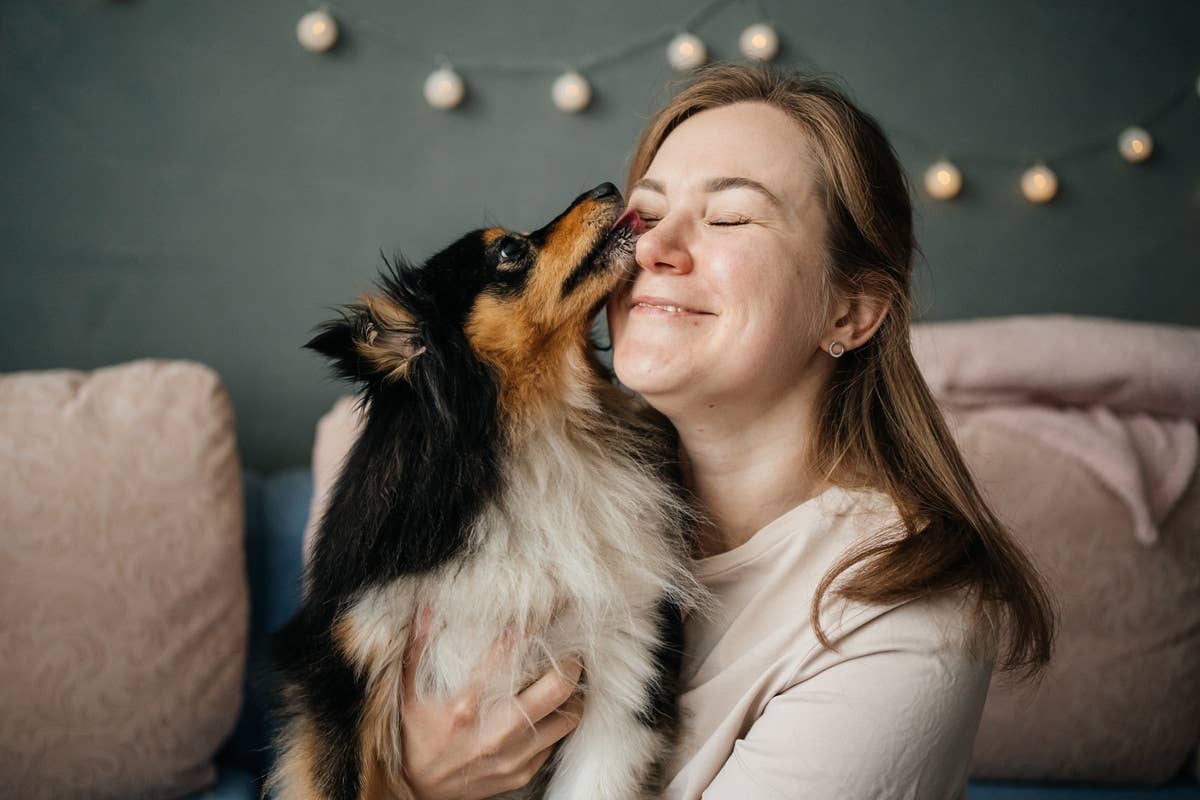
Dogs lick, cuddle, and follow because those behaviors help maintain closeness and social comfort. Licking can be a greeting, a calming signal, or a learned attention-seeking behavior. Cuddling and leaning are forms of contact that many dogs use to stay connected. Following is often a sign that the owner has become the dog’s preferred social anchor.
These actions are not always pure affection, though affection is often part of them. They can also reflect habit, curiosity, reward history, or a dog’s personality. The key point is that the behavior usually signals a strong bond.
What the behavior may mean
- Licking: greeting, reassurance, or attention-seeking
- Cuddling: comfort, trust, and warmth
- Following: attachment and social monitoring
- Eye contact: connection and communication
- Tail wagging near you: excitement and emotional engagement
Context matters. A stiff body, tucked tail, or avoidance means something different from relaxed closeness.
What makes the owner-dog bond stronger?
The strongest bonds usually come from consistency, mutual trust, and positive daily interaction. Dogs thrive when owners are predictable and kind. Clear boundaries matter too, because dogs feel safer when they understand what is expected.
Simple habits often make the biggest difference. Regular walks, fair training, quiet time together, and respectful handling can deepen attachment over time. The goal is not constant excitement. The goal is a stable relationship your dog can rely on.
Practical ways to build a stronger bond
- Feed and walk on a regular schedule.
- Use positive reinforcement during training.
- Give your dog enough exercise and mental work.
- Speak calmly and keep cues consistent.
- Respect signs of stress or overstimulation.
- Spend time together without always demanding performance.
That last point matters. Dogs also bond during ordinary quiet moments, not just during play or training.
When is strong attachment a problem?
Attachment becomes a problem when it turns into distress. A dog that cannot cope when alone may have separation anxiety or another behavioral issue. That is different from normal affection.
Watch for signs such as panic when you leave, repeated destruction, house soiling linked to separation, nonstop vocalizing, or self-injury. If those signs show up, the dog may need a veterinarian or qualified behavior professional. Early help is better than waiting.
Helpful distinction
| Normal attachment | Possible problem |
|---|---|
| Follows you but settles | Cannot relax when alone |
| Greets you excitedly | Panics when you leave |
| Likes being near you | Damages property or soils when separated |
| Watches your movements | Shows distress for long periods |
If behavior changes suddenly, a medical issue should also be ruled out.
Frequently asked questions
Do dogs know who their owner is?
Yes, most dogs recognize their owner through a mix of scent, voice, routine, and visual cues. They often respond more strongly to their primary caregiver than to strangers.
Can dogs love more than one person?
Yes. Many dogs bond with several people in the same household. One person may still be the favorite, but that does not mean the dog cannot form other real attachments.
Why does my dog stare at me so much?
Your dog may be checking your cues, seeking attention, or simply staying connected. Calm eye contact can be part of a bond, but context matters.
Do dogs get jealous?
Dogs can show jealousy-like behavior, such as pushing in or seeking attention when another person or pet is present. The behavior may reflect competition for access and security rather than a human-style emotion.
Why is my dog more affectionate with one person?
That person may provide more routine, rewards, training, or calm handling. Dogs often bond most strongly with the person who feels safest and most predictable.
Final take: why do dogs love their owners?
Dogs love their owners because owners become the center of safety, routine, and social reward. That bond grows through repeated care, trust, and everyday shared life. In a very real sense, your dog is not just reacting to food or habit. Your dog is responding to a relationship.
If you want a stronger bond, focus on consistency, kindness, and clear communication. That is what dogs understand best.
Next step
If you want, I can also turn this into:
- a shorter blog version,
- a more conversational pet-site version,
- or an SEO content brief with title tags, meta description, and FAQs.