Why Do Dogs Like Leaves: Surprising Reasons Explained
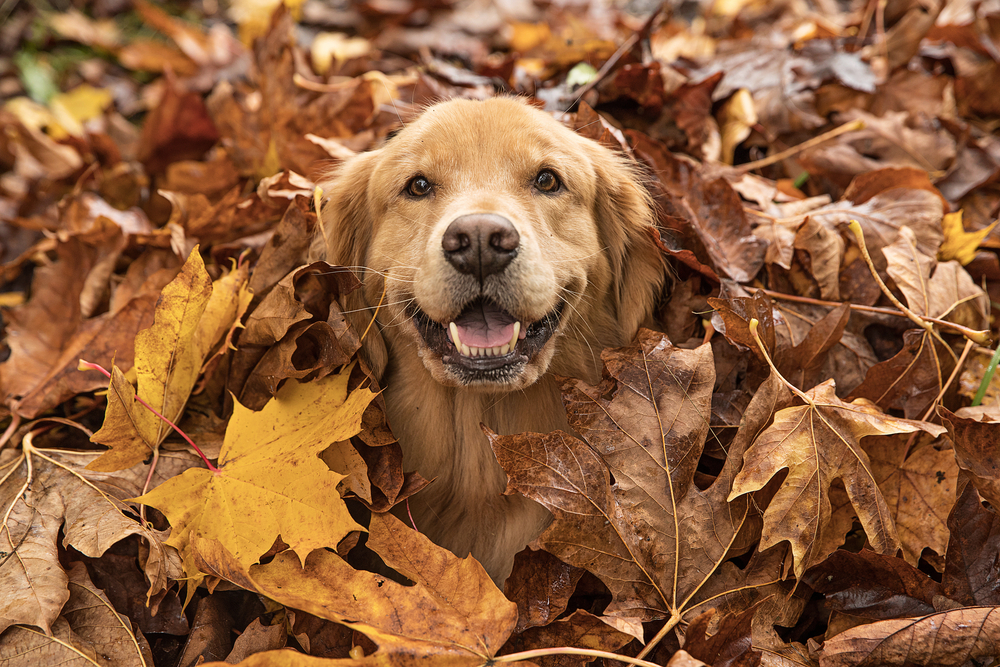
Dogs like leaves for several normal reasons: leaves smell interesting, move in the wind, make fun sounds, feel good to chew, and offer a new object to explore. Many dogs also enjoy the chase and search that leaves create.
A dog’s interest in leaves is usually harmless when the leaves come from a safe plant and your dog only sniffs or carries them. The risk rises when a dog eats many leaves, chews treated yard waste, or plays near toxic plants, mold, sharp debris, or poisonous chemicals.
This guide explains why dogs like leaves, when leaf eating may signal a problem, and how to keep your dog safe in U.S. yards, parks, and wooded areas.
Why Do Dogs Like Leaves?
Dogs like leaves because leaves engage several senses at once. A dry leaf has a scent, texture, shape, and sound. It may also move like prey when wind pushes it across the ground.
A dog does not need to be hungry or sick to show interest in leaves. For many dogs, leaf play is simply a form of normal exploration.
1. Leaves carry strong and changing smells
Dogs experience the world largely through scent. A leaf can hold smells from:
- Soil
- Rain
- Grass
- Other animals
- Insects
- Tree sap
- Decaying plant matter
- Urine or feces from wildlife
A pile of leaves can act like a message board. It may contain many scents from animals that passed through the area. Sniffing helps dogs gather information about their surroundings.
Fresh leaves may smell different from wet leaves or dried leaves. This change can make the same yard seem new each day.
2. Leaves move like small animals
Wind-blown leaves can trigger a dog’s chase response. The leaf darts, stops, changes direction, and skims along the ground.
This movement may resemble the motion of prey. That does not mean your dog believes the leaf is a mouse or bird. It means the movement can activate a natural interest in chasing and catching.
Dogs with high play or prey drive may show more interest in moving leaves than calm, older dogs.
3. Leaves offer an appealing texture
Dogs learn through their mouths as well as their noses. Crunchy leaves may feel satisfying to bite. Soft, damp leaves provide a different texture from dry leaves.
Some dogs like the sound of leaves breaking under their teeth. Others enjoy carrying a leaf for a short time and then dropping it.
This behavior is similar to chewing a toy, grass, a stick, or other outdoor objects. The key difference is whether the object is safe and whether the dog can stop when asked.
4. Leaves provide novelty
Dogs often investigate ordinary objects that change over time. A yard may look and smell different after a storm, lawn mowing, or seasonal leaf fall.
A new leaf pile can give a dog:
- A new place to sniff
- A hidden-object game
- A different walking path
- A chance to search for insects or small animals
- A brief mental challenge
Novelty can be especially attractive to young dogs and dogs that spend much of the day indoors.
5. Leaves can support natural foraging behavior
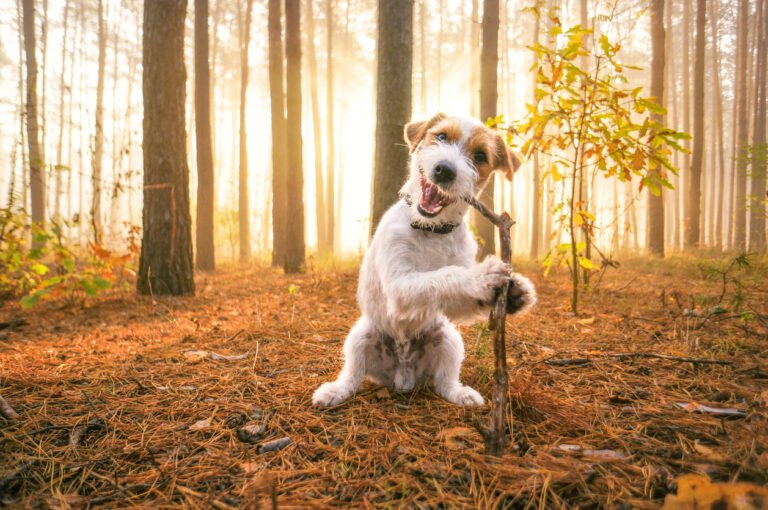
Foraging means searching for food or other interesting items. Dogs may push leaves aside with their noses, dig through them, or search under them.
This action can be rewarding even when no food is present. The search itself may satisfy a dog’s instinct to investigate.
You can provide a safer version of this activity with a supervised scent game, treat search, or food puzzle. Avoid hiding food in outdoor leaf piles unless you can control the area and remove all leftovers.
6. Some dogs learn that leaves bring attention
A dog may repeat leaf play if it causes a fun response from people. Chasing your dog, pulling a leaf from its mouth, or laughing can turn the behavior into a game.
This does not mean the dog is being stubborn. The dog may simply learn that grabbing a leaf starts an exciting interaction.
If you want less leaf chewing, use calm redirection. Offer a toy or treat, then praise the dog for leaving the leaf.
Is It Normal for Dogs to Eat Leaves?
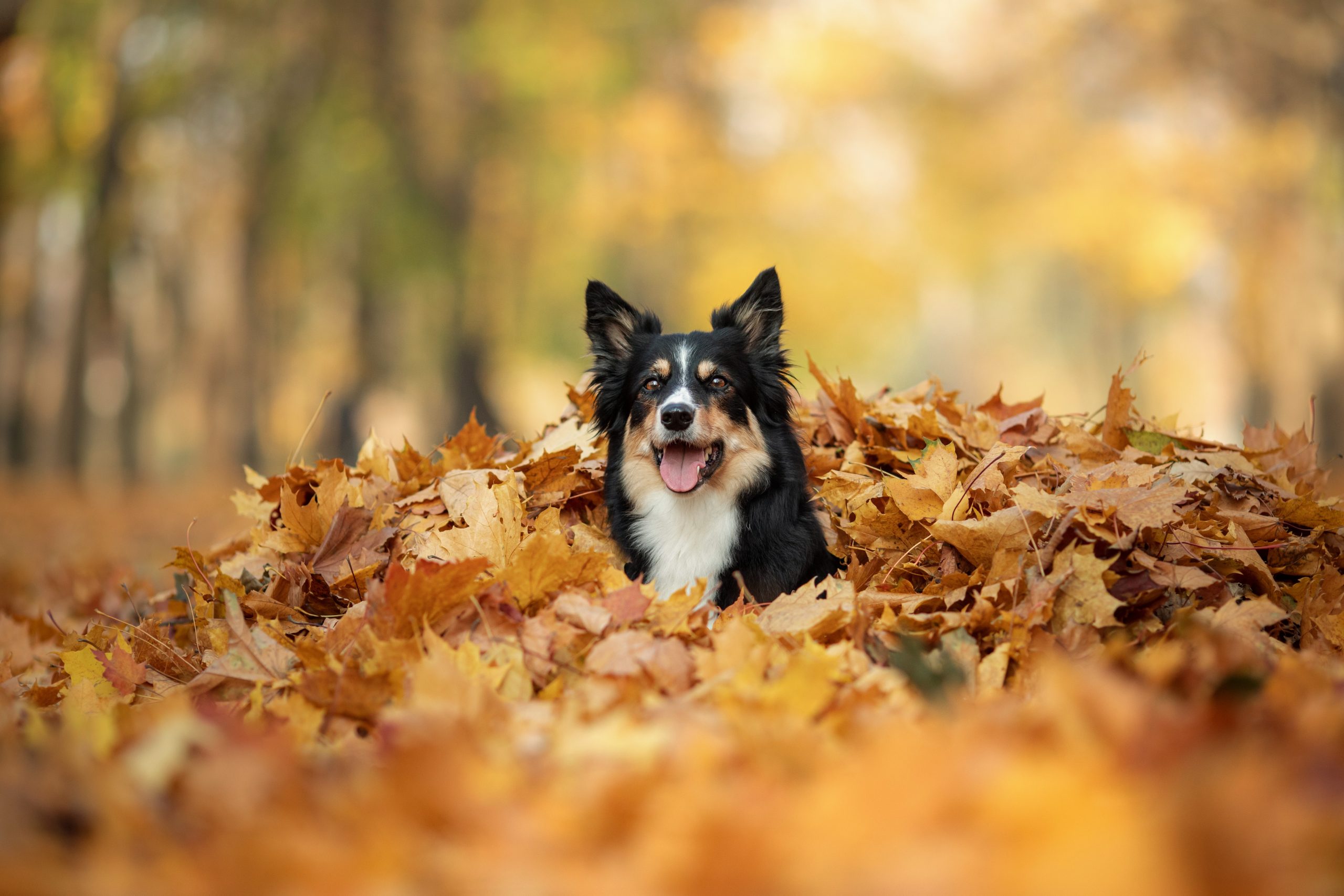
Eating one or two leaves is often not an emergency, but repeated or large-scale leaf eating deserves closer attention. Dogs may chew leaves as part of play, exploration, or ordinary scavenging.
Leaf eating can also happen because the dog likes the taste or texture. Some dogs consume grass, leaves, sticks, mulch, or other plant material without showing illness.
However, leaf eating is not proof that a dog needs extra fiber or is trying to treat an upset stomach. That common belief has not been established as a reliable explanation for all dogs.
Watch the whole pattern instead of focusing on one behavior. Note what your dog eats, how much, where it came from, and whether vomiting, diarrhea, pain, or behavior changes follow.
When Leaf Eating May Point to a Problem
Leaf eating becomes more concerning when it is sudden, intense, or linked with other symptoms. It may reflect boredom, stress, nausea, hunger, or a condition called pica.
Pica is the repeated eating of non-food items. A dog with pica may eat leaves, fabric, plastic, rocks, paper, or other objects.
Signs that need attention
Contact your veterinarian if your dog:
- Eats large amounts of leaves
- Repeatedly seeks and swallows non-food objects
- Vomits more than once
- Has ongoing diarrhea
- Strains to pass stool
- Has a swollen or painful belly
- Stops eating normal food
- Becomes weak or unusually quiet
- Drools heavily
- Gags or has trouble swallowing
- Has pale gums, breathing trouble, tremors, or seizures
These signs can occur with poisoning, stomach irritation, intestinal blockage, or another illness. A blockage can become life-threatening and may not cause symptoms right away.
Stress and boredom can increase chewing
A dog with too little exercise or mental activity may chew outdoor objects for entertainment. Stress can also lead to repetitive behaviors.
Possible triggers include:
- A move
- A new pet or person
- Changes in work hours
- Loud construction
- Separation
- Reduced walks
- Lack of play
- Limited access to safe chewing items
Meeting the dog’s daily needs may reduce the behavior. Still, persistent non-food eating should be discussed with a veterinarian rather than blamed only on boredom.
Health conditions can contribute
Medical causes vary. A veterinarian may consider diet, digestive disease, parasites, anemia, medication effects, or other conditions when a dog repeatedly eats non-food items.
Do not give supplements or change the diet based only on online advice. A veterinarian can decide whether an exam, stool test, blood test, or diet review is appropriate.
Are Leaves Safe for Dogs?
Leaves are safe only when you know the plant, the treatment history, and the condition of the yard. “Natural” does not always mean harmless.
Some plants contain toxins that can cause mild stomach upset or severe illness. The risk depends on the plant, the part eaten, the amount, and the dog’s size and health.
Common outdoor hazards linked to leaves
Check for these risks before allowing leaf play:
| Hazard | Why it matters | Safer action |
|---|---|---|
| Toxic plants | Some leaves, seeds, or berries can poison dogs | Identify the plant and block access |
| Lawn chemicals | Fertilizer, herbicide, and pesticide residue may cling to leaves | Follow the product label and keep pets away for the stated time |
| Moldy leaf piles | Decay can support mold that causes illness | Remove wet, moldy piles and prevent access |
| Wildlife waste | Leaves may carry parasites or harmful bacteria | Supervise sniffing and avoid contaminated areas |
| Sharp sticks or debris | Hidden objects can cut the mouth or cause blockage | Rake and inspect the area |
| Compost | Food waste and mold can be dangerous | Keep dogs away from compost bins and piles |
| Mushrooms | Some wild mushrooms are poisonous | Remove mushrooms and contact a vet if eaten |
| Roadside contamination | Leaves near roads may contain chemicals or trash | Use clean, managed areas instead |
Do not assume a leaf is safe because it fell from a tree in your yard. If you cannot identify the plant, prevent your dog from eating it.
Plants that may be dangerous
Potentially harmful plants vary by region. Examples found in parts of the United States include azalea, rhododendron, oleander, sago palm, yew, and some members of the lily family.
The exact risk differs by species and plant part. Use a reliable plant identification source, such as the ASPCA Animal Poison Control Center plant database, and call a veterinarian if your dog may have eaten a toxic plant.
Do not wait for symptoms if the plant may be poisonous. Some toxins cause delayed effects.
Can Dogs Eat Dry, Wet, or Moldy Leaves?
Dry leaves may cause mild stomach upset if a dog eats a small amount, but they can still hide hazards. Wet leaves can be harder to inspect and may contain mold, animal waste, or sharp material.
Moldy leaves are more dangerous than clean, dry leaves. Certain molds can produce toxins that cause vomiting, poor coordination, tremors, seizures, or worse.
Keep your dog away from piles that smell sour, look fuzzy, feel slimy, or contain visible mold. Call a veterinarian or an animal poison service promptly if your dog eats moldy yard waste and then acts sick.
Do not induce vomiting unless a veterinarian or poison professional tells you to do so. The wrong method can cause additional injury.
Why Do Dogs Like Rolling in Leaves?
Dogs may roll in leaves because the scent is interesting, the texture feels good, or the behavior provides physical stimulation. Rolling may also spread a new smell onto the coat.
Some dogs roll after detecting animal scents or decaying matter. They may be responding to a strong odor rather than trying to make themselves dirty.
Rolling is usually harmless in a clean area. It becomes risky when leaves contain:
- Fleas or ticks
- Feces
- Dead animals
- Mold
- Pesticides
- Sharp debris
- Irritating sap
Check your dog after outdoor play. Look through the coat, paws, ears, and mouth. Wash the coat if it carries a strong or harmful substance, but seek veterinary advice for chemical exposure.

How to Stop a Dog From Eating Leaves
The safest approach combines management, teaching, and a better activity. Avoid chasing the dog, because chasing can make the leaf more valuable.
Step 1: Find out what the dog is eating
Identify the plant if possible. Check whether the leaves are dry, wet, moldy, treated, or mixed with sticks and trash.
If you cannot identify the source, block access until you know it is safe.
Step 2: Reduce access
Use practical barriers:
- Rake leaves before outdoor play
- Fence off compost and leaf piles
- Keep your dog on a leash near unknown plants
- Clear leaves from paths and play areas
- Remove fallen fruit, mushrooms, and trash
- Avoid untreated or unmaintained areas
Management prevents the behavior from becoming a habit while you teach a replacement.
Step 3: Teach “leave it”
Start indoors with a low-value object.
- Place the object on the floor.
- Say “leave it” once.
- Wait for your dog to look away or move back.
- Reward the choice with a treat or toy.
- Repeat in short sessions.
- Practice outdoors only after the indoor response is reliable.
Do not punish the dog for picking up a leaf. Calmly trade the leaf for a treat or toy. If the dog guards objects, do not force the mouth open. Ask a veterinarian or qualified reward-based trainer for help.
Step 4: Provide a safe outlet
Offer activities that use the same needs leaves may satisfy:
- Sniff walks
- Scent searches
- Food puzzles
- Fetch with a safe toy
- Supervised tug
- Chew items made for dogs
- Short training sessions
- Digging areas with safe, clean soil
A dog that receives regular mental and physical activity may have less reason to invent its own games with leaves.
Step 5: Reward calm outdoor behavior
Give praise or treats when your dog sniffs a leaf and then moves on. Rewarding the behavior you want is clearer than correcting behavior after it happens.
Keep sessions short. End the activity before the dog becomes overly excited or starts grabbing everything.
What to Do If Your Dog Ate Leaves
If your dog ate a small amount of known, untreated leaves and acts normal, monitor closely. Offer normal access to fresh water and avoid giving home remedies.
Write down:
- The plant name, if known
- The amount eaten
- The time of ingestion
- Your dog’s weight and age
- Any symptoms
- Any lawn or garden products used nearby
Call your veterinarian if the plant is unknown, the amount was large, or your dog has symptoms. In the United States, the ASPCA Animal Poison Control Center and Pet Poison Helpline provide poison guidance, though fees and availability may vary.
Seek urgent veterinary care for trouble breathing, seizures, collapse, severe weakness, repeated vomiting, a painful swollen abdomen, or suspected ingestion of a toxic plant or chemical.
Common Mistakes to Avoid
Do not assume leaf eating means a vitamin deficiency
Leaf eating has many possible causes. A dog may be curious, bored, playful, stressed, or simply attracted to a scent.
A balanced commercial diet usually provides the nutrients a healthy dog needs. Add supplements only with veterinary guidance.
Do not let a dog play in an unknown leaf pile
You may not know whether the pile contains mold, chemicals, animal waste, toxic plants, or sharp debris.
Supervise outdoor play and use areas that you can inspect.
Do not punish or chase
Punishment can increase fear or make the object part of a chase game. It may also cause a dog to swallow the leaf quickly.
Use a trade, redirection, and reward instead.
Do not delay care after possible poisoning
Some poisons cause signs quickly. Others cause delayed damage. If a dog may have eaten a toxic plant, chemical, mushroom, compost, or moldy yard waste, call for advice promptly.
Leaf Interest by Dog Type
Every dog is different, but certain traits can change the behavior.
| Dog trait | Possible reason for stronger leaf interest |
|---|---|
| Puppy | Teething, exploration, and learning through the mouth |
| High-energy dog | Chasing, running, and play |
| Scent-focused dog | Interest in animal and soil odors |
| Herding breed | Movement may invite chasing or gathering |
| Bored dog | Leaves provide easy entertainment |
| Anxious dog | Repetitive chewing may help self-soothe |
| Older dog | A sudden change may deserve a health check |
Breed does not determine behavior by itself. Training, health, environment, age, and past rewards also matter.
Frequently Asked Questions
Why does my dog eat leaves and then vomit?
Leaves may irritate the stomach, or your dog may already feel sick. Vomiting after eating a large amount, an unknown plant, or treated leaves needs veterinary advice.
Are leaves poisonous to dogs?
Some leaves are poisonous, while others are not. Safety depends on the plant species, amount eaten, and whether the leaves contain chemicals, mold, or contamination.
Should I let my puppy chew leaves?
It is safer to stop the habit. Puppies may swallow leaves, sticks, rocks, or other objects. Use supervision, barriers, “leave it” training, and safe puppy chew toys.
Why does my dog roll in dead leaves?
Dead leaves carry strong smells and offer an interesting texture. Rolling is usually normal, but avoid piles with mold, waste, chemicals, dead animals, or sharp debris.
Can leaves cause a blockage?
Yes. Large amounts of leaves, or leaves mixed with sticks and debris, can contribute to digestive obstruction. Watch for vomiting, pain, loss of appetite, bloating, weakness, or trouble passing stool.
Key Takeaways
- Dogs like leaves because of their scent, movement, texture, sound, and novelty.
- Leaf interest is often normal, especially during walks or outdoor play.
- Do not assume leaf eating means a dog needs more fiber or has a nutrient deficiency.
- Prevent access to unknown plants, moldy piles, compost, treated lawns, mushrooms, and contaminated leaves.
- Use “leave it,” calm redirection, and safe scent games instead of chasing or punishment.
- Call a veterinarian promptly after possible toxic plant, chemical, mold, or large-object ingestion.
Conclusion
Dogs like leaves because leaves turn an ordinary yard into a rich sensory playground. Sniffing, chasing, chewing, and rolling can all be normal dog behaviors.
The right response is not to ban every leaf. Inspect the area, know the plants, limit access to unsafe debris, and teach your dog what to do instead. If leaf eating is frequent, intense, or paired with illness, contact a veterinarian rather than treating it as simple curiosity.
Sources for further checking
- ASPCA Animal Poison Control Center: https://www.aspca.org/pet-care/animal-poison-control
- ASPCA Toxic and Non-Toxic Plants: https://www.aspca.org/pet-care/animal-poison-control/toxic-and-non-toxic-plants
- Merck Veterinary Manual, gastrointestinal obstruction in small animals: https://www.merckvetmanual.com/
- Pet Poison Helpline: https://www.petpoisonhelpline.com/
- American Veterinary Medical Association, pet safety resources: https://www.avma.org/resources-tools/pet-owners