Why Do Dogs Eat Sticks And Leaves: Causes And Risks
Dogs eat sticks and leaves for several reasons, including curiosity, play, hunger, boredom, natural foraging, and the taste or texture of plant matter. In the United States, this behavior is common on walks, in backyards, and at dog parks. Small amounts of a known, non-toxic leaf may pass without a problem, but sticks and unknown plants can cause choking, mouth injuries, poisoning, or intestinal blockage.
The key question is not only “Why is my dog eating sticks and leaves?” It is also “What did the dog eat, how much, and what symptoms are present?”

Why Do Dogs Eat Sticks and Leaves?
Dogs often eat sticks and leaves because they explore the world with their mouths. A dog’s nose may detect scent, but chewing and tasting also provide information. Puppies are especially likely to mouth outdoor objects as they learn about their surroundings.
Common reasons include:
- Curiosity: New smells and textures attract dogs.
- Play: A moving stick can seem like a toy.
- Foraging: Dogs may search for food or chewable items outdoors.
- Taste or texture: Leaves, bark, and wood may feel satisfying to chew.
- Boredom: A dog without enough exercise or mental activity may invent its own game.
- Attention: If a dog receives a strong reaction when grabbing a stick, the behavior may become more rewarding.
- Stress or anxiety: Repetitive chewing can help some dogs cope with tension.
- Pica: Some dogs repeatedly eat non-food items. This behavior is called pica and may have medical or behavioral causes.
Eating grass and eating leaves are not exactly the same behavior. Some dogs eat grass during normal grazing, while others may consume leaves from shrubs, houseplants, or fallen branches. The risk depends on the plant species, treatment chemicals, amount eaten, and the dog’s health.
Does eating leaves mean a dog is sick?
Not always. A healthy dog may occasionally chew a leaf without having a medical problem. However, frequent or intense eating can sometimes occur with nausea, gastrointestinal discomfort, hunger, nutritional problems, or pica.
A single behavior cannot diagnose the cause. If leaf eating is new, persistent, or paired with vomiting, diarrhea, weight loss, poor appetite, or unusual thirst, schedule a veterinary exam.
Why do puppies eat sticks and leaves?
Puppies investigate with their mouths and often have strong chewing needs during teething. They may also have less impulse control than adult dogs.
Puppies face extra risk because they can swallow large pieces relative to their body size. A stick that seems small outdoors may still injure a puppy’s mouth or become lodged in the throat or intestine.
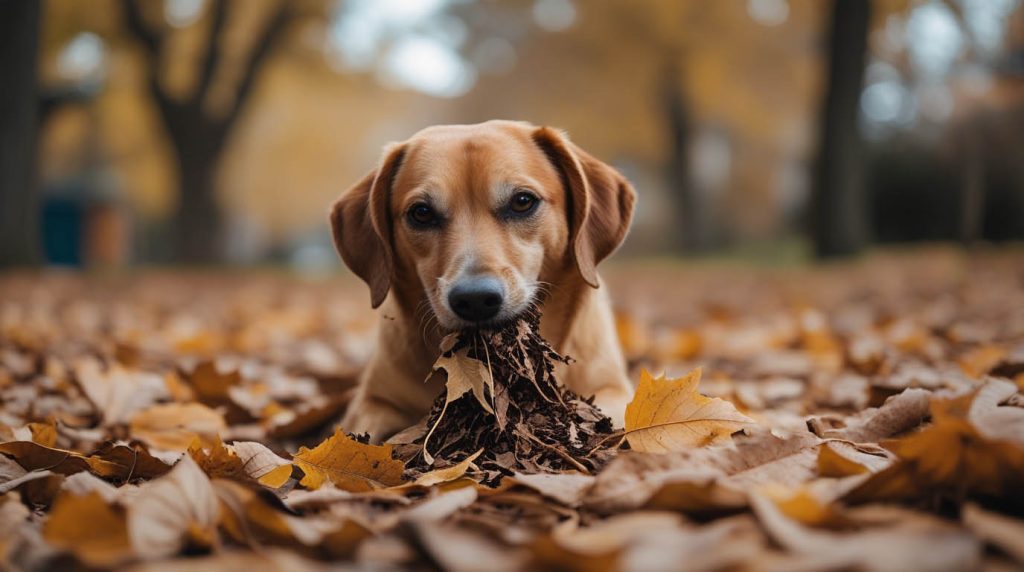
Are Sticks and Leaves Dangerous for Dogs?
Sticks can be dangerous because wood may splinter, break, or become lodged. Leaves can be dangerous when they come from a toxic plant or have chemical residue on them.
The main risks are:
| Hazard | How it can happen | Warning signs |
|---|---|---|
| Mouth injury | A sharp stick pierces the tongue, gums, palate, or throat | Drooling, pawing at the mouth, bleeding |
| Choking | A piece blocks the airway | Gagging, gasping, blue or gray gums, collapse |
| Intestinal blockage | Wood or plant matter cannot move through the gut | Repeated vomiting, pain, bloating, no stool |
| Gastrointestinal injury | A sharp splinter punctures the stomach or intestine | Severe pain, weakness, blood, fever |
| Poisoning | A dog eats a toxic plant or treated foliage | Vomiting, diarrhea, tremors, seizures, weakness |
| Chemical exposure | Leaves contain herbicide, pesticide, or fertilizer residue | Drooling, vomiting, diarrhea, tremors |
| Parasites or contamination | Fallen material carries feces, mold, or other contaminants | Digestive upset or illness |
The American Veterinary Medical Association and veterinary poison-control services advise pet owners to treat unknown plant ingestion seriously, especially when the plant cannot be identified. The ASPCA Animal Poison Control Center maintains a plant and substance database, but plant identification can still be difficult from a casual description or photograph.
Which plants are toxic to dogs?
Many plants found in U.S. yards, homes, parks, and landscaping can harm dogs. Examples include:
- Sago palm
- Oleander
- Azaleas and rhododendrons
- Certain lilies
- Yew
- Dieffenbachia
- English ivy
- Castor bean
- Autumn crocus
- Some mushrooms and wild plants
The word “lily” can be especially confusing because different lily species affect animals differently. A plant’s common name may also vary by region. Do not assume that a plant is safe because birds or other animals eat it.
If your dog ate an unknown plant, save a sample or take clear photos of the leaves, stem, flowers, and surrounding plant. Do not delay veterinary advice while trying to identify it if symptoms are present.
Are fallen sticks safer than branches?
No. Fallen sticks may be dry, brittle, moldy, contaminated with animal waste, or treated with chemicals. A fresh branch can also splinter. The risk does not depend only on whether the stick came from a living tree.

When Should You Call a Veterinarian?
Call a veterinarian promptly if your dog swallowed part of a stick, ate an unknown plant, or shows symptoms after chewing outdoor material. Contact an emergency veterinary hospital when breathing, swallowing, circulation, or severe pain may be affected.
Seek urgent help for:
- Trouble breathing
- Choking or repeated gagging
- Blue, gray, pale, or white gums
- Collapse or severe weakness
- Heavy bleeding from the mouth
- Repeated vomiting or retching
- A swollen or painful abdomen
- Bloody vomit or stool
- Extreme drooling or trouble swallowing
- Tremors, seizures, or unusual behavior
- Inability to keep water down
- Straining without passing stool
- Sudden severe lethargy
A dog may appear normal shortly after swallowing a foreign object. Symptoms can develop later as the object moves through the digestive tract. Do not rely on a normal first hour as proof that the dog is safe.
What should you do if your dog eats a stick?
Follow these steps:
- Move the dog away from the material. Use a calm voice and prevent another bite.
- Check breathing and behavior. Look for choking, gagging, bleeding, or difficulty swallowing.
- Do not pull out a deeply lodged object. A stick in the mouth or throat may cause more damage if pulled.
- Do not induce vomiting unless a veterinarian tells you to do so. Sharp wood can injure the esophagus on the way back up.
- Write down what happened. Note the type of stick, estimated amount, time, and the dog’s weight.
- Call your veterinarian if swallowing occurred. The need for an exam depends on the object, amount, symptoms, and dog.
- Go to an emergency clinic for serious signs.
If the dog is choking and cannot breathe, contact an emergency veterinary hospital while following the dispatcher’s instructions. Avoid putting your fingers deep into the mouth of an awake, frightened dog.
What should you do if your dog eats leaves?
First, identify the plant if possible. Take a photo, collect a sample without touching sap with bare skin, and note whether the plant was treated with lawn chemicals or pesticides.
Then contact your veterinarian or a U.S. animal poison-control service if the plant is unknown, potentially toxic, or the dog has symptoms. Do not give milk, oil, salt, human medicine, or activated charcoal unless a veterinary professional specifically directs you.

How Can You Stop a Dog From Eating Sticks and Leaves?
The safest approach combines management, training, and enrichment. Punishment may increase anxiety or turn the object into a game of chase.
1. Remove access
Keep the yard free of fallen branches and poisonous plants. Fence off garden beds when practical. During walks, use a leash in areas with heavy debris, treated grass, or unknown plants.
Inspect the ground before allowing your dog to roam. This is especially useful after storms, tree trimming, landscaping, or pesticide application.
2. Teach “leave it”
Practice indoors first:
- Place a low-value treat in a closed hand.
- Wait for the dog to stop touching or sniffing your hand.
- Mark the calm behavior with a word such as “yes.”
- Give a better treat from the other hand.
- Add the cue “leave it” once the dog understands the game.
- Practice with safe objects before using the cue outdoors.
The goal is to reward the dog for turning away. Do not repeatedly shout the cue after the dog already has a dangerous object.
3. Teach a safe trade
If your dog already has a stick, offer a high-value treat or a safe toy. When the dog drops the stick, reward the release and calmly remove the object.
Avoid chasing. Chasing can make the dog run, swallow the object quickly, or guard it.
4. Provide legal chewing options
Offer durable toys designed for dogs and matched to the dog’s size and chewing style. Supervise new toys and remove them if pieces break off.
Do not assume that every commercial chew is risk-free. Any chew can become a choking or obstruction hazard if a dog breaks off and swallows large pieces.
5. Increase exercise and mental work
A dog that has enough physical activity and mental stimulation may have less interest in scavenging. Useful options include:
- Sniff walks
- Short training sessions
- Food puzzles
- Hide-and-seek games
- Fetch with a dog-safe toy
- Structured play
- Scent-search games
Mental work can be tiring without requiring long or intense exercise. Match activity to the dog’s age, breed, health, and heat tolerance.
6. Consider a basket muzzle when risk remains high
A properly fitted basket muzzle can prevent scavenging while still allowing a dog to pant, drink, and take treats. It should be introduced gradually with positive training.
A muzzle is a safety tool, not a substitute for supervision or medical care. Never use a tight fabric muzzle for extended outdoor activity because it can limit panting.

When Is Stick or Leaf Eating a Sign of Pica?
Pica is the repeated eating of non-food items. A dog that occasionally mouths a leaf is not automatically showing pica. Concern rises when the dog persistently seeks and swallows wood, rocks, fabric, plastic, dirt, or other non-food objects.
Possible contributors include:
- Anxiety or compulsive behavior
- Boredom or limited enrichment
- Gastrointestinal disease
- Parasites
- Anemia or other medical conditions
- Dietary problems
- Medication effects
- Learned behavior
A veterinarian may ask about diet, stool, appetite, weight, behavior, access to objects, and the timing of the habit. Testing may be recommended based on the dog’s history and examination.
Do not add supplements or change the diet solely because a dog eats leaves. Nutritional causes are possible, but they are not proven by the behavior alone. A complete and balanced diet appropriate for the dog’s life stage is a better starting point than guessing at a deficiency.
Behavior support may help when the medical exam does not identify a cause. A veterinary behaviorist or qualified reward-based trainer can help build a plan for compulsive eating, anxiety, guarding, or poor impulse control.

Common Mistakes to Avoid
Assuming natural means safe
Leaves and wood come from nature, but natural materials can still be poisonous, sharp, contaminated, or difficult to digest.
Waiting for symptoms after a known toxic exposure
Some toxins cause delayed signs. Call a veterinarian or poison-control service as soon as possible rather than waiting for vomiting or weakness.
Pulling out a lodged stick
A visible object may be embedded deeper than it appears. Pulling it can worsen bleeding or tissue damage.
Trying home remedies
Salt, oil, milk, and hydrogen peroxide can cause harm or delay proper treatment. Vomiting is not safe for every substance or object.
Scolding after the dog swallows something
Punishment does not remove the object and may cause faster swallowing or resource guarding. Calmly manage the environment and train a trade or “leave it” cue.
Ignoring repeated behavior
Frequent ingestion deserves attention even if the dog has not become sick yet. Prevention is easier before a blockage, poisoning, or injury occurs.
Frequently Asked Questions
Is it normal for dogs to eat leaves?
Occasional chewing of a small amount of a known, non-toxic leaf may be normal exploratory behavior. It is not safe to assume that an unknown leaf is harmless. Repeated eating or any illness after ingestion warrants veterinary advice.
Can dogs eat tree leaves?
Some tree leaves may be harmless in small amounts, but others are toxic or irritating. Leaves may also carry pesticides, mold, or animal waste. Identify the tree before assuming the leaves are safe.
Why does my dog eat sticks but not toys?
Sticks carry outdoor scents and have a changing texture that may be more rewarding than a toy. The behavior may also be reinforced by chasing or attention. Replace sticks with a safe toy and reward the dog for choosing it.
Can eating sticks cause a blockage?
Yes. A swallowed piece of wood can lodge in the throat, stomach, or intestine. Sharp pieces may also puncture tissue. Vomiting, abdominal pain, weakness, bloating, or lack of stool after ingestion requires prompt veterinary attention.
Should I let my dog chew sticks if the dog does not swallow them?
It is safer to avoid stick chewing. Even dogs that usually spit out wood can break off a splinter, injure the mouth, or swallow a piece unexpectedly. Use a dog-safe toy for fetch and chewing instead.
Does eating leaves mean my dog needs more fiber?
Not necessarily. Leaf eating does not prove a fiber deficiency. Speak with a veterinarian before changing the diet, especially if the behavior is frequent or accompanied by digestive signs.
Key Takeaways
- Dogs eat sticks and leaves because of curiosity, play, foraging, boredom, stress, taste, or pica.
- Sticks can splinter, choke a dog, cause mouth injuries, or create an intestinal blockage.
- Unknown leaves may be toxic or contaminated with pesticides and other substances.
- Call a veterinarian promptly after known ingestion, especially when the plant or amount is unknown.
- Do not induce vomiting or give home remedies unless a veterinary professional instructs you.
- Prevent the behavior with yard management, “leave it,” safe trades, enrichment, and supervision.
- Repeated eating of non-food items should receive a veterinary and, when needed, behavioral evaluation.
Conclusion
Dogs may eat sticks and leaves as part of normal exploration, but the behavior is not risk-free. Treat occasional contact differently from repeated swallowing, unknown plant exposure, or symptoms such as choking, vomiting, pain, weakness, or trouble passing stool.
The safest next step is simple: remove access, identify what the dog ate, monitor closely, and contact a U.S. veterinarian when the object, plant, or symptoms create uncertainty.