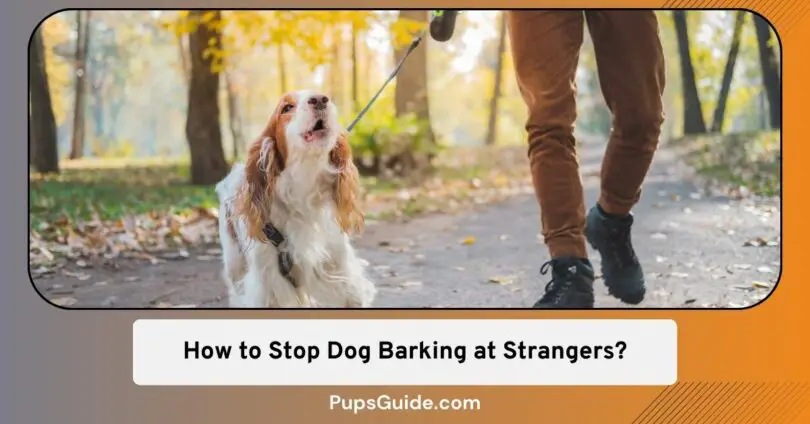
You can stop a dog from barking at strangers by identifying why the dog reacts, preventing repeated barking practice, and using gradual training with rewards for calm behavior.
Across the United States, dogs commonly bark at delivery workers, visitors, neighbors, and people passing by homes or on walks. Barking is a normal form of communication, but frequent barking at strangers can become stressful for families and difficult for the people around them. The goal is not to remove barking completely but to teach the dog when quiet behavior is the better choice.
A dog that barks at unfamiliar people may be showing fear, excitement, territorial behavior, frustration, or a desire to get attention. The most effective approach combines management, reward-based training, and careful exposure to new people at a distance where the dog can still learn. Punishment alone can increase fear in some dogs and may make reactions worse.
This guide explains practical steps owners can use to reduce stranger-directed barking, how to recognize the cause of the behavior, what mistakes to avoid, and when professional help may be needed.
Source: pupsguide.com
Why Do Dogs Bark At Strangers?
Dogs bark at strangers for different reasons, and understanding the cause is the first step toward changing the behavior. A dog barking at a person near the house may be protecting its space, while the same dog may bark on a walk because it feels uncertain or overstimulated.
Barking is often a distance-making behavior. A dog may bark because it wants the unfamiliar person to move away. When the person leaves after barking, the dog can learn that barking works, even if the person was already leaving.
Source: urbanpawsibilities.com
Fear or uncertainty
Some dogs bark because unfamiliar people feel threatening. They may also hide, back away, lower their body, or show other signs of stress.
Territorial behavior
Dogs may bark more when strangers approach the home, yard, windows, or vehicles because they see these areas as important spaces.
Excitement
Friendly dogs may bark because they want to greet people, play, or receive attention.
Learned habit
If barking repeatedly produces a result, such as attention or a person leaving, the behavior may become stronger over time.
How To Identify Your Dog’s Barking Trigger
Watch what happens before, during, and after barking. Notice the location, the person’s distance, your dog’s body language, and whether the dog can respond to you.
A dog that can still eat treats, look away, or follow a simple cue is usually in a better learning state than a dog that is lunging, growling, or unable to focus.
Track the situation
Write down where barking happens, who triggers it, and what your dog does next.
Prepare Before Training Your Dog Around Strangers
Training works best when the dog is prepared to succeed. Before practicing around strangers, teach basic skills in a quiet area and choose rewards your dog values.
The purpose of preparation is to create a clear communication system. Your dog should understand that paying attention to you and staying calm can lead to good outcomes.
Source: animalia-life.club
Choose rewards
Use small treats, praise, toys, or another reward your dog finds motivating.
Teach simple cues
Practice cues such as look, come, sit, or leave it before adding distractions.
Manage the environment
Reduce unnecessary barking opportunities by closing curtains, using barriers, or increasing distance from triggers.
Why Distance Matters During Training
A common mistake is moving a dog too close to strangers too quickly. If the dog is already barking, the brain is focused on reacting instead of learning.
Start at a distance where your dog notices the stranger but remains calm. Over time, slowly decrease the distance as the dog improves.
Signs the distance is correct
Your dog can look at the stranger, respond to you, and accept rewards without barking.
Step-By-Step Training To Stop Barking At Strangers
The most useful training method is to change the dog’s emotional response to strangers. Instead of seeing a person as a reason to bark, the dog learns that calm behavior brings rewards.
Training takes repetition. Some dogs improve quickly, while others need weeks or months of consistent practice depending on their history, age, and level of fear.
Source: www.youtube.com
Step 1: Notice the stranger before barking starts
When your dog sees a stranger but remains calm, immediately reward that behavior.
Step 2: Pair strangers with positive outcomes
Give rewards when strangers appear so your dog begins forming a calmer association.
Step 3: Reward attention toward you
Teach your dog that checking in with you is more valuable than reacting.
Step 4: Increase difficulty slowly
Gradually practice in busier areas only when your dog can succeed at the current level.
What To Do When Your Dog Starts Barking
Avoid repeating commands loudly or becoming frustrated. Instead, calmly create distance and wait until your dog can focus again.
After your dog settles, return to an easier training level. A setback usually means the situation was too difficult, not that training failed.
Move away
Increase distance from the stranger to help your dog calm down.
Avoid forced greetings
Do not make a nervous dog approach unfamiliar people.
How To Handle Stranger Barking At Home
Dogs often bark more at home because they feel responsible for alerting their family. The first goal is to prevent the dog from practicing repeated alarm barking.
Management does not replace training, but it reduces the number of times the dog rehearses the unwanted behavior while new habits are being built.
Source: hotdiggitydogstoronto.com
Limit window reactions
Use curtains, window coverings, or another setup that reduces visual triggers.
Create a visitor routine
Teach your dog what to do when someone arrives, such as going to a mat or staying behind a barrier.
Reward quiet moments
Notice and reward calm behavior before barking begins.
Training Visitors To Help
Visitors should avoid overwhelming the dog. Calm movements, ignoring unwanted barking, and following the owner’s instructions can make training easier.
For dogs that are fearful or reactive, controlled practice is safer than allowing random greetings at the door.
Use predictable interactions
Consistent visitor behavior helps the dog understand what to expect.
Common Mistakes That Can Make Barking Worse
Many owners try to stop barking quickly, but some common reactions can accidentally strengthen the behavior or increase stress.
The best approach focuses on teaching an alternative behavior rather than only trying to stop the noise.
Source: artofit.org
Yelling at the dog
A dog may interpret loud yelling as joining the barking or may become more anxious.
Using fear-based methods
Harsh corrections can increase fear for some dogs and do not teach what behavior to perform instead.
Allowing repeated reactions
Every barking episode can become practice that makes the habit harder to change.
When Professional Help Is Needed
Professional guidance is recommended if barking includes snapping, biting attempts, severe fear, or inability to calm down around strangers.
A qualified veterinary behavior professional or experienced reward-based trainer can help identify causes and create a safer plan.
Seek help for safety concerns
Aggressive behavior or intense fear requires careful management.
How Long Does It Take To Stop Stranger Barking?
The time needed depends on the dog’s age, learning history, motivation, and the reason behind the barking. A dog with a mild habit may improve faster than a dog with strong fear or years of repeated reactions.
Progress should be measured by small changes, such as shorter barking periods, faster recovery, or the ability to stay calm closer to strangers.
Source: artofit.org
Signs of improvement
Your dog notices strangers but recovers faster, accepts rewards, and chooses calm behaviors more often.
If progress stops
Reduce the difficulty, review triggers, and make sure training sessions are short and successful.
Frequently Asked Questions
Q
Why does my dog bark at strangers but not family members?
Dogs usually bark at strangers because unfamiliar people create a different emotional response than trusted family members. The cause may be fear, excitement, or territorial behavior.
Q
Should I punish my dog for barking at strangers?
Punishment is not usually the best first option because it may increase fear or stress. Rewarding calm behavior and changing the dog’s response to strangers is often more effective.
Q
Can an older dog learn to stop barking at strangers?
Yes. Older dogs can learn new behaviors, although changing a long-standing habit may require patience and consistent practice.
Q
How do I stop my dog barking at strangers during walks?
Create distance from strangers, reward calm observation, and slowly practice closer interactions only when your dog can remain relaxed.
Q
When should I contact a dog behavior professional?
Contact a professional if your dog shows aggression, attempts to bite, has extreme fear, or the behavior creates safety concerns.
✦ Wrapping Up
Conclusion
Stopping a dog from barking at strangers requires understanding the reason behind the behavior and teaching a better response. The most reliable approach combines prevention, gradual exposure, and rewards for calm choices.
Every dog learns at a different pace. Focus on steady improvement rather than expecting instant silence, and adjust the training plan when your dog struggles.
💡 Key Takeaway
Start by finding your dog’s trigger, keep enough distance for learning, reward calm behavior, and build confidence through consistent practice.