A sick dog may survive several days without food in some cases, but a dog that refuses food for more than 24 hours, especially while ill, should be watched closely and may need veterinary advice.
Across the United States, many dog owners notice a sudden loss of appetite when their pet becomes sick. A dog skipping one meal can sometimes happen with minor stomach upset, stress, or temporary illness. However, refusing food for a longer period can signal a deeper problem that needs attention.
How long a sick dog can live without food depends on many factors, including the illness causing appetite loss, body condition, age, access to water, and overall health. Food provides energy needed for healing, immune function, and normal body processes, so a sick dog has less ability to handle fasting than a healthy dog.
The biggest immediate concern is often not food alone but hydration. A dog that stops drinking water can become dangerously dehydrated much faster than a dog that refuses meals. Owners should monitor both food and water intake and contact a veterinarian when warning signs appear.
Source: doggozila.com
How Long Can A Sick Dog Live Without Food?
A sick dog can sometimes live several days without food, but there is no safe universal timeline. A healthy adult dog with enough body reserves may tolerate a short fast better than a puppy, elderly dog, or dog fighting an infection or serious disease.
When illness affects appetite, the body begins using stored energy. First, the body uses available glucose, then it relies more on stored fat and eventually muscle tissue. A sick dog may lose strength faster because illness already places extra demands on the body.
Veterinarians usually focus less on the exact number of days a dog can survive and more on why the dog is not eating. Loss of appetite is a symptom, not a diagnosis, and the underlying cause determines urgency.
Source: cuddleyourdogs.com
Healthy adult dogs
Some healthy adult dogs may tolerate a short period without food, but illness changes the risk and should not be ignored.
Sick or weakened dogs
Dogs with infections, pain, organ problems, or severe digestive issues may decline much faster.
Dogs without water
Lack of water is generally more dangerous than lack of food because dehydration can quickly affect body function.
Why Illness Changes A Dog’s Ability To Go Without Food
A sick dog’s body may need extra energy to fight inflammation, repair tissue, maintain temperature, and recover from injury. When food intake stops, the body has fewer resources available for these tasks.
Some illnesses also prevent normal digestion or make eating painful. For example, dental pain, nausea, intestinal problems, fever, and certain diseases can all reduce appetite.
Energy needs
Recovery requires energy, and prolonged fasting can reduce the body’s ability to heal.
Underlying disease
The illness causing appetite loss is often more important than the lack of food itself.
What Factors Affect How Long A Sick Dog Can Go Without Eating?
Two dogs with the same appetite problem may have very different outcomes. A young healthy dog with mild stomach upset is not in the same situation as an older dog with kidney disease or a puppy with vomiting and diarrhea.
Owners should consider the dog’s age, size, medical history, symptoms, and water intake when deciding how urgently to seek help.
Source: dogshowtv.com
Age
Puppies and senior dogs often have fewer reserves and may need faster medical attention.
Body condition
A thin dog may have less stored energy than a dog with healthy body reserves.
Illness type
Digestive illness, pain, infection, and organ disease can affect appetite in different ways.
Hydration
A dog that cannot keep water down may face a more urgent situation.
Puppies And Senior Dogs Need Extra Attention
Puppies have higher energy needs for growth and may become weak faster when they cannot eat. Senior dogs may also struggle because aging can reduce their ability to handle stress from illness.
Small dogs can be at higher risk from certain problems because they have smaller energy reserves compared with larger dogs.
Watch for weakness
Low energy, shaking, collapse, or unusual behavior are reasons to seek veterinary help.
Signs A Sick Dog Not Eating Needs Veterinary Care
A dog refusing food becomes more concerning when other symptoms appear. Appetite loss combined with vomiting, diarrhea, pain, breathing problems, or extreme tiredness can indicate a condition that needs professional evaluation.
Pet owners should avoid waiting too long if a dog appears seriously ill. Early veterinary care can help identify the cause and provide supportive treatment.
Source: bulldogology.net
Emergency warning signs
Seek urgent veterinary help for collapse, trouble breathing, seizures, severe weakness, bloating, or signs of severe pain.
Persistent refusal of food
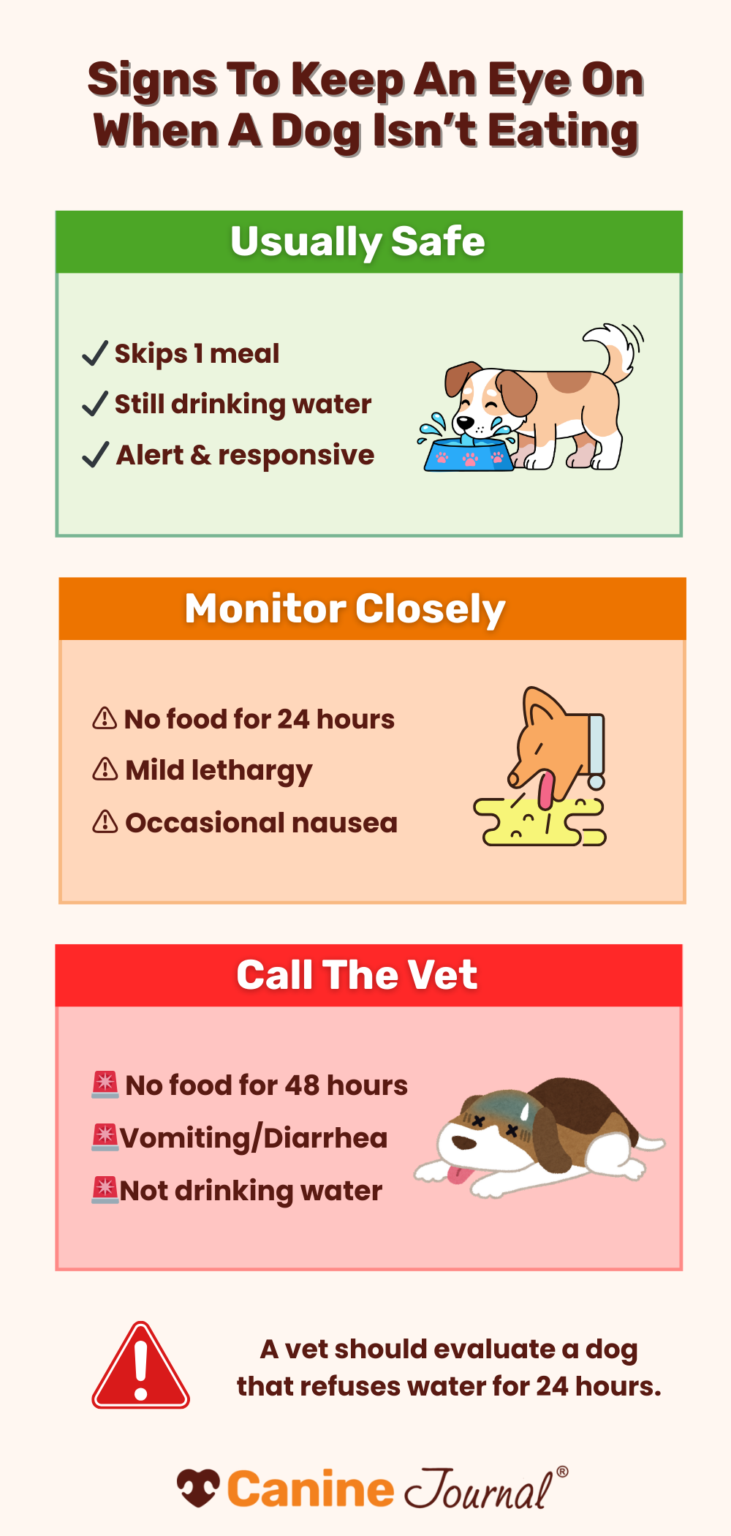
A dog refusing food for about 24 hours or longer should be discussed with a veterinarian, especially if sick.
Dehydration signs
Dry gums, weakness, sunken eyes, and reduced urination can suggest dehydration.
Common Reasons A Sick Dog Stops Eating
Dogs may stop eating because of stomach upset, infection, pain, medication effects, stress, dental problems, or diseases affecting internal organs.
Finding the cause matters because treatment depends on the problem. A dog with nausea needs a different approach than a dog refusing food because of mouth pain.
Digestive problems
Vomiting, diarrhea, or stomach discomfort can reduce interest in food.
Pain
Pain from injury, dental issues, or illness can make eating difficult.
What To Do If Your Sick Dog Will Not Eat
The first step is to check for other symptoms and make sure fresh water is available. Do not assume that a dog refusing food is simply being picky when illness is present.
If your veterinarian has not advised a different plan, avoid sudden food changes, force-feeding, or giving human medications. Some actions can hide symptoms or create additional health risks.
Source: caninejournal.com
Monitor intake
Track when your dog last ate and drank, along with any vomiting, diarrhea, or behavior changes.
Offer normal food
Offer appropriate food without pressuring the dog to eat.
Contact a veterinarian
Get professional advice when appetite loss continues or other symptoms develop.
Mistakes To Avoid
One common mistake is waiting many days because a dog can technically survive without food. Survival is not the same as being safe or recovering.
Another mistake is focusing only on eating while ignoring water intake, energy level, and signs of illness.
Do not force-feed
Force-feeding can be unsafe in some illnesses and should only be done with professional guidance.
How Food And Water Affect A Sick Dog’s Recovery
Food provides calories, protein, vitamins, and minerals needed for normal body functions. During illness, these nutrients support recovery and help maintain strength.
Water is essential for circulation, temperature control, digestion, and organ function. A dog that refuses both food and water needs faster attention than a dog that only skips meals.
Source: raisedrightpets.com
Food supports healing
Adequate nutrition helps the body maintain energy during recovery.
Water protects body systems
Hydration problems can become serious because many body processes depend on water.
When A Dog Starts Eating Again
A dog returning to food intake is a positive sign, but owners should still watch for recurring symptoms. Some illnesses can cause appetite to improve briefly before worsening again.
Follow veterinary instructions if treatment has been provided, and continue monitoring behavior, stool, vomiting, and energy levels.
Small changes matter
Gradual improvement in eating and energy can help show whether recovery is progressing.
Frequently Asked Questions
Q
Can a sick dog survive three days without food?
Some dogs may survive several days without food, but that does not mean it is safe. A sick dog’s condition, hydration, and underlying illness determine the risk.
Q
How long can a dog go without water when sick?
A sick dog without water can become dehydrated quickly. Water refusal, repeated vomiting, or inability to keep fluids down should be treated as a serious concern.
Q
Should I force my sick dog to eat?
Do not force-feed a sick dog unless a veterinarian has recommended it. Some medical conditions can become worse with forced feeding.
Q
Why is my sick dog not eating but drinking water?
A dog may still drink while avoiding food because of nausea, pain, stress, dental problems, or illness. Continued appetite loss should be monitored.
Q
When should I call the vet if my dog stops eating?
Contact a veterinarian if a sick dog refuses food for about 24 hours, has other symptoms, or belongs to a higher-risk group such as puppies or senior dogs.
✦ Wrapping Up
Conclusion
A sick dog may survive without food for a limited time, but there is no safe number of days that applies to every dog. The cause of appetite loss, hydration status, age, and overall health all change the situation.
The best approach is to treat loss of appetite as a possible warning sign rather than waiting to see how long a dog can go without eating. Monitoring water intake and seeking veterinary advice when symptoms continue can protect your dog’s health.
💡 Key Takeaway
If your sick dog is not eating, record when the problem started, check water intake, watch for warning signs, and contact a veterinarian when the situation does not improve quickly.