Why Do Dogs Love Moms So Much: Heartwarming Reasons
Dogs often seem to adore moms more than anyone else in the house because moms usually become the main source of food, comfort, routine, and safety in the dog’s daily life. In many U.S. homes, dogs learn that mom is the person who feeds them, notices their needs, and responds with calm attention. That combination builds a strong attachment fast.

Why dogs bond so strongly with moms
Dogs bond strongly with moms because they connect her with positive experiences repeated over time. A dog does not love someone for one big moment alone. Dogs learn through patterns: who fills the bowl, who opens the door for walks, who gives gentle touch, and who soothes stress.
This is rooted in canine social behavior. Dogs are highly attuned to people’s voices, facial cues, body language, and routines. When mom is the person who most often provides predictable care, the dog’s brain starts to treat her as a trusted safety figure.
In plain terms, dogs usually love moms so much because moms often become the dog’s best source of predictability. For an animal that thrives on routine, predictability feels like security.
The main reasons dogs may prefer mom
- Feeding: Dogs quickly connect the person who feeds them with good outcomes.
- Comfort: Calm petting and soothing voices lower stress.
- Routine: Dogs like the person who keeps life predictable.
- Attention: Dogs notice who talks to them, plays with them, and checks on them.
- Safety: Dogs often follow the person who helps them feel secure.
The role of attachment in dogs
Dogs form attachment-style bonds with humans, similar in some ways to how children bond with caregivers. That does not mean dogs think exactly like people. It means they can show clear preference for the person who consistently meets their needs.
Research on dog-human attachment has found that dogs often use their preferred person as a “secure base.” In practical terms, that means the dog may explore more confidently, settle faster, and show less distress when that person is nearby. If mom is the one who provides the most reassurance, the dog may naturally gravitate toward her.
The bond is not just emotional in the human sense. It is also behavioral. Dogs learn who responds fastest, who is gentlest, and who makes good things happen most often.
Why moms often become the favorite
Moms often become the favorite because they are frequently the primary caregiver in many households. That matters more than personality alone. A dog usually bonds most with the person who does the most daily caregiving.
1. Moms often do the invisible care work
Many moms handle the everyday tasks dogs notice most:
- feeding on schedule
- letting the dog out
- giving medications
- cleaning up messes
- making sure the dog is safe and supervised
Dogs do not understand “family roles” the way humans do. They understand repetition. The person who keeps showing up becomes important.
2. Moms may use calmer communication
Dogs often respond well to calm, steady voices and gentle body language. Many people describe moms as more nurturing in tone and touch, and dogs tend to mirror that comfort. A soft voice and patient interaction can make a dog feel safe faster than loud or rough energy.
3. Moms often notice needs sooner
Dogs are excellent at reading patterns. If mom is the one who notices when the dog is thirsty, anxious, scared, or wants to go out, the dog learns that she is highly responsive. Responsiveness builds trust.
4. Dogs like people who create predictability
Dogs relax when life feels structured. Moms often create that structure through routines around meals, walks, and bedtime. That steady rhythm can make the bond stronger over time.
How dogs show love for moms
Dogs do not say “I love you” in words, but they show attachment clearly. If your dog loves mom most, you may notice these behaviors:
- following her from room to room
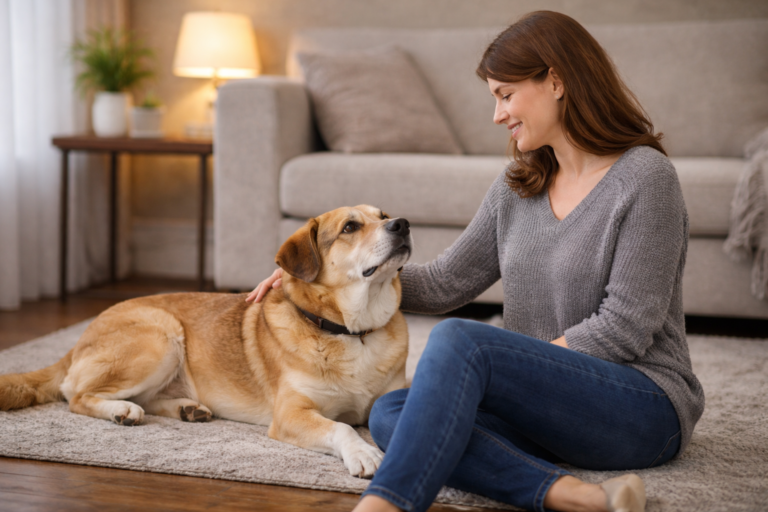
- choosing to nap near her
- greeting her with excitement
- leaning on her or resting a paw on her
- making eye contact
- bringing toys to her
- settling down faster when she is nearby
These behaviors usually mean the dog sees mom as a safe and rewarding person. Excitement is not the only sign. Quiet closeness can be just as meaningful.
What changes the answer from dog to dog
Not every dog loves moms more. Some dogs prefer dads, kids, or another caregiver. The strongest bond usually depends on who meets the dog’s needs most consistently.
Variables that matter
| Factor | How it affects the bond |
|---|---|
| Feeding | Dogs often favor the person linked to meals |
| Time spent together | More daily contact usually means stronger bonding |
| Tone and touch | Calm, kind handling can build trust |
| Training | The person who trains the dog often becomes highly valued |
| Early life experience | Puppies may bond most with the first secure caregiver |
| Stress history | Rescue dogs may attach strongly to whoever makes them feel safe |
A dog’s preference can also shift over time. If dad starts doing more walks, training, and feeding, the dog may begin to love him just as much, or more.
When a dog seems obsessed with mom
A dog that constantly follows mom is often showing attachment, not a problem. But in some cases, strong clinginess can point to separation stress or anxiety.
Normal attachment looks like this
- follows mom around the house
- wants to sit near her
- gets excited when she returns
- calms down after greeting her
Possible anxiety signs
- pacing when mom leaves
- whining or barking for long periods
- destructive behavior
- refusing to settle
- panic when left alone
If the behavior is intense, sudden, or disruptive, a veterinarian or qualified trainer should evaluate it. Dogs with separation anxiety need the right plan, not punishment.
Common myths about why dogs love moms
Myth 1: Dogs only love the person who gives them food
Food matters, but it is not the whole story. Dogs also bond through safety, touch, routine, and trust.
Myth 2: Dogs always prefer women
Some dogs do respond more easily to certain voices or movements, but there is no rule that dogs prefer women. Individual history and daily care matter more.
Myth 3: Love is only about treats
Treats can help, but a dog’s strongest bond often comes from repeated care and emotional safety.
Myth 4: If the dog loves mom most, it means dad did something wrong
Not necessarily. Dogs often favor the person who has the most predictable daily role. That can change with time and effort.
How to build a stronger bond with your dog
If you want your dog to love you the way dogs often love moms, focus on trust, routine, and positive interaction.
Practical ways to build the bond
- Feed the dog on a schedule. Predictability matters.
- Use a calm voice. Dogs notice tone.
- Spend one-on-one time daily. Short, regular attention works well.
- Take over walks or potty breaks. Repetition builds association.
- Train with rewards. Dogs often bond with the person who teaches them.
- Respect the dog’s space. Let the dog approach when ready.
- Be consistent. Dogs trust patterns more than promises.
The goal is not to compete for affection. It is to become a steady, safe part of the dog’s world.

Why this bond matters
A strong dog-mom bond can make daily life easier for everyone. Dogs that feel secure often settle better, learn faster, and cope more easily with change. That does not mean the bond has to be exclusive. Healthy dogs can love multiple people at once.
The best bond is the one built on trust, routine, and kindness. When a dog loves mom deeply, it is usually because mom has become the person who makes life feel safe and good.

FAQs
Do dogs really have favorite people?
Yes. Many dogs clearly prefer one person because that person provides the most care, comfort, and consistency.
Why does my dog follow my mom everywhere?
Your dog likely sees your mom as a trusted source of safety, attention, or routine.
Can a dog love more than one person?
Yes. Dogs can bond with several family members at the same time.
Why does my dog like my mom but ignore me?
Your dog may associate your mom with more frequent rewards, calmer handling, or more time together.
Can I become my dog’s favorite person?
Yes. Spend consistent time feeding, training, walking, and calmly interacting with your dog.
Conclusion
Dogs love moms so much because moms often become the person they trust most. That trust grows from repeated care, calm communication, and daily routines that make life feel safe. In many U.S. homes, the dog’s strongest attachment simply reflects who shows up most often with comfort and consistency.
If you want to deepen that bond, focus on predictable care, patient training, and positive time together. Dogs remember who makes them feel secure.