Why Do Dogs Have Tails: Why Tails Matter
Dogs have tails because tails help with communication, balance, body control, and movement. A dog’s tail is an extension of the spine. It contains small bones, muscles, nerves, blood vessels, and skin that work together to send signals and help the dog move.
For people in the United States, a tail may seem like a simple feature that changes in shape from breed to breed. But a Labrador Retriever’s “otter” tail, a Siberian Husky’s curved tail, and a Pembroke Welsh Corgi’s short tail all reflect different traits shaped by ancestry, genes, and selective breeding.

What Is a Dog’s Tail Made Of?
A dog’s tail is the movable end of the spinal column. Its bones are called caudal vertebrae, or tail vertebrae. The number and shape of these bones vary among dogs.
The tail also contains:
- Muscles that raise, lower, curl, and wag it
- Nerves that control movement and carry sensation
- Blood vessels that supply the tissue
- Tendons and connective tissue
- Skin and hair
- A thin layer of fat that varies by breed and body condition
A dog’s tail is not a separate part attached to the back. It is linked to the pelvis and spine through muscles and connective tissue. This is why tail injuries can be painful and may affect nearby nerves.
Some dogs are born with short or unusually shaped tails. This can happen because of natural genetic variation or because humans selected the trait during breeding. The natural bobtail seen in some breeds is different from a tail shortened by surgery.
What Are the Main Functions of a Dog’s Tail?
A dog’s tail has four major roles: communication, balance, movement, and social signaling. The importance of each role depends on the dog’s breed, body shape, age, environment, and situation.
1. Tails Help Dogs Communicate
Dogs use their tails as part of a larger body-language system. Tail position, speed, stiffness, and movement all provide clues about a dog’s emotional state.
A tail held high may show alertness, confidence, or excitement. A tail held low may suggest fear, uncertainty, or submission. A tail tucked tightly under the body often signals distress or an attempt to appear less threatening.
Tail movement alone does not give a complete answer. A wagging tail does not always mean a dog is happy. Dogs may wag when they are excited, nervous, frustrated, or ready to react.
The rest of the body matters:
- Relaxed body, soft eyes, loose wag: often friendly or comfortable
- Stiff body, hard stare, high rigid tail: may signal tension or a warning
- Low tail with crouched posture: may show fear or uncertainty
- Fast wag with a tense body: may reflect high arousal, not calm joy
- Tail tucked with ears back: often signals fear or stress
Dogs also use their tails to communicate with other dogs. Tail movement can help show whether a dog wants to play, avoid conflict, approach, or keep distance.
2. Tails Help With Balance
A tail can act like a counterweight. It helps a dog adjust its body while running, jumping, climbing, or turning.
For example, when a dog makes a sharp turn, the tail can shift in the opposite direction. This helps control the body’s rotation. When a dog walks along a narrow surface, the tail may help keep the body steady.
This role is similar to the way a tightrope walker uses the arms for balance. A dog does not depend on its tail in exactly the same way, but the basic idea is similar: moving one body part can help control the rest of the body.
Dogs with short tails can still run and play normally. They may rely more on their hips, back, legs, and core muscles. The tail supports movement, but it is not the only source of balance.
3. Tails Support Movement
A tail can help guide a dog during fast movement. This is especially useful for dogs bred to run, swim, herd, or work in rough terrain.
Swimming dogs may use the tail as a rudder. A strong, broad tail can help steer the body through water. Some breeds, such as Labrador Retrievers, have tails shaped for swimming. Their thick tail can help with direction and balance.
Dogs that chase, turn quickly, or move through uneven ground may use the tail to make small body adjustments. The tail does not provide power in the way that the legs do. Instead, it helps refine movement.
4. Tails Spread Scent and Signal Presence
A dog’s tail can help move scent from glands near the anus. When a dog raises and moves its tail, it may spread its individual scent more widely. This may help other dogs gather information about identity, sex, health, and social status.
This does not mean every wag is a deliberate scent-marking action. Tail movement can have several functions at once. A dog may raise its tail because it feels alert, while the movement also makes its scent easier to detect.
Dogs also use tail position to make their bodies look larger or smaller. A raised tail may make a dog appear more prominent. A tucked tail makes the body look smaller and can reduce social pressure.

Why Do Dogs Wag Their Tails?
Dogs wag their tails because they are experiencing some form of arousal or emotion and are communicating that state. A wag shows that something has caught the dog’s attention, but it does not identify the emotion by itself.
The direction and speed of movement may offer clues. Some research has found that dogs can respond differently to left- and right-biased tail movement in other dogs. However, this detail is not simple enough to use as a home test. The full body signal remains more useful.
When reading a dog’s tail, check these features:
- Position: Is it high, level, low, or tucked?
- Speed: Is the movement slow, quick, or still?
- Shape: Is the tail loose, curved, or rigid?
- Body tension: Are the muscles soft or stiff?
- Face and ears: Do they look relaxed, worried, or focused?
- Situation: Is the dog meeting a stranger, playing, eating, or facing a threat?
A relaxed wag usually comes with a loose body. A stiff wag may occur when the dog is highly alert or uncomfortable. A dog that wags while growling, freezing, or staring should not be approached based on the wag alone.
Why Do Dog Breeds Have Different Tail Shapes?
Dog tail shapes differ because of ancestry, inherited genes, and selective breeding. Humans bred dogs for work and appearance, and tail shape sometimes supported those goals.
Common tail types include:
| Tail type | Examples | Possible role or origin |
|---|---|---|
| Long, tapered tail | German Shepherd Dog, Golden Retriever | Broad movement and body signaling |
| Thick “otter” tail | Labrador Retriever | Useful for swimming and steering |
| Curled tail | Akita, Basenji, Siberian Husky | Inherited breed trait |
| Feathered tail | Golden Retriever, Shetland Sheepdog | Hair type and breed heritage |
| Short natural tail | Australian Shepherd, Pembroke Welsh Corgi | Genetic variation selected in some lines |
| Screw tail | Pug, Bulldog | Breed trait linked to vertebral shape |
A breed’s tail does not always match its original job in a clear way. Modern breeding can preserve traits for appearance even when the dog no longer performs the historic work.
Some tail shapes also create health concerns. A tightly curled or screw-shaped tail may be linked with abnormal vertebrae. In some dogs, nearby skin folds can trap moisture and cause irritation. Owners should ask a veterinarian to examine a tail that is painful, inflamed, or difficult to keep clean.
Why Are Some Dogs Born Without Long Tails?
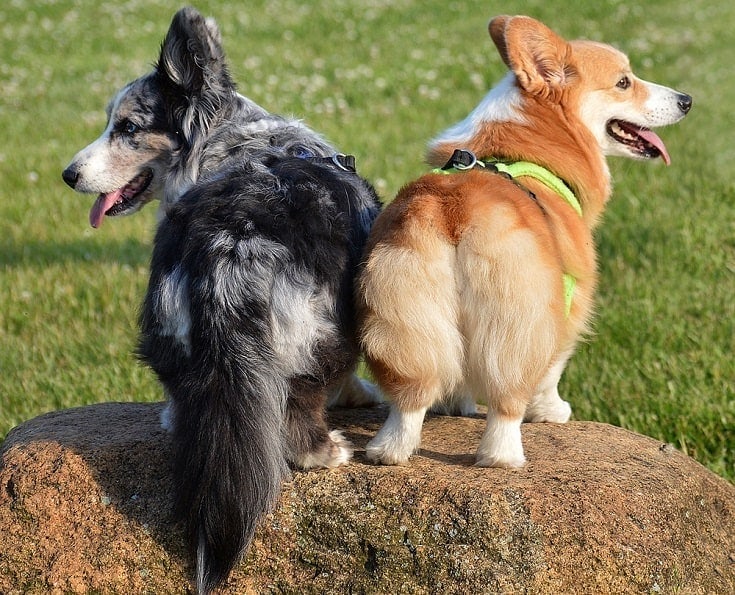
Some dogs inherit genes that produce a naturally short tail. This is known as a natural bobtail. Other dogs have short tails because of changes in the vertebrae.
Natural short tails can vary. One dog may have only a small stub, while another may have a short tail with several movable vertebrae. A short tail does not automatically mean a dog has a health problem.
However, certain genetic combinations can cause serious spinal or nerve problems. Responsible breeding programs use breed-specific genetic information and veterinary guidance to reduce these risks.
Why Are Some Dogs’ Tails Docked?
Tail docking is the surgical removal of part of a dog’s tail. In the United States, docking may be done for breed tradition, appearance, or a claimed working purpose. It is different from a dog being born with a naturally short tail.
The American Veterinary Medical Association opposes cosmetic tail docking when it is done only for appearance. The American Animal Hospital Association also opposes cosmetic docking and supports preserving a dog’s natural body parts when there is no medical reason for removal.
Docking can cause pain and may involve risks such as:
- Surgical pain
- Infection
- Poor healing
- Nerve injury
- Chronic sensitivity
- Reduced ability to communicate through tail signals
In some cases, a veterinarian may recommend removing part of a tail because of severe injury, cancer, or another medical problem. That decision is different from routine cosmetic docking.
Laws and veterinary rules vary by state and local area in the United States. Anyone considering docking should speak with a licensed veterinarian about medical need, pain control, age, aftercare, and applicable law.
Can Dogs Live Normally Without a Tail?
Most dogs with naturally short tails can live active, normal lives. They can run, play, communicate, and learn to use other body signals.
A dog without a full-length tail may rely more on:
- Ear position
- Facial expression
- Body posture
- Eye contact
- Movement and distance
- Vocal sounds
This does not mean tail loss has no effect. A tail injury can be painful, and sudden loss of a tail may make communication with other dogs less clear. Dogs with very short tails may need more careful supervision during introductions because other dogs may misread their signals.
A missing tail can also point to a medical concern if the change happens suddenly. The dog may have suffered a fracture, nerve injury, infection, or another condition.

What Tail Problems Should Dog Owners Watch For?
A healthy tail usually moves freely and matches the dog’s normal shape and behavior. A sudden change deserves attention.
Contact a veterinarian if a dog has:
- A tail that hangs limp after an injury
- Swelling, bleeding, or an open wound
- A sharp bend that was not present before
- Persistent licking or chewing
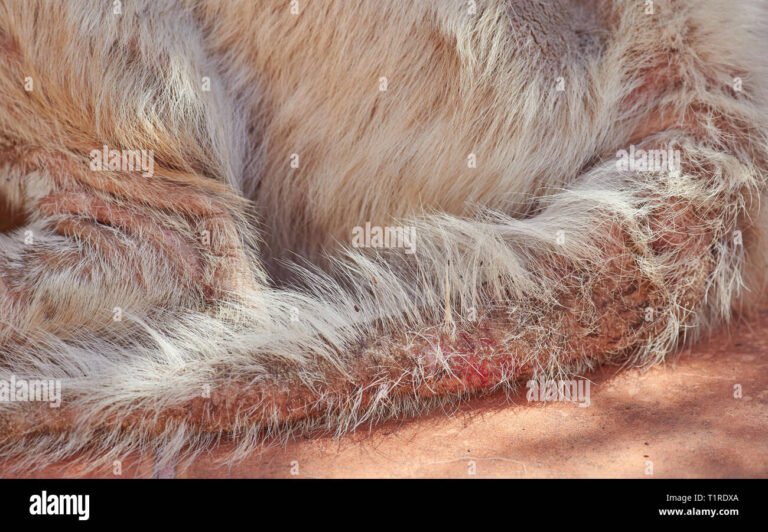
- Hair loss, redness, odor, or discharge
- Pain when the tail is touched
- A tail that cannot lift or move normally
- Repeated impact injuries from wagging
- Trouble passing stool or signs of pain near the tail
A condition called limber tail, also known as swimmer’s tail, can cause a dog’s tail to hang down and become painful. It may occur after intense exercise, swimming, cold exposure, or prolonged activity, but other problems can look similar. A veterinarian should confirm the cause.
Do not try to straighten a bent tail, drain a swelling, or give human pain medicine. Some human medicines are dangerous for dogs. Keep the dog calm and arrange veterinary care, especially after a fall, bite, door injury, or vehicle accident.
How Should You Read a Dog’s Tail Safely?
Read the tail as one part of the dog’s whole body language. Never use a tail signal as permission to touch an unfamiliar dog.
Use this simple approach:
- Watch the dog from a safe distance.
- Look at the body, face, ears, and tail together.
- Check whether the dog can move away.
- Avoid leaning over, staring, grabbing, or reaching toward the tail.
- Let the dog approach only if its body remains loose and calm.
- Stop contact if the dog stiffens, freezes, growls, backs away, or shows a tucked tail.
Children in the United States should learn that a wagging tail does not guarantee safety. An adult should supervise every child around an unfamiliar dog, including a dog that appears friendly.

Key Takeaways
- Dogs have tails for communication, balance, movement, and scent signaling.
- A wagging tail does not always mean happiness.
- Tail position, speed, stiffness, and the dog’s whole body give better clues than movement alone.
- Breed differences come from genes, ancestry, breeding goals, and sometimes vertebral structure.
- Natural bobtails are inherited traits; docked tails are surgically shortened.
- Sudden pain, swelling, limpness, bleeding, or loss of movement needs veterinary attention.
- Never approach an unfamiliar dog based only on its tail wag.
Frequently Asked Questions
Do dogs control their tails?
Yes. Dogs control their tails with muscles and nerves connected to the lower spine. Some movements are deliberate, while others may happen as an automatic response to emotion or stimulation.
Does a wagging tail always mean a dog is happy?
No. Dogs may wag when they are happy, excited, nervous, frustrated, or tense. A loose body and relaxed face suggest comfort more than a wag alone.
Why do dogs chase their tails?
Dogs may chase their tails during play or exploration. Repeated tail chasing can also relate to boredom, stress, parasites, skin disease, pain, or compulsive behavior. A sudden or frequent change should be discussed with a veterinarian.
Can a dog break its tail?
Yes. Tail fractures can occur after doors shut on the tail, falls, bites, or other trauma. Signs may include swelling, pain, bleeding, an abnormal bend, or reduced movement. Do not manipulate the tail; seek veterinary care.
Why does my dog’s tail stop wagging?
A dog may stop wagging because it is tired, focused, frightened, in pain, or less interested in the situation. If the tail becomes limp or the change follows an injury, a veterinarian should check the dog.
Is tail docking necessary for all working dogs?
No. Tail docking is not automatically necessary for every working dog. Any possible benefit depends on the dog’s work, injury risk, breed, and environment. A veterinarian can discuss medical evidence, welfare, alternatives, and local rules.
Conclusion
Dogs have tails because tails are useful tools for signaling, balance, movement, and social interaction. The exact role varies by dog. A swimmer may use its tail like a rudder, while another dog may rely on it mainly to communicate.
The safest way to understand a dog’s tail is to view it with the whole body. A relaxed posture matters more than a fast wag, and a sudden change in tail movement should never be ignored. When pain, injury, or unusual behavior appears, contact a licensed veterinarian in the United States for an examination.