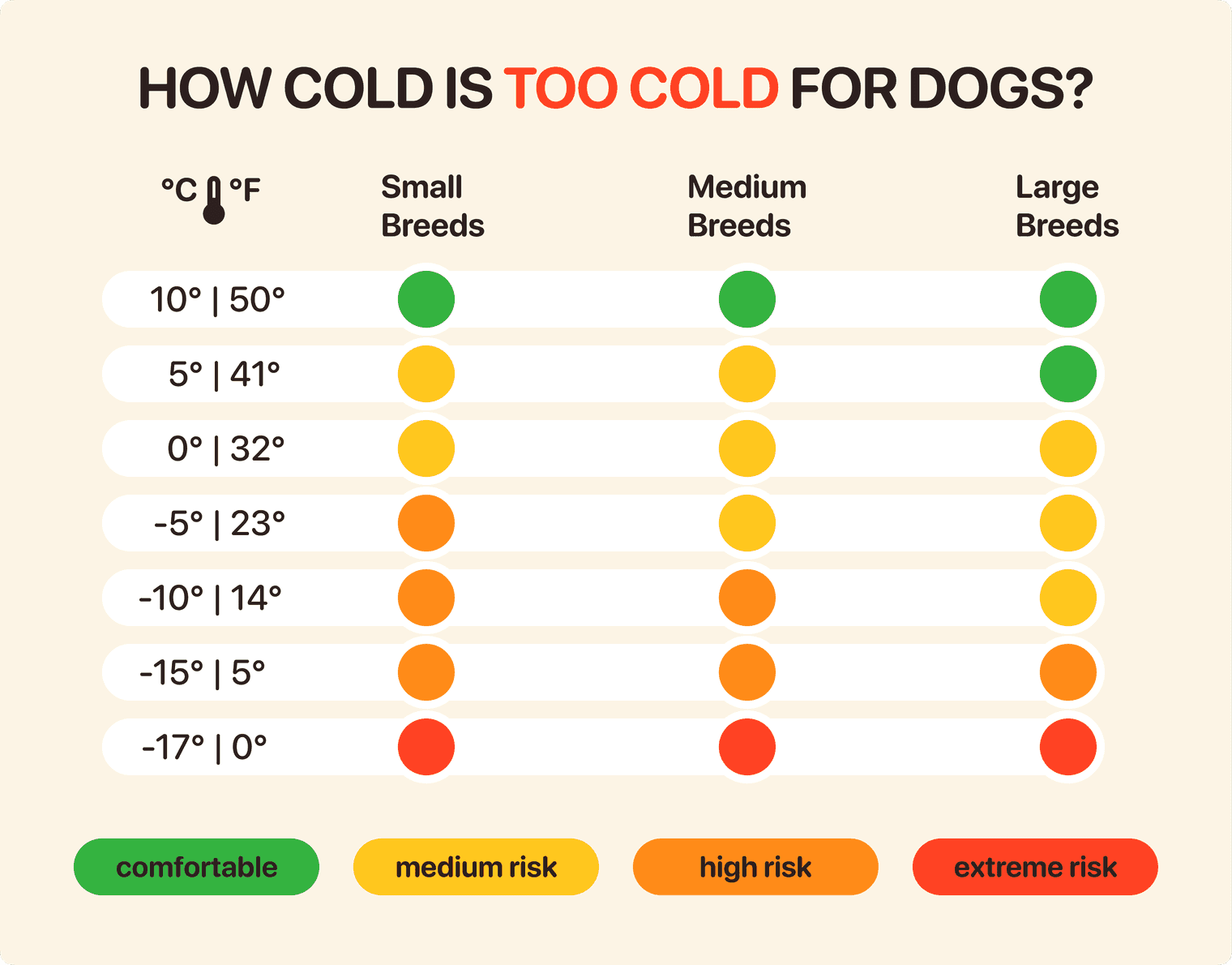
For most dogs, temperatures below 32°F can become risky, and temperatures near or below 20°F may create a serious risk of hypothermia or frostbite, especially for small, short-haired, young, old, or unhealthy dogs.
Across the United States, winter conditions can change quickly from mild mornings in southern states to freezing winds and snow in northern regions. A dog that is comfortable during a short walk in cool weather may become unsafe when exposed to freezing temperatures, wind, wet fur, or long outdoor periods.
The answer to how cold is too cold for dog health depends on more than the number shown on a thermometer. Breed, coat type, body size, age, health, activity level, and weather conditions all affect how well a dog can maintain body heat. Responsible winter care means watching the whole situation instead of relying on temperature alone.
Source: woofz.com
How Cold Is Too Cold For A Dog?
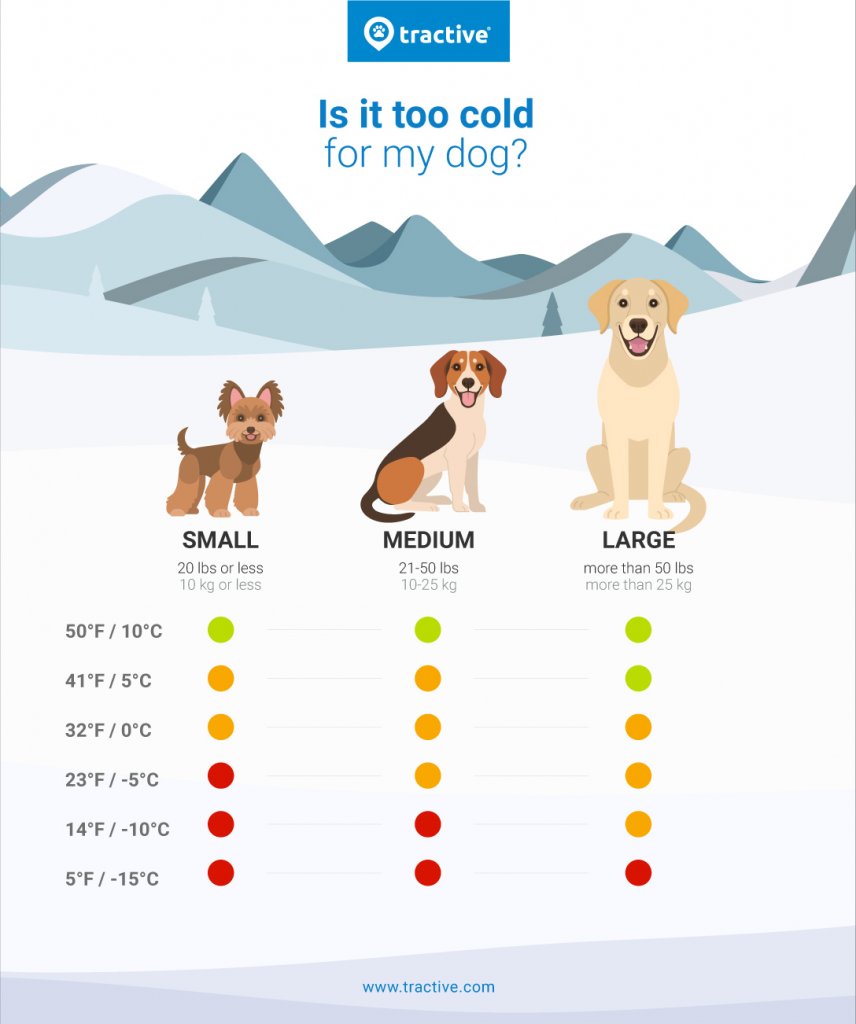
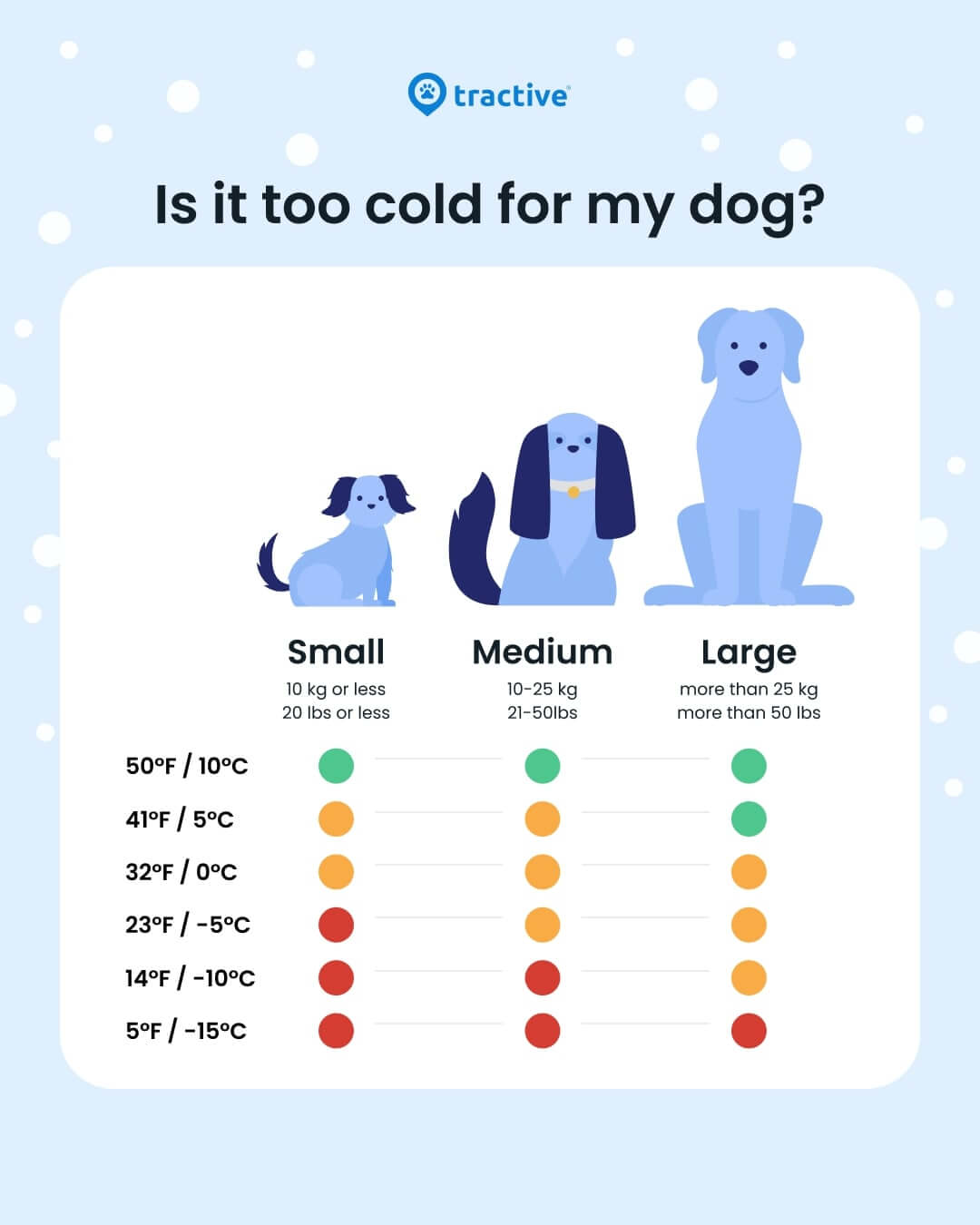
For many dogs, cold becomes a concern when temperatures approach freezing, but the exact danger point varies. A healthy large dog with a dense winter coat may tolerate conditions that would be unsafe for a small dog with thin fur. Temperature charts are useful guides, but they cannot replace observing the individual animal.
Cold injuries happen when a dog’s body loses heat faster than it can produce it. The body normally protects vital organs by maintaining core temperature, but prolonged exposure can overwhelm that system. Wet fur, strong wind, and inactivity can speed up heat loss.
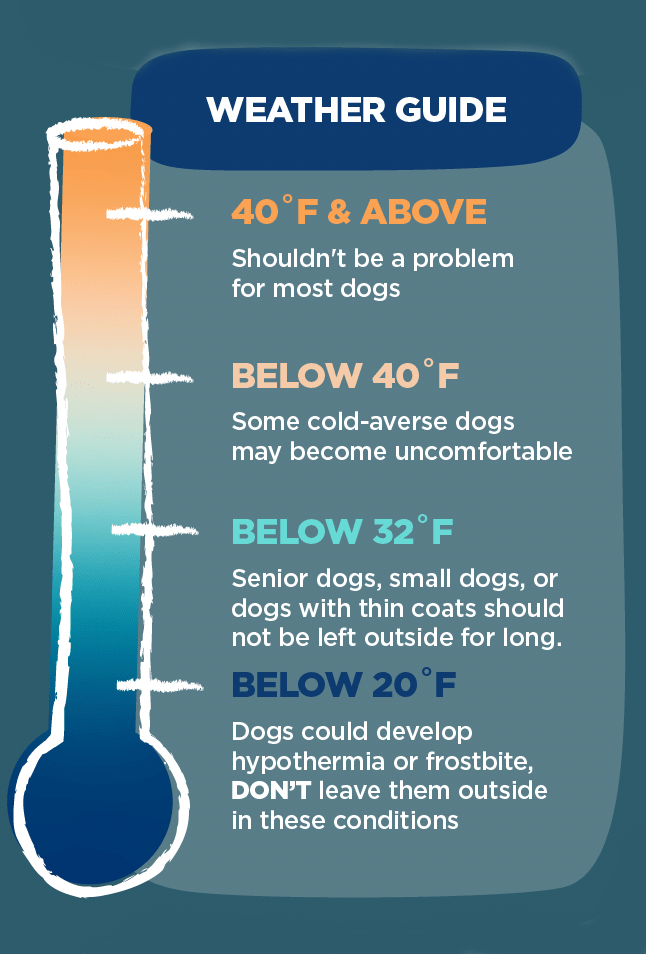
In practical terms, many owners should become more cautious below 32°F and avoid extended outdoor exposure near 20°F unless they have a specific reason and the dog is well suited for the conditions.
Source: tractive.com
Above 45°F
Most healthy dogs can usually handle this range, although individual needs still depend on breed, age, and weather conditions.
32°F to 45°F
Many dogs can enjoy outdoor activity, but smaller or sensitive dogs may need shorter walks and extra monitoring.
20°F to 32°F
Cold exposure becomes more concerning. Dogs with less cold protection may need limited outdoor time.
Below 20°F
Many dogs face increased risks of hypothermia and frostbite, especially during long exposure.
Why Temperature Alone Does Not Tell The Whole Story
A thermometer measures air temperature, but dogs experience weather differently. Wind can remove heat from the body faster, while rain, snow, and wet fur reduce the insulation provided by a coat. A calm 25°F day may feel very different from a windy, wet day at the same temperature.
Wind
Strong wind can increase heat loss by removing the layer of warm air around a dog’s body.
Moisture
Wet coats provide less insulation and can make dogs become cold more quickly.
Which Dogs Get Cold The Fastest?
Some dogs naturally handle cold weather better than others. Breeds developed for cold climates often have thick double coats and body features that help conserve heat. Dogs bred for warmer climates or indoor living may become uncomfortable much sooner.
A dog’s size also matters. Small dogs have less body mass to hold heat, so they can lose warmth faster than larger dogs. Puppies and senior dogs may also have more difficulty regulating body temperature.
Source: tractive.com
Small dogs
Toy breeds and small dogs often need extra protection because their bodies cool down faster.
Short-haired dogs
Dogs with thin coats have less natural insulation against cold air.
Senior dogs
Older dogs may have reduced ability to regulate temperature or may have health issues affected by cold.
Dogs with health problems
Medical conditions, low body weight, or weakness can reduce cold tolerance.
Cold Tolerant Dogs Are Not Cold Proof
Even northern breeds with heavy coats are not immune to cold injury. A thick coat helps, but it does not eliminate the risks caused by extreme temperatures, wet weather, wind, or long exposure. Every dog needs supervision in severe winter conditions.
Common misconception
A furry coat does not mean a dog can safely stay outside for unlimited periods.
Signs Your Dog Is Too Cold
Dogs often show early warning signs before cold exposure becomes an emergency. Paying attention to behavior changes can help owners bring a dog indoors before serious problems develop.
A dog that refuses to continue walking, repeatedly lifts paws, or searches for shelter may be communicating discomfort. These signals should be taken seriously, especially in freezing weather.
Source: itsadogz.life
Shivering
Shaking is a common response when the body tries to create more heat.
Paw lifting
Repeatedly raising paws may indicate discomfort from cold ground, ice, or salt.
Slow movement
A cold dog may become less active, tired, or unwilling to move.
Whining or anxiety
Dogs may vocalize or act differently when they are uncomfortable.
Signs Of Possible Hypothermia
Hypothermia occurs when body temperature drops below a safe level. Severe cases require veterinary attention because the condition can affect normal body functions.
Emergency warning signs
Extreme weakness, confusion, collapse, difficulty breathing, or loss of normal movement require urgent veterinary care.
How To Keep A Dog Safe In Cold Weather
The safest approach is to adjust outdoor time based on the dog’s needs and the current conditions. Winter care does not mean avoiding all outdoor activity. It means managing exposure and reducing preventable risks.
Before going outside, consider temperature, wind, moisture, the dog’s health, and the planned activity. A short bathroom break and a long outdoor play session have very different risk levels.
Source: foreverpuppy.co.uk
Limit exposure time
Shorten outdoor periods when temperatures drop or conditions become harsh.
Keep the dog dry
Dry fur helps maintain insulation and reduces heat loss.
Protect paws
Check paws after walks for ice, cracks, irritation, or chemicals from deicers.
Provide warm shelter
Dogs spending time outside need protection from wind, moisture, and cold surfaces.
Should Dogs Wear Coats In Winter?
A coat or sweater can help some dogs stay warmer, especially small, short-haired, or older dogs. However, clothing does not make every dog safe in severe cold. Owners should still limit exposure and monitor behavior.
Helpful for
Dogs with limited natural insulation that become uncomfortable quickly in cold weather.
Not a replacement
Winter clothing does not replace shelter, supervision, or safe temperature decisions.
Common Cold Weather Mistakes Dog Owners Make
Many winter problems happen because owners assume dogs experience cold the same way humans do. Dogs have different body sizes, coats, and needs, so a comfortable temperature for a person may not be comfortable for a pet.
Another common mistake is leaving a dog outside for long periods without checking changing conditions. Weather can shift quickly, especially overnight or during storms.
Source: i1.wp.com
Using breed alone as a guide
Individual health and body condition can change how a dog handles cold.
Ignoring wet weather
Rain, snow, and wet fur can make cold exposure more dangerous.
Waiting for severe symptoms
Early signs like shivering and discomfort should be addressed before they become emergencies.
Frequently Asked Questions
Q
Can dogs stay outside in 30 degree weather?
Some healthy dogs can handle short periods around 30°F, but safety depends on breed, size, coat, wind, moisture, and activity level. Dogs that are small, thin-coated, elderly, or sick may need to stay indoors sooner.
Q
What temperature is too cold for a dog walk?
There is no universal cutoff, but walks should become shorter and more carefully monitored as temperatures approach freezing. Below 20°F, many dogs face higher risks and owners should use extra caution.
Q
Do dogs feel cold like humans?
Dogs feel cold, but their tolerance differs from humans because coats, body size, and breed history affect insulation. A dog with a thick coat may handle cold better than a small short-haired dog.
Q
How can I tell if my dog is cold at night?
Signs include shivering, curled-up posture, restlessness, seeking warm areas, whining, and reduced activity. A dog outside overnight should always have suitable shelter and protection from weather.
Q
When should I call a veterinarian for cold exposure?
Contact a veterinarian if a dog shows severe weakness, collapse, confusion, breathing problems, or other signs of serious cold stress. Quick action can reduce the risk of complications.
✦ Wrapping Up
Conclusion
Knowing how cold is too cold for dog safety requires more than checking a single temperature number. The safest decision considers the dog’s size, coat, age, health, and the weather conditions outside.
Cold weather can be enjoyable for many dogs when owners provide proper limits and watch for warning signs. Shorter outdoor time, dry fur, protected paws, and careful observation can help prevent cold-related problems.
💡 Key Takeaway
Before every winter outing, check the weather, consider your dog’s individual needs, and bring your dog inside if you notice signs of discomfort or cold stress.