Why My Dog Eat Too Much? Causes, Warning Signs, and What to Do
If you keep asking, “why my dog eat too much,” you are not alone. Many dogs act as if every meal is their last. Some stare at the food bowl, beg during family meals, or search the kitchen after eating.
The key is to look at the whole picture. A dog that has always loved food may simply have a strong appetite. But a sudden change in hunger can also point to a health issue. Your dog’s age, size, activity, diet, weight, and other signs all matter.
Why My Dog Eat Too Much: Common Reasons
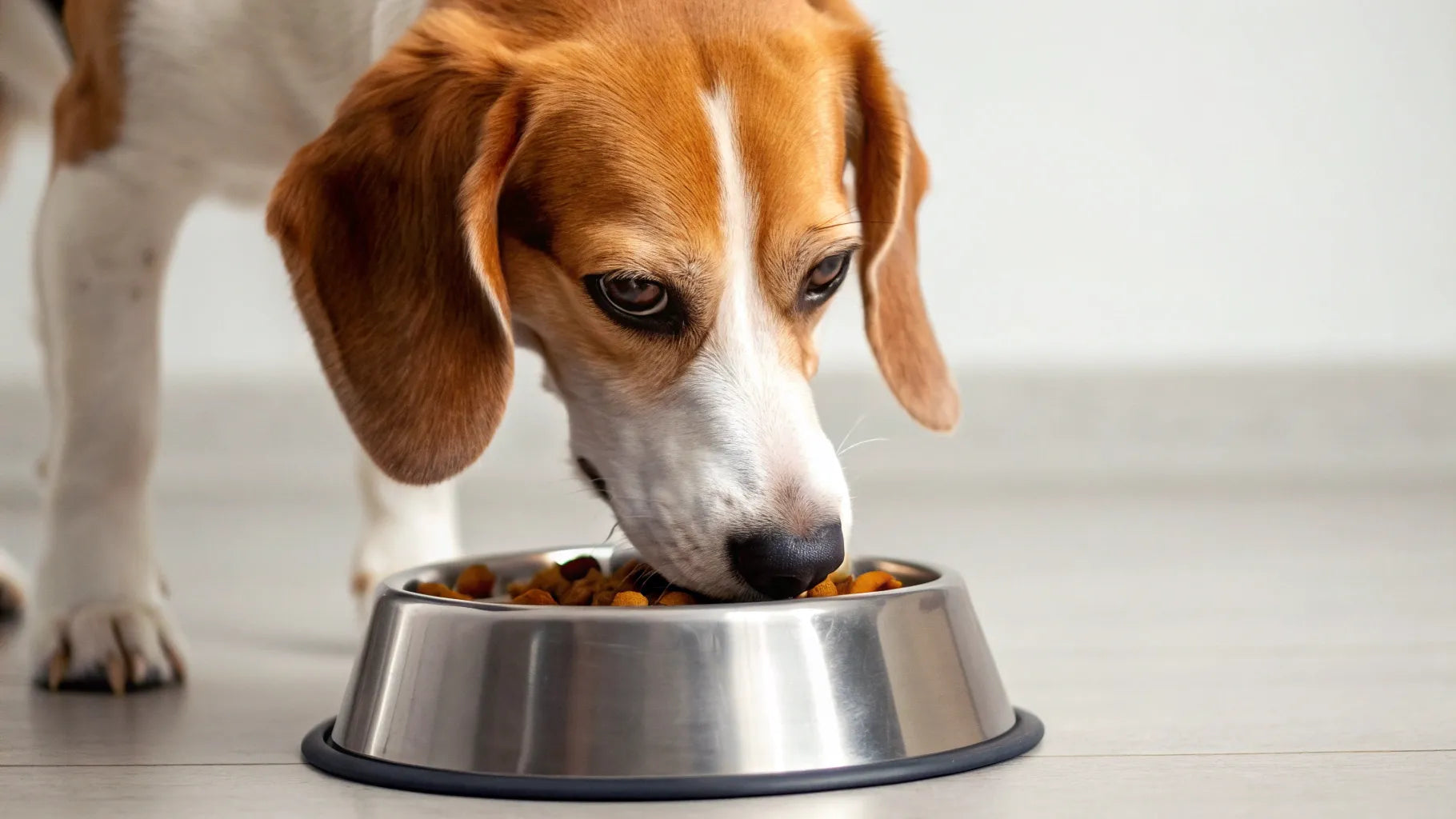
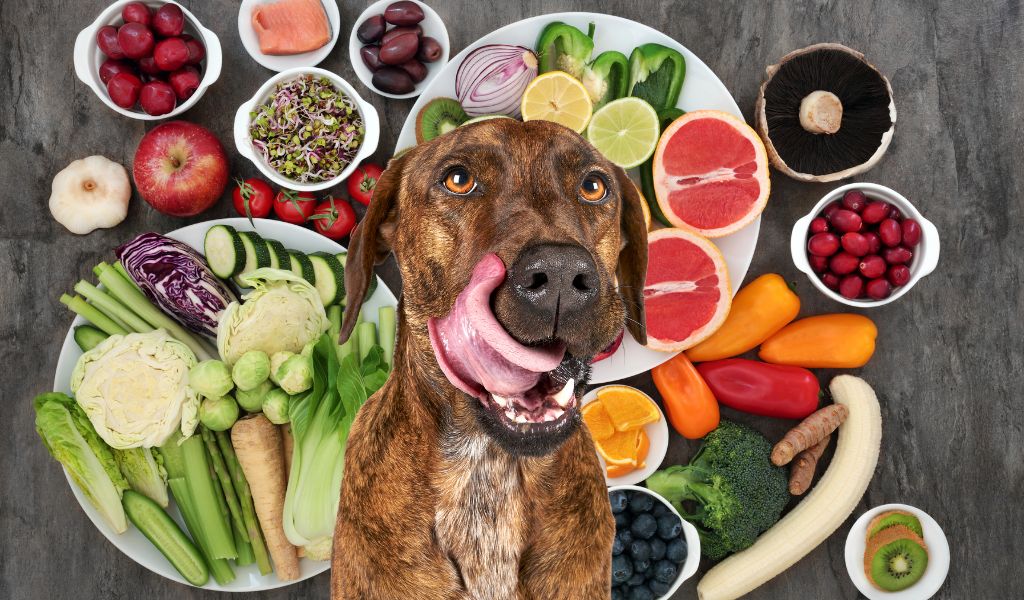
There is more than one answer to why my dog eat too much. Dogs are natural food seekers. Some will keep eating when food is available, even when they have had enough calories.
The first step is to check how much your dog eats in a full day. Include meals, treats, chews, table food, training rewards, and food given by other family members. Small extras can add up fast.
A dog can also eat more when food is low in calories or does not keep them satisfied for long. In other cases, the dog may be reacting to boredom, stress, or a change in routine.
- ✦ Strong food drive
Some dogs are very food motivated and will keep looking for food after a normal meal.
- ✦ Too many treats
Treats and snacks can raise daily calorie intake without making the main meal look larger.
- ✦ Boredom
A dog with too little play, exercise, or mental activity may seek food for something to do.
- ✦ Meal routine
Irregular feeding or free access to food can make it harder to control how much your dog eats.
- ✦ Health problems
Some medical conditions and medicines can increase appetite. A sudden change deserves more attention.
Your Dog May Simply Love Food
Some dogs have a strong food drive. They may finish a meal in seconds and still look for more. This does not always mean they need more food.
If your dog’s weight is stable, body shape is healthy, energy is normal, and appetite has stayed the same for a long time, a strong food drive may be part of the reason.
- ✦ Check the body
Look at your dog’s weight and body shape, not just how much food your dog wants.
- ✦ Track the pattern
Write down meals and snacks for several days. This can reveal how much food your dog gets in total.
Your Dog May Be Eating From Boredom
Dogs need more than food. They also need movement, play, training, sniffing, and time with people. A bored dog may search for food because it is an easy and rewarding activity.
- ✦ Add play
Use short play sessions during the day to give your dog another activity.
- ✦ Use food puzzles
Puzzle feeders can make meals take longer and give your dog a simple mental task.
Could Your Dog Be Getting Too Many Calories?
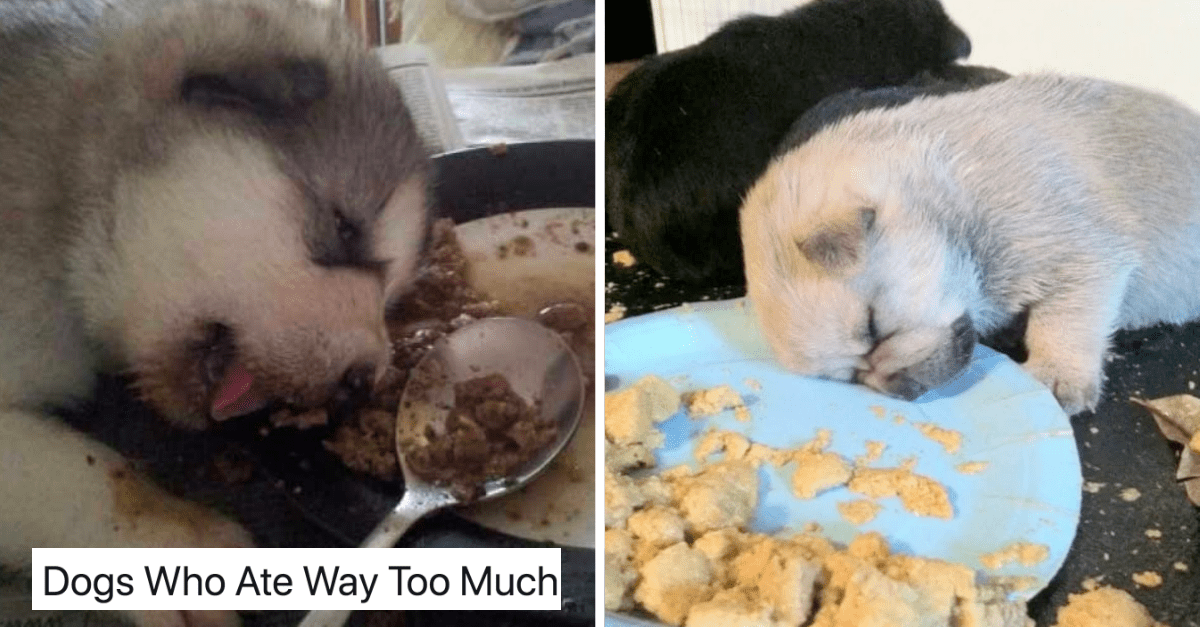
One of the most common reasons behind why my dog eat too much is simple: the dog may be getting more calories than the owner realizes. A scoop of kibble, a few treats, a dental chew, and bites from the dinner table can become a large daily total.
Food labels can also be easy to misunderstand. Feeding directions are general guides. Your dog’s needs depend on body size, age, activity, health, and whether the dog is spayed or neutered.
Measure food with a proper measuring cup or, even better, a kitchen scale when your veterinarian recommends precise portions. Avoid adding more food just because your dog begs.
- ✦ Count treats
Include training treats, biscuits, dental chews, leftovers, and small snacks in the daily food total.
- ✦ Measure meals
Do not guess portions by eye. Use a consistent measure for every meal.
- ✦ Limit table scraps
Human food can add many calories and may also contain ingredients that are unsafe for dogs.
- ✦ Review the diet
Ask your veterinarian if the food and portion match your dog’s current weight, age, and activity level.
How Treats Can Cause Overeating
Treats feel small, but several treats each day can add a meaningful amount of food. This is easy to miss when more than one person gives rewards.
Keep treats in one place and set a daily limit. You can also use part of your dog’s normal meal as training rewards instead of adding extra food.
- ✦ Make a daily treat plan
Set aside the day’s treats before training or play begins.
- ✦ Use small rewards
Tiny pieces can work well for training and may help control total calories.
Medical Reasons Your Dog May Always Be Hungry
If you are asking why my dog eat too much because the change is new, take it seriously. Some health problems can cause a dog to feel unusually hungry or eat more than normal.
Increased appetite is sometimes called polyphagia. It can occur with conditions such as diabetes mellitus, some intestinal problems, certain hormone disorders, and other illnesses. Some medicines, including corticosteroids, can also increase hunger.
A hungry dog is not automatically sick. Still, a sudden or strong increase in appetite is worth discussing with your veterinarian, especially when other signs appear.
- ✦ Diabetes
Increased hunger can occur with diabetes, often along with increased thirst and urination and changes in body weight.
- ✦ Cushing’s disease
Some dogs with Cushing’s disease develop increased appetite along with signs such as increased thirst, urination, panting, or a change in body shape.
- ✦ Intestinal problems
Poor digestion or nutrient absorption can affect weight and appetite in some dogs.
- ✦ Medication effects
Certain medicines can increase hunger. Tell your veterinarian about every medicine and supplement your dog takes.
- ✦ Other medical conditions
Many different health problems can affect appetite, so diagnosis should come from a veterinary exam rather than guesswork.
When Increased Hunger Is More Concerning
A sudden appetite change matters more when it happens with other changes. Weight loss despite eating more is especially important because it can point to a problem with how the body uses or absorbs nutrients.
Watch for changes in thirst, urination, energy, stool, vomiting, breathing, and body weight. Share these changes with your veterinarian.
- ✦ Weight loss
Losing weight while eating more is a reason to arrange a veterinary check.
- ✦ More thirst or urination
A clear increase in drinking or urination together with hunger should not be ignored.
- ✦ Digestive signs
Repeated vomiting, diarrhea, or major stool changes need veterinary attention.
- ✦ Sudden behavior change
A sharp change from normal eating habits can be more important than a lifelong love of food.
Why Dogs Eat Too Fast and Still Act Hungry
Eating fast can make a dog seem even hungrier. A dog that gulps food may finish before the body has had time to respond to the meal. Fast eating can also cause swallowing air and stomach upset.
Some dogs learned to eat quickly because they had to compete for food in the past. Others simply have a strong food drive. Whatever the reason, slowing the meal can make feeding safer and more engaging.
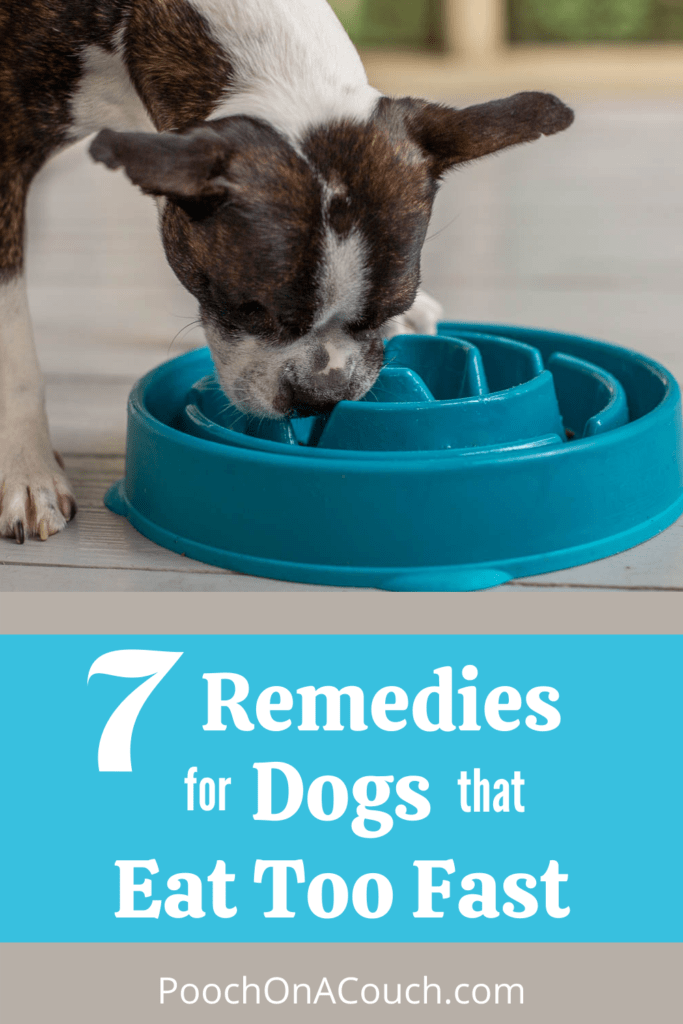
- ✦ Slow feeder
A slow-feeder bowl can make kibble harder to gulp down.
- ✦ Puzzle toy
A suitable food puzzle can turn part of a meal into a simple activity.
- ✦ Smaller meals
Splitting the daily food amount into several meals may help some dogs feel more satisfied.
- ✦ Calm feeding area
Feed your dog in a quiet place if noise or competition makes the dog rush.
Can Eating Too Fast Be Dangerous?
Fast eating can lead to choking, vomiting, and stomach discomfort. In some dogs, especially large and deep-chested dogs, rapid eating is one factor linked with a serious condition called gastric dilatation-volvulus, or GDV.
If your dog has a swollen or tight belly, repeated unproductive attempts to vomit, severe restlessness, weakness, collapse, or trouble breathing after eating, seek emergency veterinary care at once.
- ✦ Watch for a swollen belly
A sudden swollen abdomen after eating can be an emergency.
- ✦ Watch for dry heaving
Repeated attempts to vomit without bringing anything up require urgent veterinary attention.
How to Tell If You Are Feeding Your Dog Too Much
Your dog’s food bowl does not tell the full story. Body condition is more useful than appetite alone. A dog can beg for food and still be getting enough calories.
Look at your dog’s waist and ribs from several angles. Your veterinarian can help you assess body condition and set a healthy weight goal for your individual dog.
Do not put a dog on a strict diet without professional guidance, especially if the dog is a puppy, senior, pregnant, nursing, underweight, or has a health problem.
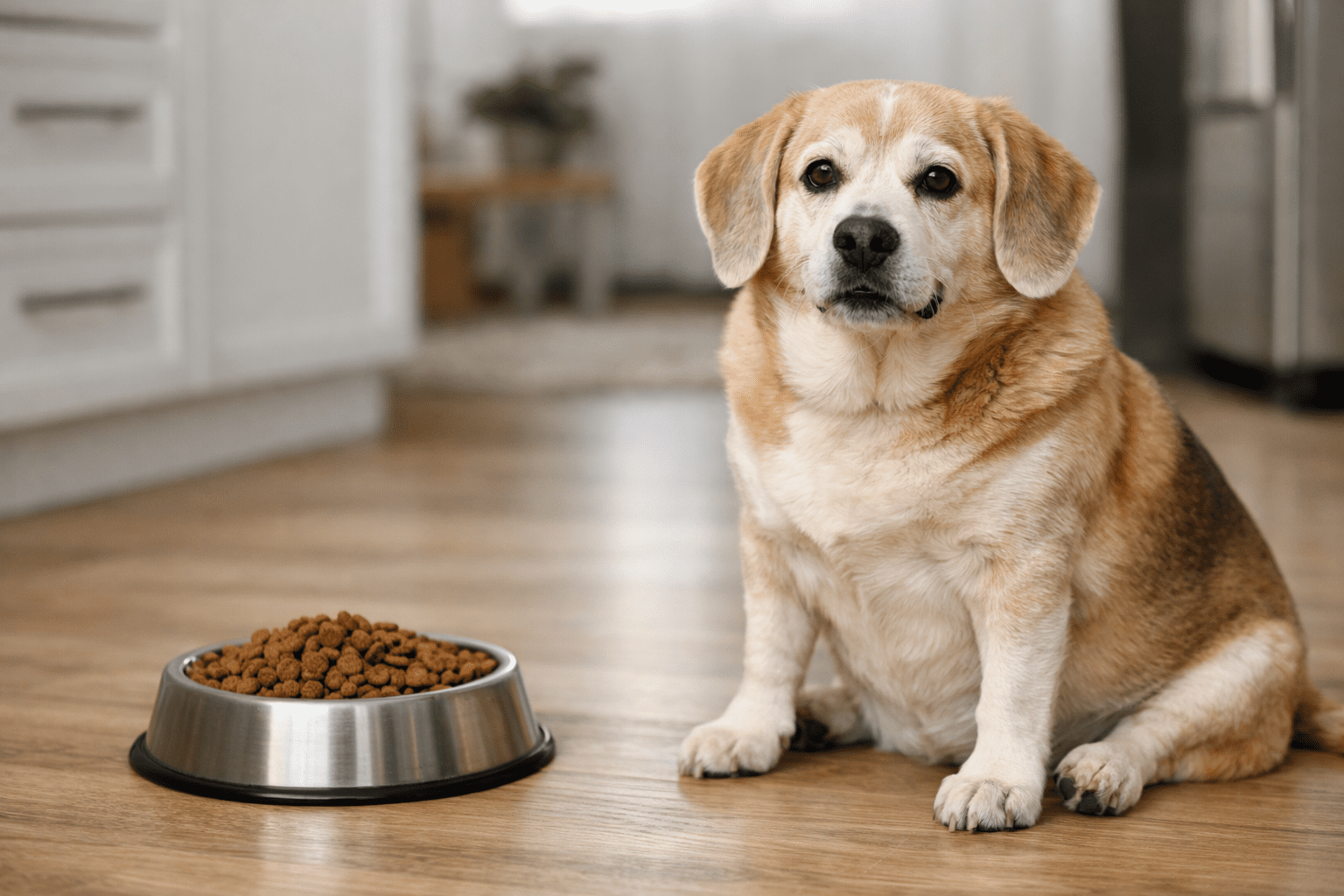
- ✦ Ribs
You should be able to feel the ribs without pressing hard, although the ideal amount of cover varies by dog.
- ✦ Waist
When viewed from above, a healthy dog’s waist should usually be visible behind the ribs.
- ✦ Abdominal tuck
From the side, the belly usually rises behind the rib cage rather than hanging straight down.
- ✦ Weight trend
A steady increase in weight can show that daily calorie intake is too high.
Why Begging Does Not Always Mean Hunger
Dogs learn that begging can lead to food. If barking, staring, pawing, or sitting near the table has worked before, your dog may repeat it even after a full meal.
Try rewarding calm behavior with praise, play, attention, or a small planned treat. Everyone in the home should follow the same rule.
- ✦ Reward calm behavior
Give attention when your dog settles instead of rewarding repeated begging.
- ✦ Keep family rules clear
Ask everyone in the home to follow the same feeding plan.
What to Do If Your Dog Eats Too Much Food
If your dog ate one larger meal than normal, do not panic. The right response depends on how much was eaten, what the food was, your dog’s size, and whether any symptoms are present.
Do not make your dog vomit unless a veterinarian or animal poison professional specifically tells you to do so. Some foods and objects can cause more harm when brought back up.
Remove access to more food and monitor your dog closely. If your dog ate a very large amount, ate something toxic, or develops concerning signs, contact a veterinarian or emergency animal hospital.
- ✦ Remove extra food
Keep your dog away from the food source so the dog cannot eat more.
- ✦ Check what was eaten
Identify the food, amount, and approximate time if you can.
- ✦ Watch for symptoms
Look for repeated vomiting, severe belly swelling, pain, weakness, collapse, or breathing trouble.
- ✦ Call your veterinarian
Get professional advice when the amount was large, the food was unsafe, or your dog shows concerning signs.
Foods That Can Be Dangerous for Dogs
Eating too much is not the only concern. Some human foods can be toxic to dogs even in small amounts. Chocolate, grapes and raisins, onions and garlic, xylitol, alcohol, and some other foods can cause serious problems.
If your dog ate a potentially toxic food, do not wait for symptoms before asking for help. Have the package, ingredient list, or food name ready when you call.
- ✦ Chocolate
Chocolate can be harmful to dogs, and risk depends on the type and amount eaten.
- ✦ Grapes and raisins
These foods can cause serious kidney problems in dogs.
- ✦ Xylitol
This sweetener can cause dangerous low blood sugar and other serious effects in dogs.
- ✦ Onions and garlic
Members of the allium family can damage red blood cells and cause illness.
How to Help Your Dog Stop Eating Too Much
Once you understand why my dog eat too much, you can work on the cause. The goal is not to make your dog feel hungry. The goal is to provide the right amount of food while meeting the dog’s physical and mental needs.
Start with a simple routine. Measure the daily food amount, divide it into planned meals, control treats, and give your dog regular exercise and mental activity.
If your dog is overweight, make changes slowly with veterinary guidance. A safe weight plan should protect muscle while reducing excess body fat.

- ✦ Use measured meals
Measure every meal rather than filling the bowl based on how hungry your dog looks.
- ✦ Set treat limits
Plan treats as part of the daily routine instead of giving them whenever your dog begs.
- ✦ Add daily activity
Use walks, play, sniffing games, and age-appropriate exercise to support a healthy routine.
- ✦ Make meals last
Try a suitable slow feeder or puzzle feeder if your dog eats too fast.
- ✦ Keep food secure
Store pet food and human food where your dog cannot reach them.
- ✦ Track weight
Regular weight checks can show whether the feeding plan is working.
Create a Simple Feeding Routine
A regular schedule can make feeding easier for both you and your dog. Feed measured portions at planned times and avoid adding food just because your dog asks.
For dogs that seem hungry between meals, ask your veterinarian whether splitting the same daily amount into more meals would be suitable. Never increase the total amount without checking the dog’s needs.
- ✦ Keep the daily amount fixed
Divide the planned daily amount across meals instead of adding extra portions.
- ✦ Use part of meals for training
Reserve some regular food for training to avoid adding many extra calories.
When to Call a Veterinarian About Increased Appetite
If your dog has always been food focused and is otherwise healthy, the issue may be related to feeding habits. But a new or intense appetite change deserves more attention.
Your veterinarian can review your dog’s diet, weight, medicines, lifestyle, and symptoms. If needed, the vet may recommend tests to look for a medical cause.
Bring a simple food diary to the visit. Include meals, treats, chews, table food, supplements, and any changes in thirst, urination, stool, vomiting, energy, or weight.
- ✦ Sudden increased hunger
Contact your veterinarian when your dog’s appetite changes sharply without an obvious reason.
- ✦ Eating more but losing weight
This combination can signal a health problem and should be checked.
- ✦ Increased thirst or urination
These signs together with increased hunger warrant a veterinary assessment.
- ✦ Repeated vomiting or diarrhea
Ongoing digestive problems can affect nutrition and should not be ignored.
- ✦ Severe symptoms after overeating
A swollen belly, repeated dry heaving, collapse, severe weakness, or breathing trouble can require emergency care.
What Your Veterinarian May Ask
Expect questions about when the appetite changed and how much your dog eats each day. Your veterinarian may also ask about weight changes, drinking, urination, stool, vomiting, exercise, and medicines.
Accurate details can make the visit more useful. If possible, measure food for several days before the appointment and keep notes about unusual behavior.
- ✦ Diet history
Record the food type, meal size, treats, chews, and table food.
- ✦ Symptom history
Note changes in weight, thirst, urination, stool, vomiting, energy, and behavior.