Why Do Hound Dogs Have Long Ears: The Real Reason
For dog owners in the United States, long ears are one of the clearest signs of a hound breed. Bloodhounds, Basset Hounds, Beagles, and many American Coonhounds often have ears that hang far below the jaw. These ears likely help scent hounds keep odors near the nose while they track, but ear length also comes from selective breeding, breed standards, and inherited body shape.
The ears do not work like a special antenna. A hound finds scent with its nose, not its ears. The long ear flap may help shape the air around the face and move scent from the ground toward the nostrils. This idea fits the way scent hounds work, but the exact effect of ear length has not been proven in controlled tests for every breed.
Long ears also come with a cost. They reduce airflow in the ear canal and can hold in heat and moisture. That is why breeds with floppy ears may need more regular ear checks than dogs with upright ears.

How Long Ears May Help a Hound Follow Scent
Long, loose ears may help a hound track a scent trail close to the ground. The ear flaps can brush through grass, leaves, and soil as the dog moves. Their movement may disturb small pockets of scented air and guide some of that odor toward the dog’s nose.
This is often called the scent-funnel theory. It is a useful explanation, but it should not be treated as a proven rule. Scientists have not shown that every long-eared hound tracks better than every short-eared dog.
A hound’s main tracking tools are still:
- A large and highly sensitive nose
- A strong desire to follow scent
- The ability to separate one odor from many others
- A body built for steady movement
- Breeding selected for tracking work
The ear flap may support these traits. It does not replace them.
Why scent hounds work close to the ground
Many scent hounds follow odor left on soil, plants, pavement, or other surfaces. A dog with its nose low can detect these odor particles more easily than a dog searching high in the air.
Long ears may add to this low-to-the-ground design. As the dog moves, the ears can sweep near the trail. The ears may also help limit crosswinds around the face, although the strength of this effect can change with wind, terrain, coat, and speed.
The nose remains the key organ. A Bloodhound’s tracking skill comes from its olfactory system, brain, training, and inherited behavior—not from its ears alone.

Why Were Hound Ears Selectively Bred to Be Long?
Breeders selected hounds for useful work, appearance, and temperament over many generations. In some lines, long ears became part of the body design linked with trailing game or finding people. Once a trait became common in a breed, breed standards helped preserve it.
Selective breeding can affect several traits at once. A dog bred for slow, careful tracking may also develop:
- A low head carriage
- Loose skin around the face
- A long muzzle
- Large nasal passages
- A deep chest
- A calm, persistent working style
- Long, pendulous ears
These traits do not have the same function in every breed. A Bloodhound and a Basset Hound both have long ears, but they were developed for different jobs and body types.
Long ears and breed identity
Long ears also help define what a breed looks like. The American Kennel Club breed standards describe the ear shape, set, length, and texture for recognized breeds. These standards guide responsible breeding, but they do not prove that a particular ear length improves tracking.
Examples include:
- Bloodhound: Very long, thin ears that hang low along the head.
- Basset Hound: Long ears combined with short legs and a heavy body.
- Beagle: Medium-to-long ears that help create its familiar hound profile.
- Coonhounds: Long, hanging ears suited to breeds developed for trailing and treeing game.
- American Foxhound: Drop ears that support the classic foxhound outline.
The exact shape varies by breed. Some hounds have long, narrow ears. Others have broad, rounded ears. Some have ears that reach the nose, while others have ears that end near the jaw.

Do Long Ears Improve a Dog’s Hearing?
No. Long ears do not usually mean better hearing.
A dog hears through the outer ear, middle ear, and inner ear. The movable outer ear helps collect and direct sound toward the ear canal. Upright ears can often aim toward a sound more easily than heavy, hanging ears.
A floppy ear may cover part of the ear opening. This can change how sound enters the canal, but it does not make the dog deaf. Hounds can still hear well and may use hearing to detect prey, people, vehicles, and other dogs.
The main difference is ear movement. A German Shepherd can point its ears toward a sound. A Basset Hound has less ability to aim its heavy ear flaps in the same way.
Long ears are therefore linked more closely to scent work and breed history than to improved hearing.
Do long ears help a dog communicate?
Dogs use ear position as part of body language. A hound with hanging ears has fewer visible ear movements than a dog with upright ears. Owners should therefore read the ears along with:
- Tail position
- Mouth and lips
- Eye shape
- Head position
- Body tension
- Weight shift
- Vocal sounds
A Basset Hound may show interest by raising the base of the ears, turning the head, or changing its posture. A relaxed dog may still have ears that look low and sad.
Why Do Some Hounds Have Droopy Skin and Long Ears?
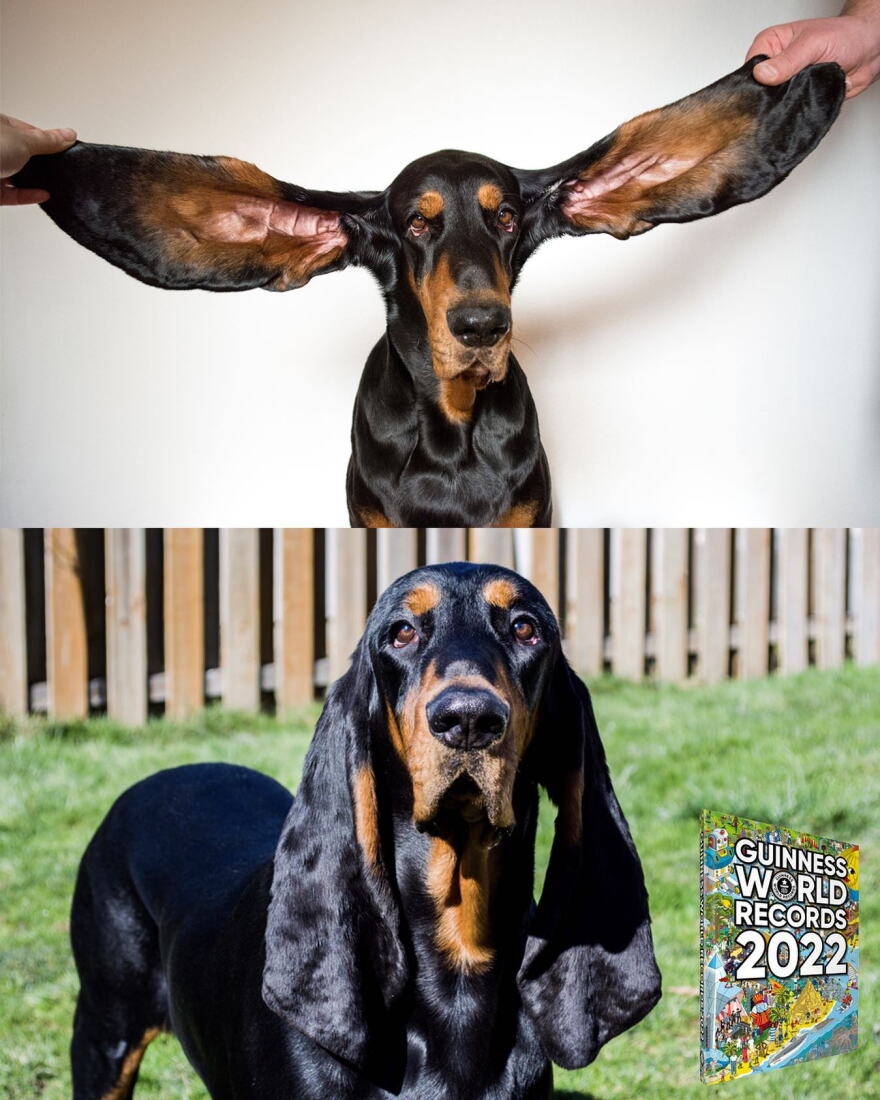
Loose skin and long ears often appear together because breeders selected a whole body type, not one trait in isolation. Bloodhounds are a clear example. Their loose facial skin, deep wrinkles, long ears, and large frame form a recognizable breed pattern.
Loose skin may help protect the face during difficult work through brush or rough terrain. It can also affect how the dog carries scent near its nose. However, claims that wrinkles or skin folds always improve tracking are not firmly established.
In some hounds, the loose skin is mainly a result of breed genetics and appearance. It may not provide a direct working advantage.
This distinction matters. A feature can be useful in the original job of a breed and still become more exaggerated through show breeding. It can also remain in a breed after the original work becomes less common.

Do Long-Eared Hounds Have More Ear Problems?
They can. A long, folded ear may reduce air movement around the ear canal. It can also hold moisture, wax, dirt, and debris against the skin. These conditions can support inflammation or infection.
Common signs of an ear problem include:
- Frequent scratching
- Head shaking
- Redness
- Bad odor
- Swelling
- Dark, yellow, or bloody discharge
- Pain when the ear is touched
- Tilting the head
- Loss of balance
A dog with these signs should be examined by a veterinarian. Ear infections can involve yeast, bacteria, parasites, allergies, foreign objects, or deeper parts of the ear. These causes need different treatments.
Safe ear care for a long-eared dog
Check the ears often, especially after swimming, bathing, hiking, or running through wet grass. Look at the ear flap and the visible opening. Do not push a cotton swab deep into the canal.
Use an ear cleaner only if your veterinarian recommends it for your dog. Avoid alcohol, hydrogen peroxide, vinegar mixtures, essential oils, and leftover medicine. These products may irritate an inflamed ear or make the problem harder to diagnose.
A basic care routine may include:
- Lift each ear flap and look for redness, dirt, swelling, or discharge.
- Smell for a new or strong odor.
- Keep the outer ear dry after water exposure.
- Use only a veterinary-approved cleaner and method.
- Stop if the dog shows pain.
- Contact a veterinarian when signs persist or return.
Do not pluck ear hair unless a veterinarian or groomer gives a specific reason. Removing too much hair can irritate the canal. The right approach depends on the dog’s ear structure and medical history.

Long Ears Can Affect Daily Comfort and Safety
Long ears may drag through food and water. They can also catch on branches, collect burrs, or become wet during walks. A simple routine can prevent many small problems.
For meals, some owners use a narrow, deep bowl that keeps the ear flaps outside the food. A washable ear snood may help in certain cases, but it should fit loosely and should not stay on a dog without supervision.
After outdoor activity, check for:
- Foxtails and other plant material
- Burrs
- Mud
- Moisture
- Scratches on the ear flap
- Insect bites
Never pull out a deeply lodged object. A veterinarian may need to remove it safely, especially if the dog is shaking its head or seems painful.
Long ears can also affect grooming. Brush the outer ears gently and keep mats from forming near the base. Do not cut the ear flap without guidance, since the flap contains blood vessels and can bleed heavily from a small cut.

Do Long-Eared Hounds Smell More Than Other Dogs?
Not necessarily. A dog’s odor usually comes from skin oils, trapped moisture, ear disease, dental disease, skin folds, or an unclean coat. Long ears can contribute to odor when they hold moisture or when an ear infection develops.
A healthy hound should not have a strong, rotten, or sour ear smell. A new odor is a reason to inspect the ears.
Hounds may also seem “smellier” because they often have:
- Oily coats
- Loose skin
- Facial folds
- Drooling
- Outdoor lifestyles
- Strong natural dog odor
These traits vary by breed and individual. Odor alone cannot diagnose an ear infection, but odor combined with scratching, redness, or discharge deserves veterinary attention.
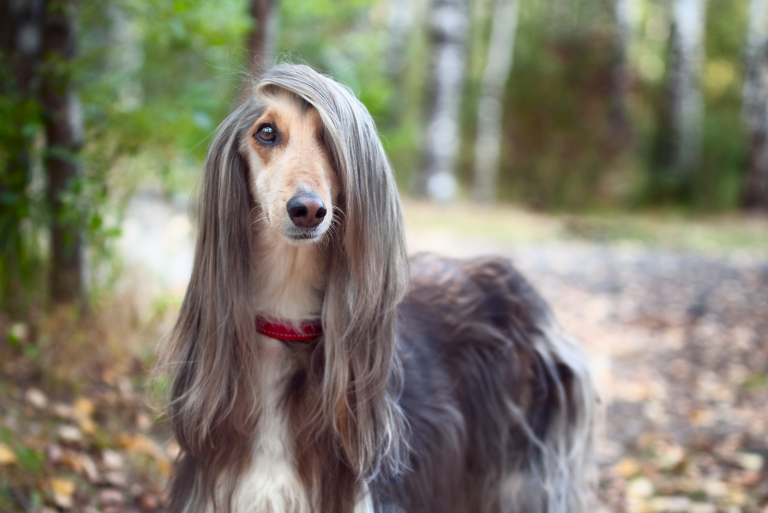
Long Ears Do Not Make Every Hound a Better Tracker
A common mistake is to assume that ear length predicts tracking ability. It does not.
Tracking skill depends on many factors, including:
| Factor | Why it matters |
|---|---|
| Nose and olfactory system | Detects and processes odor |
| Genetics | Influences scent drive and working behavior |
| Training | Teaches the dog how to follow a trail |
| Weather | Changes how odor moves and lasts |
| Ground surface | Holds scent differently on soil, grass, pavement, and water |
| Wind | Carries odor away from the trail |
| Age and health | Can affect stamina and smell |
| Motivation | Determines whether the dog keeps working |
A short-eared dog can have an excellent nose. A long-eared dog may have little interest in tracking. The ear is one visible part of a much larger system.
Breed labels also do not guarantee working performance. A dog from a working line may have different abilities and drive than a dog bred mainly for companionship or the show ring.

Frequently Asked Questions
Why do Bloodhounds have such long ears?
Bloodhounds were bred for scent trailing. Their long ears are part of their inherited breed design and may help move or hold scent near the nose as they work close to the ground. Their tracking ability mainly comes from their nose, brain, training, and strong scent drive.
Do long ears help dogs smell better?
They may help shape airflow around the face, but long ears do not directly improve the nose. The scent-funnel explanation is plausible, yet the exact benefit has not been proven for every hound breed.
Why are Basset Hounds’ ears so long?
Basset Hounds were developed as low-slung scent hounds. Their long ears fit with their short legs, low head position, and tracking style. Their body shape also reflects generations of selective breeding.
Should I clean my hound’s ears every day?
Not unless a veterinarian tells you to do so. Overcleaning can irritate the ear canal. Check the ears regularly and clean them only with a product and schedule suited to your dog.
Can long ears cause hearing loss?
Long ears alone do not usually cause hearing loss. Ear infections, injury, age-related change, inherited conditions, and blocked ear canals can affect hearing. A veterinarian should assess a dog that does not respond to sound or shows ear pain.
Key Takeaways
- Hound dogs have long ears because of selective breeding, breed history, and inherited body structure.
- Their ears may help keep scent near the nose while the dog tracks close to the ground.
- The scent-funnel idea is reasonable but is not proven as the sole reason for long ears.
- Long ears do not automatically improve hearing or make a dog a better tracker.
- Floppy ears can hold moisture and debris, so regular checks are useful.
- Redness, pain, odor, discharge, or repeated head shaking requires veterinary advice.
Conclusion
Long ears are part of the hound’s working design, but they are not the whole explanation for a hound’s tracking skill. They may help move scent near the nose, while selective breeding created the long-eared look seen in Bloodhounds, Basset Hounds, Beagles, and Coonhounds.
For owners, the practical lesson is simple: enjoy the breed feature, but monitor it. Keep the ears dry, check them often, and seek veterinary care when pain, odor, discharge, or head shaking appears.