Why Do Dogs Nibble When You Scratch Them: The Real Reason
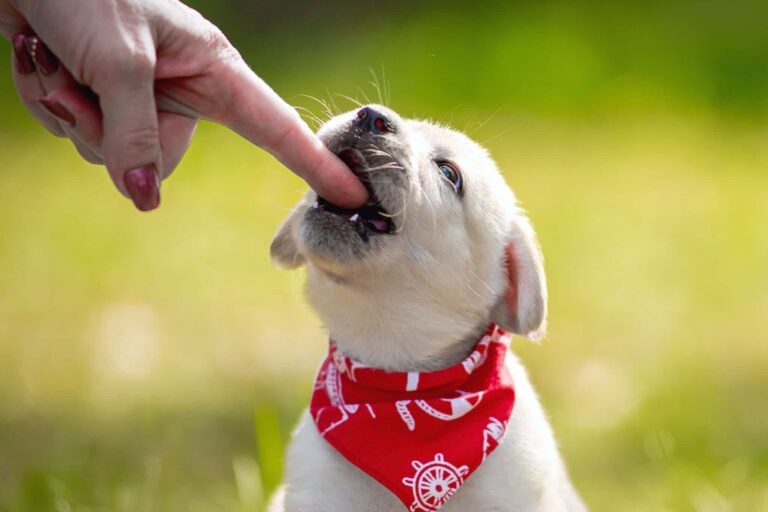
For many dog owners in the United States, a gentle scratch behind the ears, on the chest, or near the base of the tail may lead to tiny nibbles. This behavior is often normal. Dogs may nibble because they are grooming you, showing playful excitement, seeking attention, or reacting to a sensitive skin spot.
The meaning depends on the whole body, not the nibble alone. A relaxed dog with soft eyes and a loose tail may be enjoying the contact. A stiff dog that licks its lips, turns away, growls, or bites harder may feel stressed or uncomfortable.

What does a dog nibble mean?
A dog nibble is a light use of the front teeth. It is different from a hard bite, snap, or sustained chewing. Dogs may use this small, controlled movement to groom, play, communicate, or respond to touch.
The same action can have different meanings in different dogs. Watch what happens before and after the nibble:
- Does your dog move closer?
- Is the body loose or stiff?
- Does the dog invite more touch?
- Does the dog stop when you stop?
- Is the pressure gentle or painful?
- Does the behavior happen only in one spot?
A relaxed body usually points to a social or playful reason. A tense body, sudden change, or strong bite calls for caution.
Common meanings at a glance
| What you see | Likely meaning | What to do |
|---|---|---|
| Soft body, wagging tail, relaxed mouth | Enjoyment or social grooming | Continue gently if the dog stays relaxed |
| Quick nibbles during play | Excitement or play behavior | Pause and redirect to a toy |
| Nibble, then pawing or staring | Attention seeking | Reward calm behavior instead |
| Nibble only near the tail, hips, or ears | Itch, pain, or skin irritation | Check the area and call a veterinarian if needed |
| Stiff body, lip licking, growling, or hard bite | Stress, fear, or discomfort | Stop touching and give the dog space |
The most useful question is not, “Does my dog love me?” It is, “What is my dog’s body saying right now?”

Why do dogs nibble when you scratch them?
Dogs may nibble during scratching for several reasons. The most common are social grooming, play, attention seeking, a touch-triggered reflex, and skin discomfort.
1. Your dog may be grooming you
Dogs use their mouths for social grooming. In a household, a dog may treat a person as part of its social group. A light nibble can be similar to the small tooth movements dogs use when grooming fur.
This does not prove that the dog is trying to “clean” you. It is a reasonable behavior interpretation when the dog is calm, gentle, and focused on your hand or arm.
Some dogs also nibble their own fur or another dog’s fur during grooming. Gentle mouth movements may become part of their normal social routine.
2. Your dog may be excited by pleasant touch
Scratching can raise a dog’s level of excitement. The dog may enjoy the sensation but become more active at the same time. This can lead to mouthing, pawing, licking, or small nips.
Excitement is not always the same as happiness. A dog can want more interaction and still become too aroused to use good control. This is common during petting, greetings, and play.
If the nibbles get stronger or faster, stop for a few seconds. Offer a toy when play resumes. This teaches the dog that gentle behavior keeps the interaction going.
3. Your dog may be asking for attention
Dogs quickly learn which actions make people respond. If nibbling makes you talk, laugh, push the dog away, or scratch a favorite spot, the behavior may be rewarded by attention.
The dog may not understand that you dislike the nibble. From the dog’s view, the action worked: it caused a response.
You can reduce attention-seeking nibbles by doing the following:
- Stop moving your hand.
- Calmly end the contact for a moment.
- Wait for four paws to remain on the floor.
- Resume petting or offer a toy.
- Praise calm contact.
Avoid yelling or rough pushing. These reactions may increase excitement or create fear.
4. Touch may trigger a scratch or grooming response
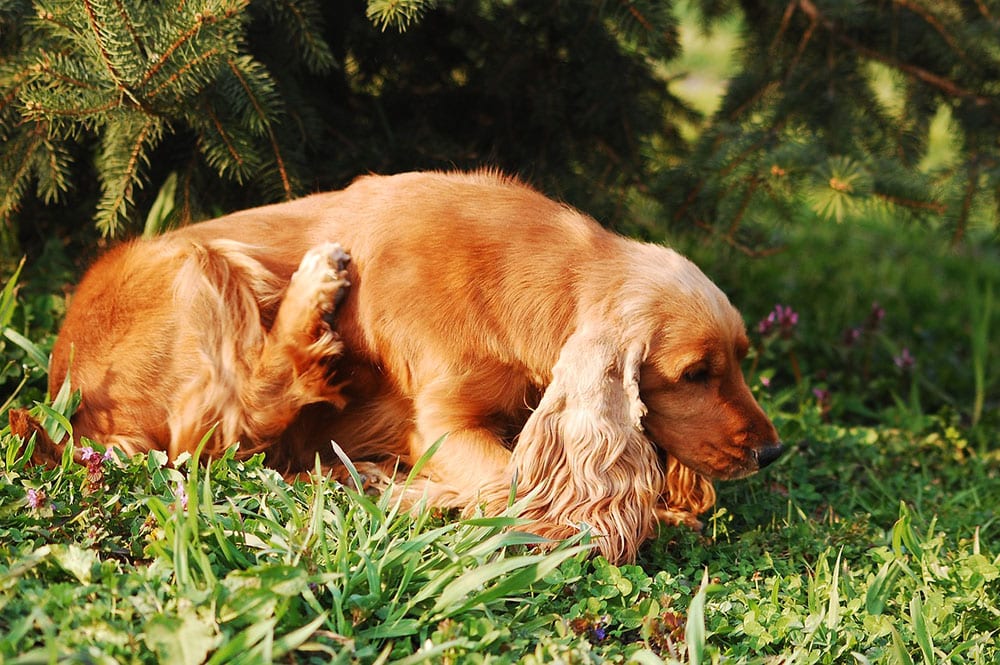
Some body areas are more sensitive than others. Scratching near the neck, chest, shoulders, or lower back may cause an automatic movement. A dog may turn toward the hand, lick, nibble, or scratch with a hind leg.
This can resemble a reflex, but not every nibble is a true reflex. It may also be learned behavior or a sign that the area feels itchy.
If the response is brief and the skin looks healthy, it may be harmless. If the dog repeatedly seeks the same spot, scratches often, or has red skin, hair loss, flakes, odor, or sores, consider a medical cause.
5. The skin may itch or hurt
A dog that nibbles only when you touch one area may be reacting to discomfort. Common causes include:
- Fleas or other external parasites
- Allergies
- Dry or inflamed skin
- A small wound
- A hot spot
- Ear irritation
- Joint or muscle pain
- A foreign object in the coat
- Infection
Dogs can hide pain. A small nibble may be an early clue, especially if the behavior is new.
Do not press hard on a sore area. Part the fur only if your dog allows it without stress. Look for swelling, redness, scabs, discharge, heat, or a change in skin odor. Contact a veterinarian if you find a problem or if the behavior continues.
6. Your dog may be using playful mouth behavior
Puppies explore with their mouths. Adult dogs may also use gentle mouthing during play. Scratching can shift into play if the dog becomes excited.
Playful behavior often includes:
- A loose, wiggly body
- A play bow
- Bouncy movements
- A relaxed, open mouth
- Short pauses
- An easy response when you stop
Even friendly mouthing can hurt or become a habit. Do not allow a behavior that may be unsafe with children, guests, or people who are afraid of dogs. Use a toy or a short training break instead.
How can you tell if your dog likes the scratching?
A dog that likes the interaction usually has a loose body and chooses to stay near you. The dog may lean into your hand, move closer when you pause, or offer another body area for contact.
Look for these signs:
- Soft eyes
- Relaxed ears
- Loose muscles
- A natural tail position
- Leaning into your hand
- A gentle wag
- Choosing to remain beside you
- Returning for more contact after a pause
These signs are more useful than a wagging tail alone. Tail movement can occur during excitement, worry, or conflict. Context matters.
Signs your dog wants you to stop
Stop scratching if you notice:
- A stiff body
- Ears held tightly back
- A tucked tail
- Repeated lip licking
- Yawning that is out of context
- Turning the head away
- Whale eye, where the whites of the eyes show
- Freezing
- Growling
- Snapping
- A sudden hard bite
A growl is a warning signal. Do not punish it. Stop the interaction and create space. Punishing warnings can make some dogs less likely to warn before a bite.
A useful test is the consent pause. Scratch gently for a few seconds, then stop. If the dog moves closer or nudges your hand, the dog may want more. If the dog moves away, stays still, or shows stress signals, leave the dog alone.

Where you scratch can change the response
Dogs do not react the same way to touch on every part of the body. Some areas are more sensitive, and some dogs dislike handling near vulnerable places.
Areas many dogs enjoy
Many dogs prefer gentle contact on:
- The chest
- The shoulders
- The side of the neck
- The upper back
- The base of the ears, if the ears are healthy
This is not universal. Let the dog’s response guide you.
Areas that may need more care
Use extra caution around:
- The paws
- The tail
- The face
- The ears
- The belly
- The hips
- The lower back
- Any injured or inflamed area
A dog that nibbles near the tail or lower back may have fleas, skin irritation, or another source of itch. A dog that reacts near a joint may have pain. Do not diagnose the cause from behavior alone.
When in doubt, choose a neutral area, use light pressure, and stop often.
What should you do when your dog nibbles?
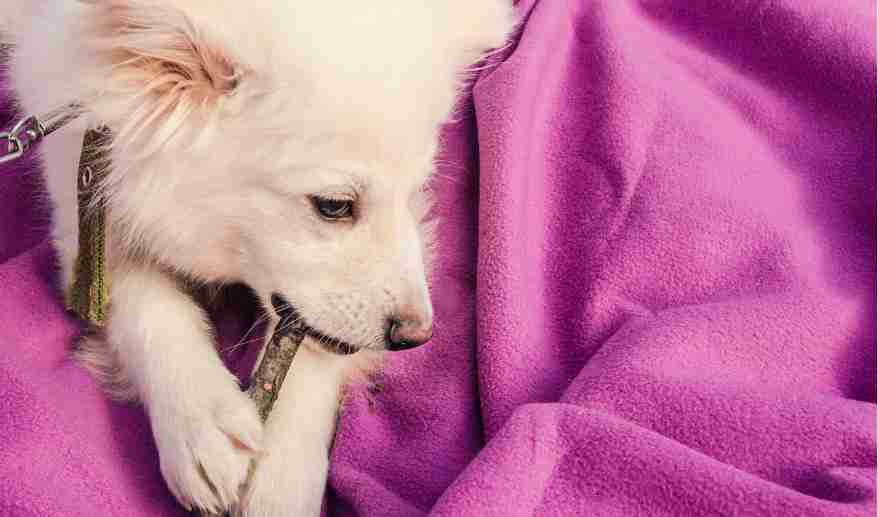
The right response depends on the dog’s body language and the pressure of the nibble. Your goal is to keep gentle contact safe and prevent the behavior from becoming a hard bite.
If the nibble is gentle and your dog is relaxed
You can:
- Pause and watch the dog’s response.
- Keep your hand still instead of pulling away quickly.
- Use calm, slow strokes.
- End the interaction before the dog becomes overexcited.
- Reward calm behavior with praise or a small treat.
If the dog keeps its mouth soft and remains relaxed, the nibble may be social or playful.
If the nibble becomes harder
Stop the interaction. Do not wrestle, tease, or wave your hands. Redirect the dog to a toy after the dog settles.
If the dog repeatedly mouths people, teach an alternative behavior such as:
- Sit for petting
- Touch a hand with the nose
- Bring a toy
- Rest on a mat
- Keep four paws on the floor
Reward the behavior you want. Consistency matters. Everyone in the home should respond in the same way.
If the nibble seems linked to pain or itch
Do not keep scratching the area to test it. Check the coat only if the dog is calm and safe to handle. Contact a veterinarian when the behavior is sudden, focused on one body area, or paired with skin changes, limping, ear problems, appetite loss, or sleep changes.
The American Veterinary Medical Association advises pet owners to seek veterinary attention when they notice possible signs of pain. A veterinarian can examine the skin, ears, joints, and other possible causes.
If the dog growls, snaps, or bites
Stop touching the dog and move away without punishment. Keep children and visitors away from the dog until you understand the trigger.
For repeated aggression, fear, or bite risk, ask your veterinarian for a referral to a qualified veterinary behaviorist or a reward-based trainer with experience in aggression cases. Do not attempt force-based corrections.

When is nibbling a medical warning?
Nibbling deserves medical attention when it is new, intense, focused on one spot, or paired with other symptoms. The behavior may be the dog’s response to itch or pain rather than a social message.
Call your veterinarian if your dog has:
- Red, swollen, flaky, or bleeding skin
- Bald patches or repeated hair chewing
- A strong skin or ear odor
- Ear scratching or head shaking
- Limping or reluctance to move
- Whining when touched
- A sudden change in behavior
- A bite that is no longer gentle
- Repeated licking of one body area
- Fleas, ticks, or visible parasites
- A wound, lump, or discharge
Do not apply human creams, essential oils, or pain medicine unless a veterinarian tells you to do so. Some products that are safe for people can harm dogs.
Also avoid guessing that every itch is caused by fleas or food. Skin problems can have many causes, and the treatment depends on the cause.
Why do dogs nibble themselves when you scratch them?
A dog may nibble its own skin or fur when you scratch because the area feels itchy, sensitive, or stimulated. It may also be part of a grooming response.
The location and frequency provide useful clues:
- One brief response: may be a normal reaction to touch.
- Repeated nibbling in the same place: may suggest itch, irritation, or pain.
- Nibbling with redness or hair loss: needs veterinary attention.
- Nibbling after a new product: consider shampoo, detergent, bedding, or topical treatment as a possible irritant.
- Nibbling with ear or paw problems: may point to a broader skin or allergy issue.
A dog that reacts this way is not necessarily “ticklish.” The word is useful in casual speech, but it does not identify the cause.
Common mistakes to avoid
Several well-meant responses can make the problem worse.
Do not assume every nibble is affection
Some dogs nibble during stress or pain. Look at the full body and recent changes in behavior.
Do not keep touching a sensitive spot
Repeated testing can increase discomfort. Stop if the dog pulls away, stiffens, or warns you.
Do not punish a growl
A growl gives you information. Treat it as a request for space and seek professional guidance if it happens often.
Do not reward hard mouthing by continuing play
If the dog bites harder and the game continues, the dog may learn that hard biting keeps the fun going. Pause, settle, and redirect.
Do not let children interpret the behavior alone
Children may miss early stress signals. Supervise all contact and teach children to leave dogs alone while they eat, sleep, hide, or care for puppies.
Do not use physical punishment
Hitting, pinning, grabbing the muzzle, or forcing contact may increase fear and bite risk. Reward-based training is a safer approach.
Key takeaways
- Dogs may nibble when scratched because of grooming, play, attention seeking, excitement, or a touch response.
- A relaxed body usually suggests the dog is comfortable.
- Stiffness, lip licking, turning away, growling, or hard biting means you should stop.
- Nibbling in one spot may signal itch, skin disease, or pain.
- Pause during petting and let the dog choose whether to continue.
- Use toys and reward-based training if mouthing becomes too strong.
- Ask a veterinarian about sudden, focused, or painful nibbling.
Frequently asked questions
Is nibbling a sign that my dog loves me?
It can be part of friendly social behavior, but nibbling alone does not prove affection. A relaxed body, voluntary closeness, and willingness to continue after a pause provide better clues.
Why does my dog nibble me but not other people?
Your dog may associate you with play, petting, grooming, or a familiar routine. Your movements, the way you scratch, and your response may also reinforce the behavior.
Should I let my dog nibble my hands?
It is safer to avoid encouraging hand mouthing, especially with puppies, children, large dogs, or dogs that become excited quickly. Teach the dog to use a toy or sit for attention instead.
Why does my dog nibble when I scratch above the tail?
That area may be sensitive because of normal touch, but repeated nibbling can also point to fleas, allergies, skin irritation, or pain. Check the skin without pressing hard and contact a veterinarian if the reaction continues.
Can a dog nibble before biting?
Yes. Nibbling may stay gentle, but a dog can escalate when excitement, fear, pain, or frustration rises. Stop when the pressure increases or the dog shows warning signals.
Should I worry if my dog nibbles during petting?
A brief, gentle nibble from a relaxed dog is often not a concern. Worry more when the behavior is new, forceful, focused on one area, or accompanied by stiffness, growling, skin changes, or other signs of illness.
Conclusion
Dogs nibble when scratched for several possible reasons, and the behavior must be read in context. Gentle nibbles from a loose, relaxed dog may reflect grooming, play, or a request for more attention. Nibbles linked to tension, pain, itching, or a specific body area need a different response.
Pause during petting, watch your dog’s body language, and stop when the dog shows discomfort. If the behavior changes suddenly or comes with skin problems, pain, or aggression, contact a veterinarian or qualified behavior professional.