Why Are Dogs Ears Floppy: The Science Explained
In the United States, floppy ears are a normal and familiar trait in many popular dogs, including Beagles, Basset Hounds, Cocker Spaniels, and Labrador Retrievers. Dogs’ ears become floppy mainly because of genetics, ear shape, and the amount and strength of cartilage that supports the ear. Selective breeding has preserved these traits in some breeds.
A floppy ear is usually harmless. However, a new change in ear position, especially with pain, swelling, odor, discharge, or head shaking, can signal an ear problem that needs veterinary care.

The short answer: Why are dogs’ ears floppy?
Dogs’ ears are floppy when the ear cartilage is softer, thinner, shorter, or shaped in a way that cannot hold the ear upright. Genes control much of this structure.
Breed history also matters. People have bred dogs for traits such as appearance, hunting ability, scent work, and companionship. Over many generations, this selection helped create dogs with long, folded, or hanging ears.
Puppies may have floppy ears because their cartilage is still developing. In some breeds, the ears may rise as the puppy grows. In others, the ears remain floppy for life.
The main causes include:
- Genetics: The largest factor in a dog’s natural ear shape.
- Cartilage structure: Firm cartilage supports upright ears; softer cartilage allows the ear to fold.
- Ear size and weight: Long or heavy ear leather can pull the ear downward.
- Breed selection: Human breeding shaped many modern ear types.
- Age and development: Puppy ears can change as the skull and cartilage mature.
- Health problems: Pain, inflammation, swelling, or injury can make an ear droop suddenly.
A dog’s floppy ears are not a sign of poor health by themselves. They are usually an inherited body trait.

How ear cartilage controls a dog’s ear position
Cartilage is a firm but flexible tissue. It gives the outer ear, called the pinna, its shape. A dog with thick, firm pinna cartilage may hold the ear upright. A dog with softer cartilage may have ears that bend, fold, or hang.
The ear also contains skin, muscles, blood vessels, and connective tissue. These parts affect movement, but cartilage provides much of the support.
Ear shape can vary even within the same breed. One puppy may have ears that stand more than another puppy’s ears. Mixed-breed dogs may also have different ear positions, depending on which traits they inherit from each parent.
Common ear shapes in dogs
| Ear type | Typical appearance | Examples |
|---|---|---|
| Upright | The ear stands above the head | German Shepherd Dog, Chihuahua |
| Button | The ear folds forward near the tip | Jack Russell Terrier |
| Rose | The ear folds back and exposes part of the inner ear | Greyhound |
| Drop or pendant | The ear hangs beside the head | Beagle, Bloodhound |
| Semi-prick | The base stands while the tip bends | Some Collies and mixed-breed dogs |
These names describe appearance, not health. A hanging ear can work normally if the dog can hear, move, and use it without pain.

Why some breeds have floppy ears
Many floppy-eared breeds were developed for specific work or appearance. Their ears did not become floppy for one single reason. Instead, several inherited traits were passed down together over many generations.
Scent hounds
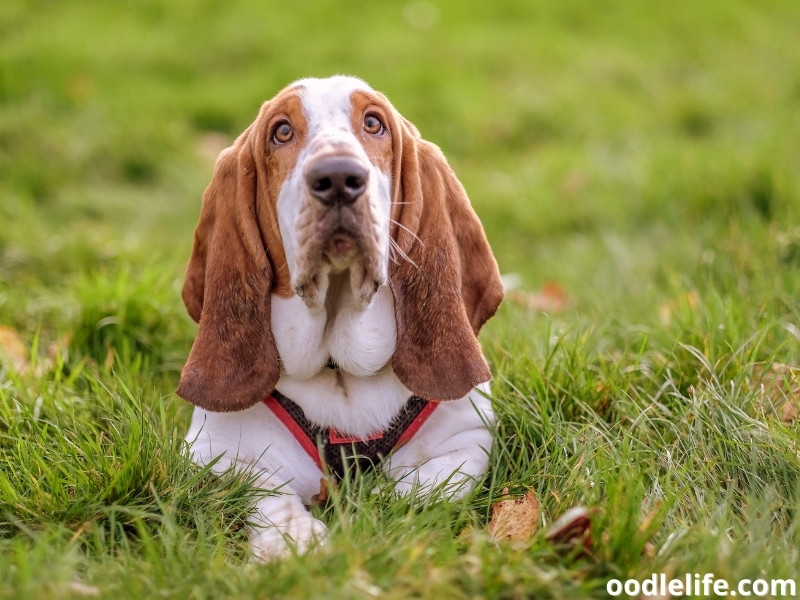
Beagles, Bloodhounds, and Basset Hounds have long ears that hang near the face. Their ear shape may help move scent toward the nose as the dog tracks. This idea fits their anatomy and working history, but the ear itself is not the only reason these breeds have strong scenting skills.
Spaniels and retrievers
Cocker Spaniels, English Springer Spaniels, and some retrievers have hanging ears. Breeders selected these dogs for field work, flushing, retrieving, or companionship. Their ear shape became part of the breed standard over time.
Companion breeds
Many small companion dogs have drop ears because breeders valued a particular appearance. In these dogs, floppy ears often reflect body shape and inheritance rather than a working need.
Mixed-breed dogs
A mixed-breed dog may have one upright ear and one floppy ear. This is often a normal result of different inherited ear traits. A change that develops suddenly is different and deserves closer attention.

Do floppy ears come from domestication?
Scientists have proposed that floppy ears may be linked to changes that occurred during domestication. This idea is sometimes called the domestication syndrome. It suggests that selecting animals for calmer behavior may have affected several physical traits, such as coat color, facial shape, and ear position.
Research on domestication supports links between behavior and physical development, but it does not prove that every floppy ear came from one simple process. Modern dog breeds were also shaped by deliberate breeding for work, looks, and size.
The safest conclusion is this: domestication helped create the wide range of dog body types seen today, while later breed selection strongly influenced which dogs developed hanging ears.
Do not assume that floppy ears mean a dog is calmer, friendlier, or less intelligent. Ear position does not reliably predict personality.

Why do puppy ears sometimes stand up and then flop down?
Puppy ears can change as the puppy grows. Cartilage, muscles, the skull, and adult teeth all develop during the first months of life. As a result, an ear may stand for a time and later fold or droop.
This change is common in breeds with naturally upright ears. Teething may also affect how a puppy holds its ears for a short period, although it does not permanently determine every dog’s final ear shape.
Normal puppy ear changes may include:
- Both ears rising at different times
- One ear standing before the other
- Ears folding during sleep or excitement
- Ears changing position during teething
- Ears becoming upright gradually as cartilage strengthens
Do not tape, glue, splint, or massage a puppy’s ears without guidance from a veterinarian or qualified breed professional. Home methods can cause skin injury, pain, infection, or stress. A puppy’s final ear position is mainly controlled by genetics.

Can floppy ears cause ear infections?
Floppy ears do not automatically cause infection, but they can create conditions that make some ear problems more likely. A hanging ear may reduce air movement around the ear canal. Moisture, wax, allergies, parasites, and skin disease can then contribute to inflammation.
According to the Merck Veterinary Manual, ear disease may involve the outer, middle, or inner ear. Outer-ear inflammation is called otitis externa.
Watch for these signs:
- Frequent head shaking
- Scratching at the ear
- Redness or heat
- Bad odor
- Brown, yellow, or bloody discharge
- Swelling
- Pain when the ear is touched
- A head tilt
- Loss of balance
- Sudden hearing changes
A floppy ear that has always looked the same is usually normal. A new drooping ear with other symptoms may point to infection, an ear-flap hematoma, a foreign object, trauma, or another medical issue.
What should you do if one ear suddenly becomes floppy?
A sudden change in one ear should be treated as a health question, not as a normal breed feature. Start by observing the dog without forcing the ear open or putting anything inside it.
Check these points:
- Look at the outer ear. Compare it with the other side.
- Watch the dog’s behavior. Note scratching, head shaking, pain, or restlessness.
- Check for swelling. A soft, thick, pillow-like ear flap may be an ear hematoma.
- Look for discharge or odor. These signs can occur with infection.
- Contact a veterinarian. Arrange an exam if the change is sudden, painful, or persistent.
An ear hematoma is a pocket of blood within the ear flap. It can develop after repeated scratching or head shaking. It may need veterinary treatment to reduce pain and prevent lasting thickening or a “cauliflower ear” appearance.
Seek prompt veterinary care for severe pain, heavy bleeding, marked swelling, a head tilt, loss of balance, facial weakness, or possible poisoning or trauma.
Do not use leftover ear drops. Some products can harm the eardrum if the eardrum is damaged, and the wrong treatment may worsen the problem.

Can you make a dog’s floppy ears stand up?
Usually, no. A dog’s natural ear position is mostly determined by inherited cartilage, ear weight, and breed structure. Training cannot permanently change normal ear cartilage.
Ear cropping is a surgical procedure that changes the shape of the ear flap. It is not needed to treat ordinary floppy ears, and it carries risks such as pain, infection, poor healing, and ongoing aftercare. Rules and veterinary views also vary by location. The American Veterinary Medical Association opposes ear cropping when it is done only for cosmetic reasons.
Never try to make ears stand with household tape, glue, weights, or rigid supports. These methods can damage skin and restrict blood flow.
For most dogs, floppy ears are a normal feature to accept and care for, not a problem to correct.

How to care for a dog with floppy ears
Good ear care focuses on observation and prevention. It does not mean cleaning the ears on a fixed schedule for every dog.
A safe care routine
- Check the ears during normal grooming.
- Keep the outer ear dry after swimming or bathing.
- Ask a veterinarian whether your dog needs an ear-cleaning product.
- Use only products made for dogs and recommended for the dog’s condition.
- Follow the label or veterinary directions.
- Stop if cleaning causes pain or bleeding.
- Never insert cotton swabs deep into the ear canal.
- Treat allergies or skin disease if a veterinarian identifies them.
Some dogs need regular cleaning because of allergies, heavy wax, or repeated infections. Other dogs need very little cleaning. Overcleaning can irritate the ear canal and disturb its normal protective environment.
A healthy ear usually does not need to smell strongly. Mild wax may be normal, but odor, discharge, redness, and discomfort are reasons to seek veterinary advice.

Floppy ears versus a new drooping ear
The difference between a lifelong floppy ear and a new drooping ear helps guide the next step.
| What you notice | More likely explanation | What to do |
|---|---|---|
| Both ears have always hung down | Normal inherited shape | Routine observation |
| Puppy ears change during growth | Normal development | Monitor and ask at routine visits |
| One ear droops suddenly | Pain, inflammation, injury, or another problem | Contact a veterinarian |
| Ear flap is swollen and soft | Possible hematoma | Arrange veterinary care |
| Ear smells bad or has discharge | Possible infection or inflammation | Veterinary examination |
| Dog has a head tilt or poor balance | Possible deeper ear or nervous-system problem | Seek prompt care |
| Ear droops after trauma | Injury or swelling | Veterinary assessment |
This table is a guide, not a diagnosis. A veterinarian may need to examine the ear canal, check the eardrum, and test discharge to identify the cause.

Common myths about floppy dog ears
Myth: Floppy ears mean a dog cannot hear well
Most dogs with naturally floppy ears hear normally. Ear position and hearing ability are related to different parts of ear anatomy. Hearing loss can result from inherited conditions, aging, infection, injury, or blockage.
Myth: All floppy-eared dogs get infections
Some dogs with hanging ears have repeated ear disease. Many do not. Allergies, moisture, ear-canal shape, wax, parasites, and skin health also matter.
Myth: A dog’s ears should be cleaned every day
Daily cleaning is not right for every dog. It may irritate healthy ears and make inflammation worse. Follow a veterinarian’s plan.
Myth: You can train floppy ears to stand
Training may change how a dog holds its ears for a moment, but it does not change inherited cartilage. Permanent changes require procedures that carry medical and ethical concerns.
Myth: Droopy ears always mean the dog is sad
Dogs use ear movement as one part of body language, but a floppy breed may have little ability to raise its ears. Read the whole dog: posture, tail, eyes, movement, and behavior.

Frequently asked questions
Why are some dogs’ ears floppy while others’ ears stand up?
Genes control the strength, shape, size, and weight of the ear cartilage. Breed history and selective breeding helped preserve either upright or hanging ears.
Do floppy ears hurt dogs?
Normal floppy ears do not hurt. Pain usually suggests another issue, such as infection, injury, a foreign object, or an ear hematoma.
Will my puppy’s floppy ears become upright?
It depends on the puppy’s genetics and breed type. Some puppies develop upright ears as they grow, while others keep hanging ears for life.
Are floppy ears bad for dogs?
No. Floppy ears are a normal body trait. They may require closer monitoring in dogs prone to moisture, allergies, wax buildup, or ear infections.
Why is only one of my dog’s ears floppy?
If the difference has always been present, it may be normal anatomy. If one ear changed suddenly, especially with swelling, pain, odor, or head shaking, schedule a veterinary exam.
Key takeaways
- Dogs’ ears are floppy mainly because of inherited cartilage shape and strength.
- Long or heavy ear flaps can also pull the ears downward.
- Puppy ears may change as the skull and cartilage develop.
- Floppy ears are not proof of poor hearing, sadness, or poor health.
- Hanging ears may need monitoring for moisture, allergies, and infection.
- A sudden drooping ear, pain, swelling, odor, or discharge needs veterinary attention.
- Do not tape, glue, crop, or medicate a dog’s ears without professional guidance.
Conclusion
Most dogs have floppy ears because their genes create softer, heavier, or differently shaped ear cartilage. Breed history helped preserve these traits, and normal puppy growth can cause ear position to change.
A lifelong floppy ear is usually nothing to fix. The important warning sign is a new change, especially when it appears with pain, swelling, odor, discharge, head shaking, or balance problems. If that happens, arrange a veterinary examination rather than trying home treatment.