Why Do Dogs Drop Their Tails: Reasons Explained
A dog may drop or tuck its tail because it feels afraid, stressed, unsure, cold, or in pain. In the United States, a sudden change in tail position is worth watching, especially if it comes with whining, limping, weakness, trouble walking, vomiting, or a change in bathroom habits. A lowered tail alone is often a normal body signal. A lowered tail with other symptoms may point to a health problem.
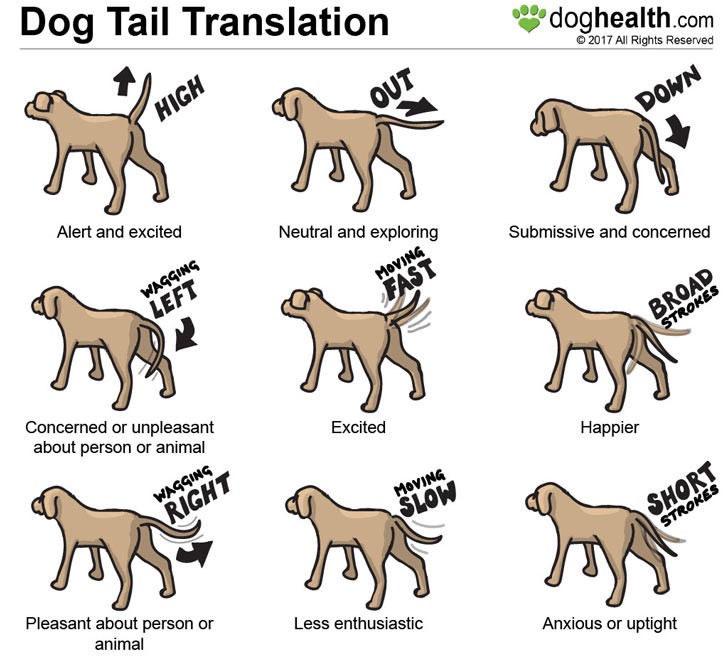
A dog’s tail is part of its body language. The meaning depends on the dog’s breed, normal tail carriage, whole-body posture, and what happened just before the change.
Quick answer: Dogs drop their tails most often due to fear, stress, submission, or discomfort. If the tail stays down, looks limp, seems painful, or changes after exercise, swimming, an injury, or a stressful event, contact a veterinarian.
What does a dropped dog tail mean?
A dropped tail means the dog is holding its tail lower than usual. A tucked tail is held tightly between the back legs. These positions are not identical, but both can signal that the dog feels unsafe or uncomfortable.
Look at the whole dog rather than the tail alone. Useful clues include:
- Ears: Pulled back or held flat may suggest fear or stress.
- Eyes: Avoiding eye contact, wide eyes, or visible whites may signal anxiety.
- Mouth: Lip licking, yawning, panting, or a tight mouth can occur with stress.
- Body: A crouched, stiff, or lowered body adds concern.
- Movement: Hiding, freezing, pacing, limping, or refusing to move changes the meaning.
- Vocal sounds: Whining, yelping, growling, or sudden silence may matter.
- Context: Fireworks, a new person, a vet visit, rough play, or a long swim can explain the change.
A relaxed dog may carry its tail low by nature. Some breeds also have tails that curl, point downward, or sit close to the body. Compare the dog with its own normal behavior instead of using one tail position as a universal rule.
Tail position is not a diagnosis
Tail language can help you notice a problem, but it cannot tell you exactly what the problem is. A tucked tail may reflect fear. It may also reflect pain in the tail, lower back, hips, abdomen, or anal area.
Dogs can hide pain well. A tail that suddenly drops and stays down deserves more attention than a tail that lowers for a few seconds during a loud noise.
The most common reasons dogs drop their tails
The main causes fall into two groups: emotional responses and physical problems. The timing and other symptoms help separate them.
Fear or anxiety
Fear is one of the most common reasons a dog tucks or lowers its tail. Common triggers include:
- Thunderstorms and fireworks
- Construction noise, alarms, or vacuum cleaners
- Unfamiliar people or dogs
- A new home, baby, pet, or piece of furniture
- Car rides or veterinary visits
- Punishment or a harsh interaction
- Slippery floors or an unfamiliar setting
A fearful dog may also crouch, pin its ears back, tremble, pant, hide, or try to escape. Give the dog space. Do not force contact or punish the behavior, because punishment can increase fear.
If the trigger is clear and the dog returns to normal soon after the event ends, stress is more likely. Repeated fear still deserves help from a veterinarian or a qualified behavior professional.
Submission or social uncertainty
Some dogs lower their tails when they want to avoid conflict. They may do this around a larger dog, a stern person, or during a tense greeting. A submissive dog may turn its head away, lower its body, lick its lips, or roll partly onto its side.
This does not mean the dog is “guilty.” Dogs do not drop their tails to confess to wrongdoing. The posture usually reflects concern, uncertainty, or an attempt to reduce tension.
Keep greetings calm. Do not make dogs interact face to face if one dog looks stiff, trapped, or frightened.
Pain or injury
Pain can cause a dog to hold its tail low or stop wagging it. Possible sources include:
- A sprain, strain, bruise, or fracture of the tail
- A bite wound or other injury
- Pain in the lower back or pelvis
- Arthritis or hip pain
- An irritated anal gland
- Abdominal or urinary discomfort
- A skin infection, wound, or swelling near the tail
A dog with pain may avoid sitting, climb stairs slowly, move less, lick one spot, or react when touched. Some dogs become quiet. Others may growl or snap because they expect handling to hurt.
Do not bend, pull, or massage a painful tail. Keep the dog calm and arrange a veterinary exam.
Limber tail after exercise or swimming
Limber tail, also called swimmer’s tail or acute caudal myopathy, is a painful condition in which the tail becomes limp. The tail may hang from its base, or the first part may stay level while the rest points downward.
It can occur after:
- Long or hard exercise
- Swimming
- Cold-water exposure
- Crate travel or limited movement
- Excitement that leads to heavy tail use
The dog may seem sore near the tail base and may avoid sitting. The condition often improves with rest, but similar signs can also occur with a fracture, spinal problem, or another injury. A veterinarian should confirm the cause, especially if the dog is in pain or does not improve.
The American Kennel Club describes limber tail as a temporary muscle injury, while veterinary references such as the Merck Veterinary Manual emphasize the need to distinguish it from more serious causes of a limp tail.
Cold, illness, or general discomfort
Cold weather can make some dogs hold their tails lower. A dog that feels sick may also change its posture and stop wagging. Fever, nausea, weakness, and pain can all affect body language.
A low tail is not a reliable way to tell whether a dog has a fever. Use a veterinarian’s advice rather than trying to diagnose illness from posture alone.
Nerve or spinal problems
The nerves that control the tail also connect with the lower spine, hind legs, bladder, and bowel. A problem in this region may cause a dropped tail along with:
- Hind-leg weakness
- A wobbly or unsteady walk
- Trouble standing
- Loss of bladder or bowel control
- Difficulty urinating
- Reduced feeling in the tail
- Pain when the lower back is touched
These signs need prompt veterinary care. Sudden weakness, paralysis, or loss of bladder control is an emergency.

How to tell fear from pain
The best clue is what changes besides the tail. The table below can guide your first observation, but it cannot replace an examination.
| Sign | Fear or stress is more likely | Pain or illness is more likely |
|---|---|---|
| Onset | Starts after a clear trigger | Starts after exercise, injury, or with no clear trigger |
| Tail | Tucks, then returns to normal | Stays low, limp, stiff, or painful |
| Body | Crouching, hiding, shaking | Limping, guarding, slow movement, or trouble sitting |
| Appetite | Often normal, though severe fear can reduce it | May decrease or stop |
| Touch | Avoids the situation or person | Reacts to touch near the tail, back, hips, or belly |
| Movement | May move normally once safe | May avoid stairs, jumping, walking, or sitting |
| Other signs | Panting, lip licking, yawning, scanning | Vomiting, weakness, swelling, bleeding, or bathroom changes |
A dog can have both fear and pain. For example, an injured dog may hide because movement or touch hurts. A frightened dog may also tense its muscles and become sore.
What to do when your dog’s tail drops
Use a calm, safety-first check. The goal is to observe, not to force an examination.
- Stop the activity. If the change happened after running, swimming, rough play, or travel, let the dog rest.
- Move the dog to a quiet area. Reduce noise, visitors, and contact with other pets.
- Watch from a distance. Note walking, sitting, eating, drinking, breathing, and bathroom behavior.
- Look without touching. Check for blood, swelling, hair loss, discharge, a wound, or an unusual tail angle.
- Review the last 24 hours. Consider exercise, swimming, a fall, a dog fight, a new medication, a stressful event, or possible toxin exposure.
- Do not give human pain medicine. Drugs such as ibuprofen, naproxen, and acetaminophen can seriously harm dogs unless a veterinarian specifically directs their use.
- Call your veterinarian if the tail remains down or the dog seems painful.
Take a short video of the dog walking and sitting if the signs come and go. It can help the veterinarian understand what you saw at home.
When home monitoring may be reasonable
Brief monitoring may be reasonable when all of these are true:
- The tail drops during a clear, short-term stressor.
- The dog has normal movement and energy.
- The dog eats, drinks, and uses the bathroom normally.
- There is no wound, swelling, bleeding, or obvious pain.
- The tail returns to its usual position after the trigger ends.
Even then, repeated episodes should be discussed with a veterinarian. A behavior pattern may need training, environmental changes, or medical evaluation.

When should you call a veterinarian?
Call your veterinarian promptly if your dog’s tail stays down, becomes limp, or seems painful. A same-day call is especially sensible when the change lasts more than a few hours, follows exercise or swimming, or comes with reduced activity.
Seek urgent veterinary care for:
- Severe or worsening pain
- A tail that is bleeding, swollen, bent, or cold
- An open wound, bite, or suspected fracture
- Inability to walk or stand normally
- Hind-leg weakness or paralysis
- Trouble urinating or loss of bladder control
- Loss of bowel control
- Repeated vomiting or marked weakness
- A swollen or painful abdomen
- Collapse, confusion, or trouble breathing
- Possible poisoning or trauma
Do not wait for a tail injury to “work itself out” if the dog cannot move normally or control urination. Those signs may involve the spine or nerves.
At the appointment, the veterinarian may ask when the tail changed, what activity came before it, and whether the dog can walk, sit, urinate, and defecate normally. The exam may include the tail, skin, anal area, hips, lower back, and neurologic function. X-rays or other tests may be needed when injury or spinal disease is possible.
Can a dog drop its tail from happiness?
A dog can hold its tail lower when it is calm, but a sharply tucked tail usually does not mean happiness. Tail wagging also does not always mean a dog is friendly. Dogs may wag when excited, nervous, conflicted, or highly aroused.
Read the tail with the rest of the body:
- A loose body, soft eyes, normal ears, and an easy wag suggest comfort.
- A stiff body, fixed stare, raised hackles, and a high tight wag may signal tension.
- A tucked tail, crouched body, and avoidance suggest fear or uncertainty.
Tail signals differ by breed and individual. A naturally curled tail may show less movement than a long, loose tail. The dog’s usual posture is the best baseline.

Common mistakes to avoid
Assuming every dropped tail is emotional
A dog may look “sad” when it is actually in pain. Check movement, appetite, touch sensitivity, and bathroom habits before deciding that stress is the only cause.
Pulling or straightening the tail
A painful tail can worsen with handling. Do not try to test its range of motion or force it into a normal position.
Punishing a tucked tail
Punishment can make a fearful dog more defensive. Give the dog room and remove the trigger when possible.
Waiting too long after an injury
Small wounds can hide under fur. Bite wounds, fractures, and spinal injuries may need treatment even when the skin looks mostly normal.
Giving over-the-counter human medicine
Many common pain relievers are unsafe for dogs. Ask a veterinarian before giving any drug or supplement.
Treating limber tail as a certain diagnosis
A limp tail after swimming may fit limber tail, but a similar posture can result from trauma or nerve disease. A veterinarian can help separate these causes.
Frequently asked questions
Why is my dog’s tail down but not tucked?
A lowered but relaxed tail may be normal for that dog. If the tail hangs suddenly, looks limp, or comes with soreness, reduced movement, or trouble sitting, pain is more likely and a veterinary exam is appropriate.
Why did my dog’s tail drop after swimming?
Cold water, long swimming, and repeated tail movement can contribute to limber tail. Stop exercise, keep the dog warm and quiet, and contact a veterinarian if the tail is painful, the dog seems unwell, or the problem does not improve.
Why does my dog tuck its tail around another dog?
The dog may feel afraid, overwhelmed, or unsure. Create distance and avoid forcing a greeting. If the behavior happens often, a veterinarian can rule out pain, and a qualified behavior professional can help with safe introductions.
Can anal gland problems make a dog hold its tail down?
Yes. Anal gland irritation may cause scooting, licking near the rear, a strong odor, difficulty sitting, or discomfort during bowel movements. A veterinarian should check the area rather than having an owner attempt treatment without instruction.
How long can I wait if my dog’s tail is down?
If the cause is a brief, clear stress event and the dog quickly returns to normal, careful observation may be enough. Call a veterinarian if the tail stays down for several hours, the dog appears painful, or any weakness, injury, appetite change, or bathroom problem occurs.
Key takeaways
- Dogs drop or tuck their tails because of fear, stress, uncertainty, pain, or illness.
- A sudden or persistent change matters more than a naturally low tail.
- Limber tail can follow swimming or hard exercise, but other conditions can look similar.
- Watch the whole dog, including movement, appetite, posture, and bathroom habits.
- Do not pull the tail, punish the dog, or give human pain medicine.
- Seek urgent care for severe pain, weakness, paralysis, bleeding, trauma, or loss of bladder control.
Conclusion
A dropped dog tail is a signal, not a diagnosis. Fear is common, but pain and injury must stay on the list when the change is sudden, persistent, or paired with other symptoms. Give your dog space, observe safely, and contact a veterinarian when the tail does not return to normal or the dog seems unwell.
For immediate next steps, note when the tail dropped, what happened before it, and whether your dog can walk, eat, sit, urinate, and defecate normally. That information can help your veterinarian decide how quickly your dog needs care.