Why Do Dogs Not Bite Their Owners: Key Reasons
Dogs often do not bite their owners because they usually see them as trusted members of their social group, and because bites are usually a last-resort response to fear, pain, stress, or conflict. In most U.S. homes, a dog that knows its owner well has learned that the owner provides food, safety, routine, and guidance, which lowers the chance of defensive aggression.
That does not mean owner bites never happen. They can occur when a dog is startled, hurt, frightened, territorial, overstimulated, or pushed past its comfort level. Understanding why dogs usually avoid biting their owners helps explain both normal behavior and the warning signs that matter.

Why dogs usually do not bite the people they live with
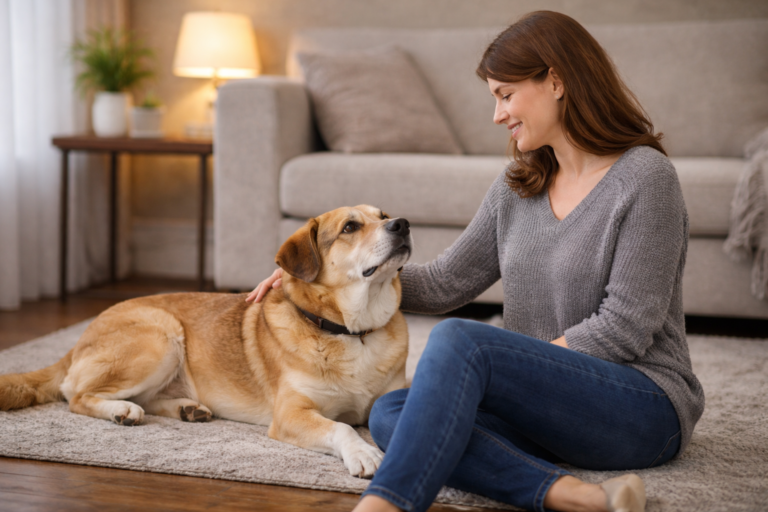
Dogs usually do not bite their owners because familiar people are associated with safety, predictability, and rewards. A dog that has bonded with an owner often learns that the owner brings meals, walks, play, grooming, and protection. That relationship reduces the need to defend itself with teeth.
Another reason is social learning. Dogs respond to tone, routine, body language, and past outcomes. If an owner is calm and consistent, the dog is less likely to feel threatened and more likely to use avoidance, freezing, licking, or moving away instead of biting.
Most dogs also avoid unnecessary conflict. Biting carries risk. It can stop a stressful interaction, but it can also lead to punishment, injury, or loss of trust. For many dogs, retreating is the safer choice.
The main reasons trust lowers bite risk
- Predictable care: The owner feeds, walks, and handles the dog in familiar ways.
- Positive association: Good things happen around the owner.
- Familiar smell and voice: Known cues reduce uncertainty.
- Learned boundaries: The dog has learned what is allowed and what is not.
- Attachment: Many dogs feel safer near their owners than away from them.
What usually triggers a dog bite, even with an owner
A dog is more likely to bite when it feels trapped, scared, hurt, or pushed too far. The bite is often not about “disobedience.” It is often a communication breakdown. The dog may be saying, “Stop,” “Move away,” or “I am uncomfortable.”
Pain is a major factor. A dog with an ear infection, joint pain, dental pain, or a hidden injury may react aggressively if touched. This is especially true if the dog is startled during sleep, grooming, or medical care.
Fear is another major cause. A dog that expects restraint, punishment, or rough handling may bite defensively. Even a normally gentle dog can bite if it believes biting is the fastest way to protect itself.
Common bite triggers
| Trigger | What the dog may feel | Practical example |
|---|---|---|
| Pain | Threatened or sore | Being touched on an injured leg |
| Fear | Trapped or unsafe | Cornered in a hallway |
| Startle | Alarmed | Woken abruptly from sleep |
| Resource guarding | Protective | Guarding food, toys, or a bed |
| Overstimulation | Overloaded | Rough play that turns tense |
| Frustration | Unable to escape | Being held too long |
Warning signs before a bite
most dogs give warning signs before they bite. These signals can be subtle or clear. Learning them matters because it gives you a chance to stop the interaction early.
Typical warning signs include a stiff body, closed mouth, whale eye, lip licking, yawning when not tired, growling, freezing, backing away, or turning the head away. Some dogs also tuck their tail, pin their ears back, or raise the hackles along the neck and back.
A growl is not bad behavior by itself. It is often a warning that the dog wants more space. Punishing a growl can remove an early warning and make the dog more likely to bite without signaling first.
Signs the dog is becoming uncomfortable
- Body goes rigid
- Eyes widen or show more white
- Ears pin back or shift sharply
- Mouth closes tightly
- Dog stops moving and freezes
- Dog licks lips or yawns suddenly
- Dog turns away or tries to leave

Why some dogs bite strangers but not their owners
Dogs often bite strangers more than owners because strangers are less predictable. An unfamiliar person may move quickly, stare, reach over the dog, or enter the dog’s space without warning. To a cautious dog, that can feel threatening.
With an owner, the dog usually has history and context. It knows the owner’s scent, voice, habits, and patterns. That familiarity lowers uncertainty. The dog has also likely had repeated experiences showing that the owner is safe.
Still, some dogs bite owners and not strangers. That pattern often points to handling conflicts, pain, or learned guarding behaviors inside the home. The identity of the person is only part of the picture. The situation matters just as much.
Breed is not the main reason a dog bites its owner
Breed alone does not explain whether a dog will bite its owner. Individual temperament, early socialization, pain, training history, fear, and environment matter far more than a label on the dog’s breed mix.
That said, any dog can bite if pressured enough. A small dog can bite. A large dog can bite. A highly social dog can bite. The common thread is usually stress, fear, pain, or poor boundaries, not breed by itself.
The more useful question is not “What breed is this dog?” but “What is making this dog feel unsafe right now?” That shift leads to better prevention.
How owners can lower bite risk at home
Owners can lower bite risk by making interactions predictable, respectful, and low-stress. The goal is to prevent the dog from feeling cornered or forced into a defensive response.
Start with routine. Feed, walk, and rest the dog on a steady schedule. Dogs often relax when they know what happens next. Use calm handling, especially around ears, paws, collars, and food bowls.
Respect warning signs. If the dog moves away, freezes, or growls, stop what you are doing. Give space first, then reassess. If a dog has repeated guarding or fear reactions, professional help is more useful than punishment.
Practical safety habits
- Do not disturb a sleeping dog.
- Do not corner the dog.
- Teach children to ask before touching.
- Use treats to build trust during handling.
- Schedule a vet visit if pain may be involved.
- Get help from a qualified trainer or behavior professional if bites or near-bites repeat.
What to do if your dog has already snapped or bitten
If a dog snaps or bites, treat it as a warning that needs investigation, not as a one-time accident to ignore. First, make sure everyone is safe. Separate the dog from people and other pets if needed.
Next, check for injury or pain. If the dog may be sick or hurt, contact a veterinarian. If the bite broke skin, clean the wound right away and seek medical care if the injury is deep, swollen, bleeding heavily, or involves the face, hand, or joint.
Then look at the trigger. What happened right before the bite? Was the dog eating, sleeping, scared, restrained, or in pain? That answer is often more useful than the bite itself.
If the dog has bitten before, or if the pattern is getting worse, work with a qualified veterinarian and a behavior professional. Repeated biting needs a real plan, not guesswork.
Common misconceptions about why dogs do not bite owners
One common myth is that a “good dog” never bites its owner. That is not true. Even well-bonded dogs can bite under the wrong conditions. A dog does not need to be “bad” to be dangerous in a stressful moment.
Another myth is that biting means the dog is trying to dominate the owner. In most home settings, biting is better understood as fear, pain, resource guarding, or overarousal. The old “dominance” explanation is too simple for most real cases.
A third myth is that a dog will always “snap out of it” with age. In reality, if the underlying problem is pain, anxiety, or poor handling, the risk can stay the same or worsen without intervention.
FAQs
Why does my dog never bite me but bites other people?
Your dog likely feels safer with you than with unfamiliar people. Familiar scent, routine, and trust reduce stress. Other people may move, look, or reach in ways your dog finds threatening.
Can a dog bite its owner out of love?
Not exactly. A bite usually comes from stress, fear, pain, or conflict, not affection. A dog may love its owner and still bite if it feels cornered or hurt.
Why does my dog growl at me but not bite?
Growling is often a warning, not aggression by itself. It means the dog is uncomfortable and wants distance. This is often the best time to stop, give space, and figure out the trigger.
Should I punish my dog for trying to bite me?
Punishment can make the dog more afraid and less likely to warn next time. That can increase risk. It is safer to stop the interaction, identify the cause, and address the trigger.
When should I call a professional?
Call a veterinarian if pain may be involved. Call a qualified trainer or behavior professional if the dog has repeated snapping, biting, guarding, or fear-based reactions. If the bite is severe, seek medical care for the person immediately.
Conclusion
Dogs usually do not bite their owners because trust, routine, and familiarity make the owner feel safe. When bites do happen, they are usually linked to fear, pain, guarding, startle, or overload, not random aggression. The safest response is to read warning signs early, avoid punishment, and fix the trigger before the behavior escalates.