Why Do Humans Love Dogs So Much: The Real Reasons
Humans in the United States love dogs so much because dogs fit our social lives in a rare way: they offer affection, loyalty, routine, and emotional support without the complexity of human conflict. In plain terms, dogs often feel like family, while also giving people structure, comfort, and daily joy.
That bond is not just sentimental. Research in psychology, anthropology, and neuroscience suggests that dogs trigger caregiving instincts, reduce stress, and help people feel connected. In American homes, neighborhoods, parks, and even workplaces, dogs have become part companion, part routine, and part emotional anchor.

What makes dogs so appealing to humans?
Dogs are appealing because they combine several traits people naturally respond to: warmth, predictability, playfulness, and social attention. Unlike many animals, dogs read human cues unusually well and often respond in ways that feel personal.
A dog looks at you, follows your movement, and reacts to your voice. That behavior can feel like being understood. For many Americans, especially people who live alone or spend long hours at work, that sense of being noticed matters.
Dogs also fit neatly into human caregiving instincts. People are often drawn to creatures that seem dependent but loving in return. A dog needs food, exercise, structure, and companionship, and that need can make the relationship feel meaningful.
Why do humans form such strong bonds with dogs?
Humans form strong bonds with dogs because the relationship activates both emotion and biology. Dogs are social animals, and so are people. That shared social design makes the bond feel natural and durable.
One major reason is oxytocin, a hormone linked to bonding and trust. Studies have found that positive interactions between people and dogs, such as petting and eye contact, can increase oxytocin in both species. That creates a feedback loop: the more affection people show, the more rewarding the relationship can feel.
Dogs also provide consistency. Human relationships can be complicated, but a dog usually offers simple cues: happiness when you return, calm presence when you are quiet, and enthusiasm for routines like walks and meals. That steadiness is deeply comforting.
How dogs support human emotional health
Dogs can support emotional health by lowering stress, easing loneliness, and encouraging healthy routines. These effects do not mean dogs replace therapy or human relationships, but they can make daily life more manageable.
Stress reduction
Physical contact with a calm dog can help reduce stress. Petting a dog may lower feelings of tension, and the predictable presence of a pet can make a home feel safer and more stable.
This matters in the U.S., where many people report high stress from work, family demands, finances, and isolation. A dog can create a small but reliable break in that pressure.
Less loneliness
Dogs help people feel less alone because they create a sense of companionship without judgment. A dog does not care if you had a bad day, wore the same sweatshirt twice, or forgot to make small talk.
For older adults, people who live by themselves, and remote workers, that companionship can be especially valuable. Even when a dog cannot replace human connection, it can soften the feeling of emptiness.
More routine and movement
Dogs require feeding, walking, grooming, and attention. That daily care builds structure, and structure often supports mental health.
A dog also nudges people to move more. Many owners walk more often because the dog needs exercise. That physical activity can improve mood, sleep, and overall well-being.
Why dogs feel more “human” than many other pets
Dogs often feel more human because they communicate in social ways people understand. They use facial expressions, body language, eye contact, and sound to signal need or emotion.
Cats, birds, reptiles, and fish can all be meaningful companions, but dogs tend to mirror human social behavior more closely. They seek approval, respond to tone, and often attach strongly to household members. That makes the relationship feel relational rather than purely observational.
Dogs also adapt to human schedules. They wake with us, wait for us, travel with us, and join our routines. That flexibility helps dogs become part of the family system instead of just living in it.
The evolutionary explanation: why humans and dogs fit so well
Humans and dogs fit well because their relationship evolved over thousands of years. Dogs descended from wolves, and domestication gradually favored animals that were less fearful, more social, and better able to live near people.
Over time, humans benefited from dogs’ skills. Dogs helped with guarding, hunting, herding, and protection. In return, dogs gained food, shelter, and survival advantages. That mutual benefit shaped a long partnership.
Today, the work role is less central for many pet dogs in the U.S., but the social role remains. The same traits that once helped dogs serve human communities now help them thrive as companions: attentiveness, trainability, and strong attachment to people.
Why do dogs make people feel loved?
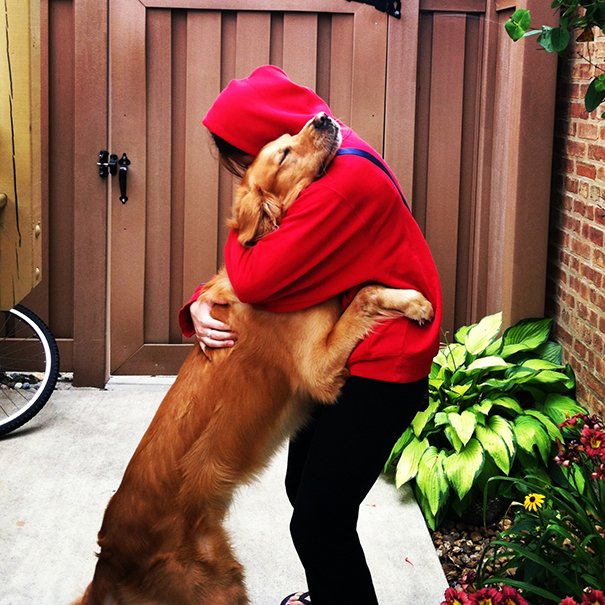
Dogs make people feel loved because they show affection in direct and repeated ways. They greet you, stay near you, react to your mood, and often seek physical closeness.
That matters because human beings do not only want to be cared for; they want to feel chosen. When a dog runs to the door or curls up beside you, it sends a clear message: you matter to me.
The love feels especially powerful because dogs rarely hold grudges in the human sense. They do not usually turn affection into criticism or social scorekeeping. That simplicity can feel refreshing in a world full of mixed signals.
Why dogs are so important in American life
In the United States, dogs often reflect lifestyle, identity, and family structure. Many homes are built around pet ownership, and dogs are commonly included in vacations, holidays, neighborhood walks, and social media posts.
Several American trends help explain their popularity:
- More people live alone or in small households.
- Many workers want companionship after long hours or remote work.
- Dogs fit active lifestyles, from suburban walks to park outings.
- Pet ownership is often seen as part of family life.
Dogs also appear in American public culture in a visible way. They are present in city apartments, rural homes, service roles, and emotional support settings. That wide visibility reinforces the idea that dogs belong in everyday life.
What makes the dog-human bond different from simple attachment?
The dog-human bond is different because it combines emotional comfort with shared behavior. It is not only about liking an animal. It is about living in a rhythm with another species.
Here is a simple comparison:
| Human need | How dogs often respond | Practical effect |
|---|---|---|
| Connection | Seeks closeness and attention | Reduces loneliness |
| Routine | Responds to feeding and walking times | Builds structure |
| Comfort | Offers touch and presence | Lowers stress |
| Play | Initiates games and movement | Improves mood |
| Loyalty | Repeats friendly behavior | Creates trust |
This combination helps explain why the bond can feel deeper than casual affection. Dogs do not just sit in the background. They participate in daily life.
Common misconceptions about why people love dogs
One common misconception is that people love dogs only because dogs are cute. Cuteness matters, but it is not the full story. Many people love dogs because of what dogs do over time, not just how they look.
Another misconception is that loving dogs means preferring them over all other animals or people. That is not true for everyone. Some people simply find dogs easier to connect with than other pets or than crowded human environments.
A third misconception is that the bond is purely emotional and has no biological basis. Research suggests both are involved. The feeling is emotional, but it is supported by brain chemistry, social learning, and repeated behavior.
When the bond with dogs can become complicated
The bond with dogs can become complicated when people expect dogs to solve problems they cannot solve. A dog can comfort a person, but it cannot replace medical care, therapy, or human support in serious situations.
Some people also bond so strongly that they overlook a dog’s actual needs. Dogs need exercise, training, socialization, and veterinary care. Love without care is incomplete.
There are also limits to how much a dog can adapt to human life. If a home is too busy, too restrictive, or too inconsistent, a dog may become anxious or disruptive. Good ownership means respecting both the emotional bond and the animal’s welfare.
What the evidence suggests, in plain English
The evidence suggests that people love dogs because dogs meet important human needs in a way that feels natural and immediate. Dogs offer companionship, structure, affection, and a sense of being understood.
The relationship likely works so well because it is built on both biology and daily behavior. Humans respond to social signals, and dogs provide them constantly. That steady exchange is powerful.
In other words, dogs are not just pets. For many Americans, they are social partners, stress buffers, and family members all in one.

FAQs about why humans love dogs so much
Do humans love dogs because dogs love us back?
Yes, partly. Dogs often show affection, attention, and excitement in ways people can easily read. That makes the bond feel mutual and rewarding.
Are dogs good for mental health?
They can be, especially for stress relief, loneliness, and routine. But a dog is not a substitute for professional care if someone has depression, anxiety, or another mental health condition.
Why do dogs bond so closely with one person?
Dogs often attach to the people who feed, train, walk, and comfort them most. Repeated care and attention build trust and attachment.
Why do some people love dogs more than cats?
People often find dogs more socially expressive and interactive. Cats can be deeply loved too, but dogs usually give more obvious social feedback.
Is the dog-human bond instinctive?
Partly, yes. Humans are drawn to social connection, and dogs are unusually good at participating in human-style communication. That makes the bond feel instinctive and easy to maintain.
Final takeaway
Humans love dogs so much because dogs meet emotional, social, and practical needs at the same time. They offer loyalty, routine, comfort, and companionship in a form people can feel every day.
For many Americans, that is the heart of it: dogs make life feel warmer, steadier, and less lonely. If you want to understand the bond, watch what happens when a dog greets its person at the door. That moment says a lot.