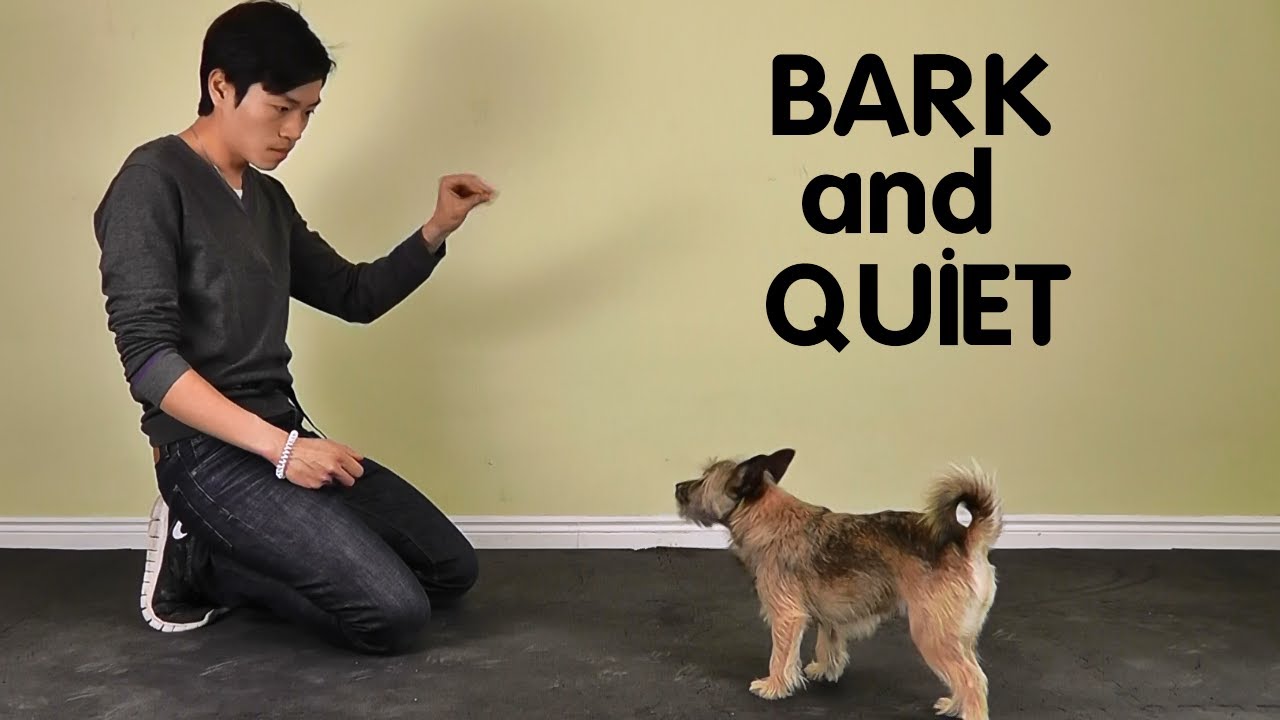
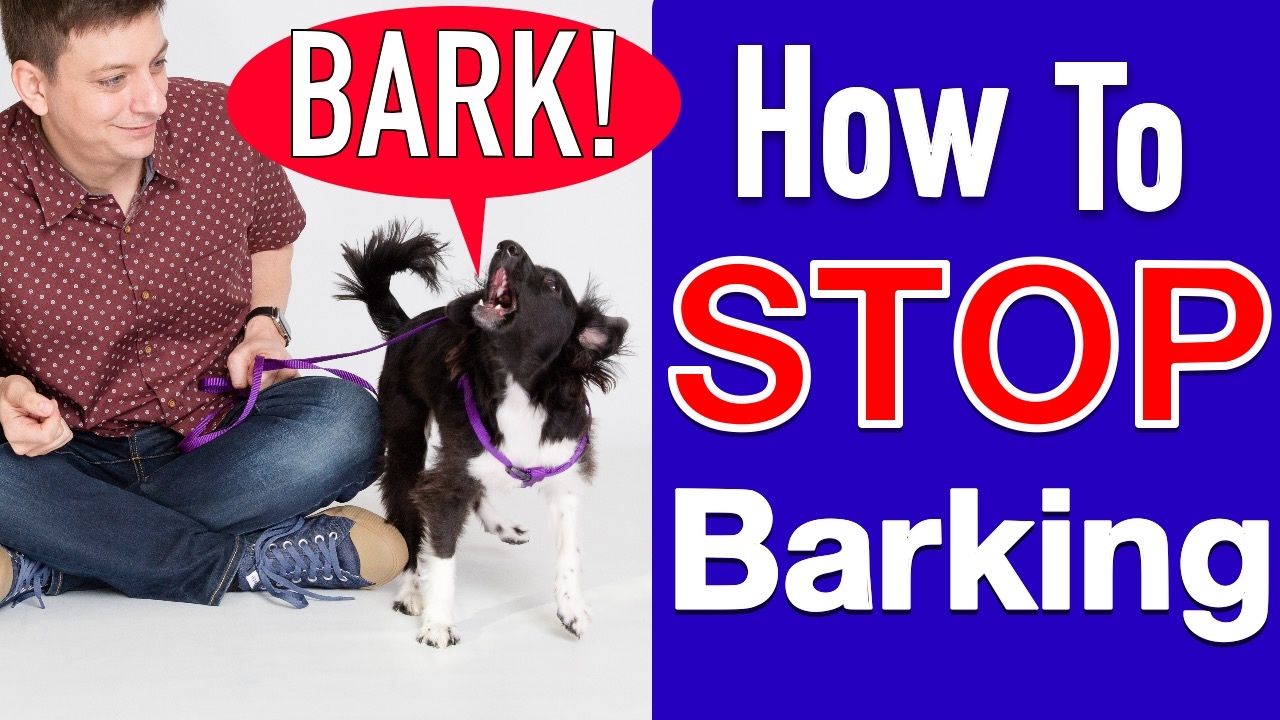
The best way to get a dog to stop barking in an apartment is to find the reason for the barking, reduce triggers, provide daily mental and physical activity, and teach a quiet behavior using reward-based training.
In many apartment communities across the United States, dog barking is one of the most common challenges between pet owners and neighbors. Close walls, shared hallways, elevators, and limited outdoor space can make normal dog sounds feel louder and more frequent. A dog is not barking to be difficult; barking is a communication behavior that usually has a cause.
The most effective approach is not to punish every bark. Instead, owners should identify what starts the barking and teach the dog a different response. A combination of training, environment changes, exercise, and consistent routines can help many dogs become calmer inside an apartment.
Source: i.pinimg.com
Why Dogs Bark More In Apartments
Dogs bark because barking serves a purpose. It can warn owners about something new, express excitement, ask for attention, respond to sounds, or show stress. In an apartment, dogs often encounter more repeated triggers because people, pets, and noises are close by.
A dog that barks at every hallway sound may be practicing alert behavior. A dog that barks when left alone may be struggling with separation-related distress. A dog that barks during long periods indoors may need more activity or enrichment.
Source: i.ytimg.com
Outside noises
Footsteps, doors closing, voices, delivery workers, and other pets can trigger barking because dogs have strong hearing and may notice sounds owners ignore.
Boredom
A dog without enough exercise, play, or mental tasks may create its own activity by barking.
Fear or stress
Some dogs bark because they feel uncertain or threatened by unfamiliar people, sounds, or situations.
Identify The Bark Before Trying To Stop It
Watch when barking happens for several days. Record the time, trigger, duration, and what happens afterward. This simple pattern can reveal whether the problem is related to visitors, being alone, windows, other animals, or a lack of activity.
Alert barking
Often happens near doors or windows and may improve when triggers are reduced.
Attention barking
Can continue when barking successfully gets interaction, even if the interaction is negative.
Prepare Your Apartment Before Training
Training works better when the environment makes success easier. If a dog spends all day reacting to triggers, it may be harder to practice calm behavior.
Start by reducing unnecessary opportunities for barking. This does not teach the final behavior by itself, but it prevents repeated barking while training is underway.
Source: i.ytimg.com
Block visual triggers
Use curtains, window coverings, or furniture placement if your dog reacts to people or animals outside.
Create a calm area
A comfortable resting space can help a dog settle when household activity increases.
Manage hallway exposure
Keep your dog away from the door when possible if every hallway noise causes barking.
Check Basic Needs First
Before changing behavior, make sure your dog has regular bathroom breaks, suitable food and water access, enough rest, and appropriate daily activity. A tired, uncomfortable, or stressed dog may have more difficulty staying quiet.
Daily routine
Consistent walks, feeding times, and rest periods can reduce uncertainty.
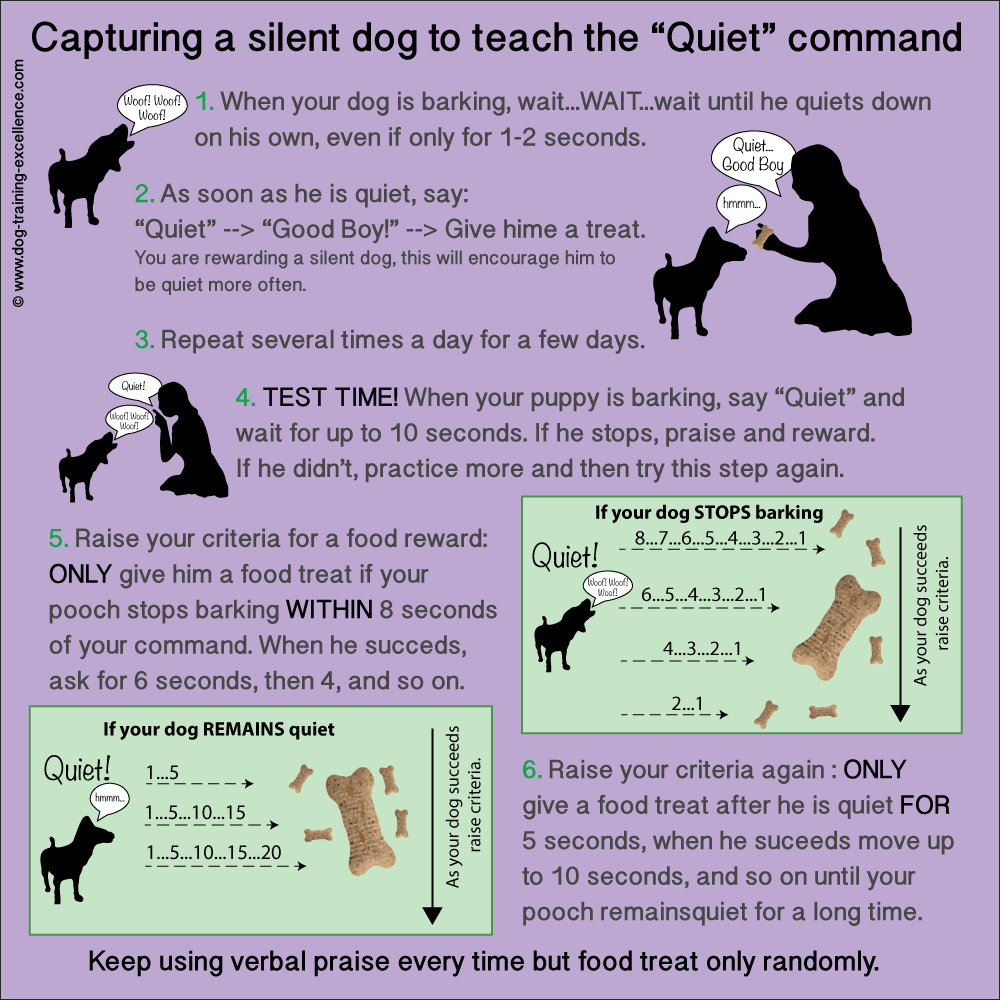
Teach Your Dog A Quiet Command Step By Step
Teaching a quiet cue gives your dog a replacement behavior. The goal is not to stop all barking, because barking is a normal dog behavior. The goal is to help your dog stop when the situation does not require a response.
Choose a calm training time first. It is usually easier to teach quiet behavior before a dog reaches a high level of excitement.
Source: dog-training-excellence.com
Step 1: Wait for a natural pause
When your dog barks, wait for a brief moment of silence and reward the quiet pause.
Step 2: Add a cue
Use a consistent word such as quiet when the dog pauses, then reward calm behavior.
Step 3: Practice with mild triggers
Slowly practice around manageable sounds instead of starting with the strongest trigger.
Use Rewards Correctly
Reward-based training works by making calm behavior valuable to the dog. Give praise, treats, or another reward immediately after the behavior you want. Timing matters because dogs connect rewards with the action that happened just before them.
Reward silence
Avoid only paying attention after barking. Notice and reward calm moments too.
Reduce Barking When You Leave The Apartment
Some apartment barking happens mainly when owners leave. This may involve separation-related distress, which can include barking, whining, pacing, or destructive behavior. These cases often need gradual training rather than simply increasing exercise.
Begin with short absences that your dog can handle. Slowly increase the time away while keeping departures and returns calm.
Source: i.ytimg.com
Practice small departures
Leave for a short time and return before the dog becomes highly distressed.
Avoid dramatic exits
Quiet departures and arrivals can reduce excitement around leaving.
Provide enrichment
Food puzzles and safe activities may help occupy a dog during alone time.
When Alone Training Is Not Enough
If a dog shows intense panic, attempts to escape, injures itself, or cannot tolerate even very short absences, consult a qualified veterinarian or behavior professional. Severe anxiety may require a more specialized plan.
Professional support
A professional can help identify whether the behavior is fear, anxiety, frustration, or another issue.
Common Mistakes That Make Apartment Barking Worse
Some reactions accidentally teach dogs that barking works. For example, shouting at a barking dog may add attention, which can reward the behavior from the dog’s perspective.
Consistency matters. If barking is ignored sometimes but rewarded at other times, the dog may continue trying because the result is unpredictable.
Source: i.ytimg.com
Punishing without teaching
Stopping a behavior without showing the dog what to do instead can leave the original problem unresolved.
Waiting too long
Training is easier when started before barking becomes a long habit.
Ignoring medical causes
Sudden changes in vocal behavior can sometimes relate to discomfort or health problems.
How To Know Training Is Working
Progress usually appears gradually. A dog may still bark sometimes but recover faster, respond to a cue sooner, or choose calm behavior more often.
Positive signs
Shorter barking episodes, longer quiet periods, and easier recovery after triggers show improvement.
Apartment Barking Troubleshooting Guide
When training does not seem to work, review the cause instead of simply adding more corrections. The solution depends on what the dog is experiencing.
Source: i.pinimg.com
Dog barks at neighbors
Reduce door and hallway triggers, then practice rewarding calm responses to mild sounds.
Dog barks all day
Review exercise, enrichment, alone time, and possible separation-related problems.
Dog barks at the window
Limit visual triggers and teach the dog to move away from the window when asked.
When To Ask For Help
Seek help if barking involves aggression, extreme fear, self-injury, sudden unexplained changes, or conflict with housing rules that cannot be managed safely.
Safety first
Avoid methods that increase fear or create risk for the dog, people, or other animals.
Frequently Asked Questions of How To Get Dog To Stop Barking In Apartment
Q
How long does it take to stop a dog from barking in an apartment?
The timeline depends on the cause, the dog’s history, and how consistently training is applied. Some dogs improve in weeks, while long-standing habits may take longer.
Q
Should I ignore my dog when it barks?
Ignoring can help with attention barking, but it may not solve barking caused by fear, excitement, or environmental triggers. The correct response depends on the reason for barking.
Q
Can exercise reduce apartment barking?
Regular exercise and mental enrichment can reduce some boredom-related barking. They are helpful but may not solve fear or separation-related barking alone.
Q
Are bark collars a good solution for apartment dogs?
Bark collars may stop a sound temporarily, but they do not teach the dog why barking happens or what behavior should replace it. Many owners prefer training-based approaches first.
Q
What if my neighbor complains about my dog’s barking?
Take the complaint seriously, track when barking happens, improve management, and begin a consistent training plan. If needed, work with a qualified professional.
✦ Wrapping Up
Conclusion
Getting a dog to stop barking in an apartment requires understanding the reason behind the noise and changing the situation that creates it. Dogs communicate through barking, so the goal is not silence at all costs but better control and calmer responses.
A practical plan combines trigger management, daily needs, reward-based training, and patience. Small improvements, repeated consistently, can help create a quieter home for both the dog owner and the surrounding community.
💡 Key Takeaway
Start by tracking your dog’s barking triggers for one week, then choose one training step and practice it consistently every day.