Why Is Bread Bad For Dogs: Risks & Safe Tips
For dogs in the United States, plain, fully baked bread is usually not toxic in a small bite, but it is not a healthy food to share often. Bread can add extra calories, upset the stomach, or contain harmful ingredients. Raw yeast dough is an emergency because it can expand inside a dog’s stomach and produce alcohol.
The risk depends on the bread type, the amount eaten, your dog’s size and health, and the ingredients. This guide explains when bread is harmless, when it is dangerous, and what to do if your dog eats it.

Is bread bad for dogs?
Bread is not automatically bad for dogs, but it offers little nutritional value and can cause harm in certain forms. A small piece of plain, fully baked white or wheat bread is unlikely to hurt most healthy dogs. However, regular feeding may contribute to weight gain, and some breads contain ingredients that are toxic to dogs.
Bread is mainly made from flour, water, yeast, and sometimes sugar, salt, oil, eggs, or milk. Once baked, the yeast is no longer active. This removes the main danger found in raw dough, but it does not make every type of bread safe.
| Bread type | Risk level | Main concern |
|---|---|---|
| Plain, fully baked bread | Usually low in a small amount | Extra calories and stomach upset |
| Whole-wheat bread | Usually low in a small amount | Calories, fiber, added ingredients |
| Bread with raisins or grapes | High | Possible kidney injury |
| Garlic or onion bread | High | Red blood cell damage and anemia |
| Bread with xylitol | High | Rapid, dangerous low blood sugar |
| Chocolate bread | High | Chocolate toxicity |
| Raw yeast dough | Emergency risk | Stomach expansion and alcohol production |
| Moldy bread | High | Mold toxins and neurologic signs |
The American Kennel Club and ASPCA both distinguish between small amounts of plain bread and bread containing dangerous ingredients.

Why can bread harm dogs?
Bread can harm dogs for four main reasons: dangerous ingredients, raw dough, excess calories, and digestive intolerance.
1. Some bread ingredients are toxic
The bread itself may not be the problem. The added ingredients often create the real danger.
Avoid giving dogs bread that contains:
- Raisins or grapes: These may cause sudden kidney failure in some dogs. The toxic amount is not predictable, so treat any ingestion as serious.
- Garlic, onions, chives, or leeks: These belong to the Allium family. They can damage red blood cells and may cause anemia.
- Xylitol: This sugar substitute can trigger a rapid insulin release and dangerously low blood sugar. It may also cause liver damage. Check labels on sugar-free or low-sugar baked goods.
- Chocolate or cocoa: Chocolate contains theobromine and caffeine, which can affect the heart, nervous system, and muscles.
- Macadamia nuts: These can cause weakness, tremors, vomiting, and other signs in dogs.
- Excessive salt: Very salty foods can cause increased thirst, vomiting, tremors, seizures, or worse when eaten in large amounts.
- Mold: Moldy bread can contain toxins that cause tremors or seizures.
Do not rely only on the product name. A “healthy,” “multigrain,” or “homemade” loaf may still contain raisins, garlic, onion powder, xylitol, or other unsafe ingredients.
2. Raw yeast dough can expand in the stomach
Raw yeast dough is much more dangerous than baked bread. A dog’s warm stomach can provide the conditions needed for dough to keep rising. The dough may expand and cause severe bloating or obstruction.
Yeast also converts sugars into alcohol during fermentation. This can lead to alcohol poisoning. Signs may include:
- A swollen or painful abdomen
- Repeated attempts to vomit
- Weakness or trouble walking
- Sleepiness or confusion
- Low body temperature
- Slow breathing
- Collapse or seizures
Do not wait for symptoms after a dog eats raw yeast dough. Contact a veterinarian or a U.S. animal poison service right away.
3. Bread adds calories without balanced nutrition
Most bread is high in carbohydrates and provides few of the nutrients dogs need from a complete diet. A slice may seem small to a person, but it can be a large treat for a small dog.
For example, if a slice contains about 80 calories, that may be a sizable share of a small dog’s daily treat allowance. This is a hypothetical example because calorie needs vary by body size, age, activity, breed, and health.
Extra calories can contribute to:
- Weight gain
- Obesity
- Diabetes management problems
- Joint strain
- Reduced appetite for balanced dog food
Treats, table food, and snacks should generally remain a small part of a dog’s daily calorie intake. The exact amount should be based on your dog’s diet and veterinary advice.
4. Some dogs do not tolerate bread well
Bread may cause gas, loose stool, vomiting, or stomach discomfort in some dogs. Wheat or other ingredients may be a problem for an individual dog, but true food allergies are less common than many owners think.
A dog with repeated itching, ear infections, vomiting, or diarrhea needs a veterinary assessment. Do not diagnose a gluten allergy based on one episode of stomach upset.

How much bread can a dog eat?
There is no single safe serving size for every dog. A tiny piece of plain, fully baked bread may be tolerated by many healthy dogs, but portion size should match the dog’s body size and health.
Use these rules:
- Choose only plain, fully baked bread with no toxic add-ins.
- Offer a small bite, not a whole slice.
- Count the calories as part of the day’s treats.
- Stop if your dog develops vomiting, diarrhea, gas, itching, or other signs.
- Ask your veterinarian before offering bread to a dog with diabetes, obesity, pancreatitis, food allergies, or digestive disease.
Bread should not replace a complete and balanced dog food. It should also not become a daily reward simply because a dog likes it.
Can puppies eat bread?
A small piece of plain baked bread may not poison a healthy puppy, but puppies have small stomachs and need food that supports growth. Bread can fill a puppy without providing the right balance of protein, fat, vitamins, and minerals.
Keep bread and other table foods limited. Contact a veterinarian promptly if a puppy eats raw dough, raisin bread, garlic bread, or another risky product.
Is whole-wheat bread better for dogs?
Whole-wheat bread may contain more fiber than white bread, but it is not automatically better for dogs. It still adds calories and may contain unsafe ingredients. Dogs do not need bread as a source of fiber when they eat a complete diet.
Read the full ingredient list. “Whole wheat” does not mean “safe for every dog.”

What should you do if your dog eats bread?
The right response depends on what kind of bread your dog ate.
If your dog ate a small amount of plain baked bread
Remove the remaining bread and check the ingredient label. If the bread contained no toxic ingredients and your dog seems normal, monitor for vomiting, diarrhea, bloating, or unusual behavior.
Do not give more food as a home remedy. Keep fresh water available, and avoid trying to make your dog vomit unless a veterinarian specifically instructs you to do so.
If your dog ate raw yeast dough
Call your veterinarian, an emergency veterinary hospital, or a U.S. animal poison service immediately. Raw dough can cause a dangerous emergency even if your dog looks normal at first.
In the United States, you can contact:
- ASPCA Animal Poison Control Center: 888-426-4435
- Pet Poison Helpline: 855-764-7661
Fees may apply. Have the product package, ingredient list, estimated amount, time of ingestion, and your dog’s weight ready.
If the bread contained raisins, grapes, xylitol, garlic, onion, chocolate, or mold
Call for professional advice at once. Do not wait for symptoms. Some toxic effects can begin before obvious signs appear, and early treatment may reduce the risk of serious illness.
Seek emergency care for these signs
Go to an emergency veterinarian if your dog has:
- A swollen, hard, or painful belly
- Repeated vomiting or unproductive retching
- Trouble breathing
- Collapse or severe weakness
- Tremors or seizures
- Pale gums
- Severe sleepiness or confusion
- Trouble walking
- Signs of low blood sugar, such as weakness or disorientation
Bring the package or a photo of the ingredients if possible. Accurate product information helps the veterinary team judge the risk.
How to prevent bread-related problems
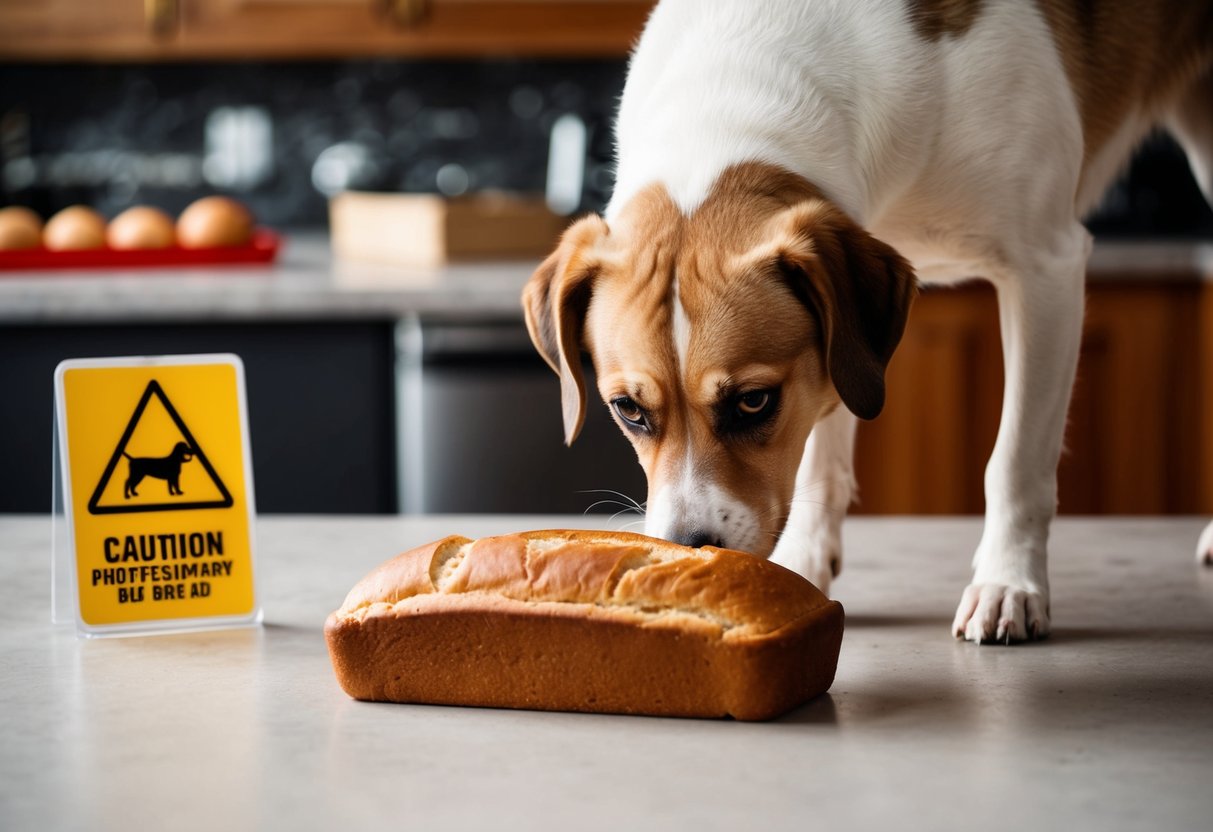
The safest approach is to keep bread and dough away from dogs, especially during baking and meal preparation.
- Store bread in a closed cupboard or container.
- Keep raw dough out of reach while it rises.
- Do not leave sandwiches, toast, or baked goods on low tables.
- Check labels for raisins, onion, garlic, xylitol, and chocolate.
- Teach children not to share food without permission.
- Use dog treats made for dogs when you want to reward good behavior.
- Ask guests not to feed your dog from the table.
If your dog repeatedly steals bread, consider using a sealed food container and a pet-safe kitchen routine. Prevention is easier than deciding whether an unknown baked product is toxic after it has been eaten.
For a dog with a health condition, ask your veterinarian for suitable treats. Plain cooked vegetables or a portion of the dog’s usual food may be better options, but even these should fit the dog’s diet.

Key takeaways
- Plain, fully baked bread is usually low risk in a small amount for a healthy dog.
- Bread is not a necessary part of a dog’s diet.
- Raw yeast dough can expand and produce alcohol. Treat it as an emergency.
- Raisins, grapes, xylitol, garlic, onions, chocolate, macadamia nuts, and mold can make bread dangerous.
- Frequent bread treats can add too many calories.
- Call a veterinarian or animal poison service when the bread type, ingredients, or amount is uncertain.
FAQs
Can dogs eat white bread?
Most healthy dogs can tolerate a small piece of plain, fully baked white bread. It should not contain raisins, garlic, onion, xylitol, chocolate, or other unsafe ingredients. White bread is still a calorie-rich human food, so it should remain an occasional treat.
Can dogs eat toast?
Plain toast is usually safe in a small amount if it is fully baked and free of harmful toppings. Butter, garlic spread, onion seasoning, chocolate, and sugar-free toppings can create additional risks.
Can dogs eat bread with butter?
A small amount of plain bread with a little butter is unlikely to poison most dogs, but it is not a good regular treat. Butter is high in fat and may cause stomach upset. Large amounts of fatty food can increase the risk of pancreatitis in susceptible dogs.
Can bread help a dog with an upset stomach?
Bread is not a reliable treatment for vomiting or diarrhea. It may add calories and can worsen stomach problems in some dogs. If symptoms are severe, last more than a short period, or occur with weakness, blood, pain, or repeated vomiting, contact a veterinarian.
Can dogs eat sourdough bread?
Fully baked plain sourdough may be tolerated in a small amount, but raw sourdough starter or uncooked dough can ferment and produce alcohol. Sourdough bread may also contain garlic, onion, raisins, or other unsafe additions. Check the ingredients before offering any.
What if my dog ate a whole loaf of bread?
A whole loaf may cause stomach upset and a large calorie load. The risk is higher if the loaf contained raisins, xylitol, garlic, onion, chocolate, macadamia nuts, or mold. Contact your veterinarian with the product details and your dog’s weight, especially if the dog is small or has symptoms.
Conclusion
Bread is not automatically toxic to dogs, but it is usually an unnecessary food. A small piece of plain, fully baked bread may be fine for many healthy dogs, while raw dough and bread with toxic ingredients can cause a medical emergency.
Check the label, control the portion, and call a veterinarian promptly when your dog eats raw dough, moldy bread, or bread containing raisins, grapes, xylitol, garlic, onions, chocolate, or another risky ingredient.