Why Does My Dog Nibble With Front Teeth: Explained
In the United States, many dog owners notice their dog using tiny front teeth to nibble their skin, clothing, fur, or another dog. This behavior is often called cobbing, picking, or flea-biting. A calm dog may do it as a social grooming habit or a sign of affection. However, frequent nibbling can also point to itchy skin, fleas, allergies, pain, stress, or a compulsive habit.
The meaning depends on what your dog nibbles, how often it happens, and what your dog’s body language looks like. Gentle, brief nibbling during cuddling is usually less concerning than intense nibbling that causes skin damage or comes with scratching, hair loss, growling, or other changes.

What Does It Mean When a Dog Nibbles With Its Front Teeth?
A dog’s small front teeth, called incisors, help it pick up objects, groom fur, and remove small particles from the coat. When a dog makes quick, light bites with these teeth, it may be using a normal grooming or social behavior.
Common reasons include:
- Social grooming: Your dog may be grooming you or another pet.
- Affection: Some dogs use gentle nibbling as a form of contact.
- Play: Puppies and young dogs often explore with their mouths.
- Itching: The dog may be trying to remove an irritant from the skin or coat.
- Fleas or other parasites: Small bites can be an attempt to catch or relieve irritation from parasites.
- Allergies or skin disease: Repeated nibbling may target an itchy area.
- Pain: A dog may nibble near a sore joint, wound, or irritated patch.
- Stress or boredom: Repetitive nibbling can become a self-soothing habit.
The behavior is usually harmless when it is gentle, brief, and easy to interrupt. It deserves closer attention when it is new, intense, repetitive, or focused on one body area.
Nibbling is not the same as biting
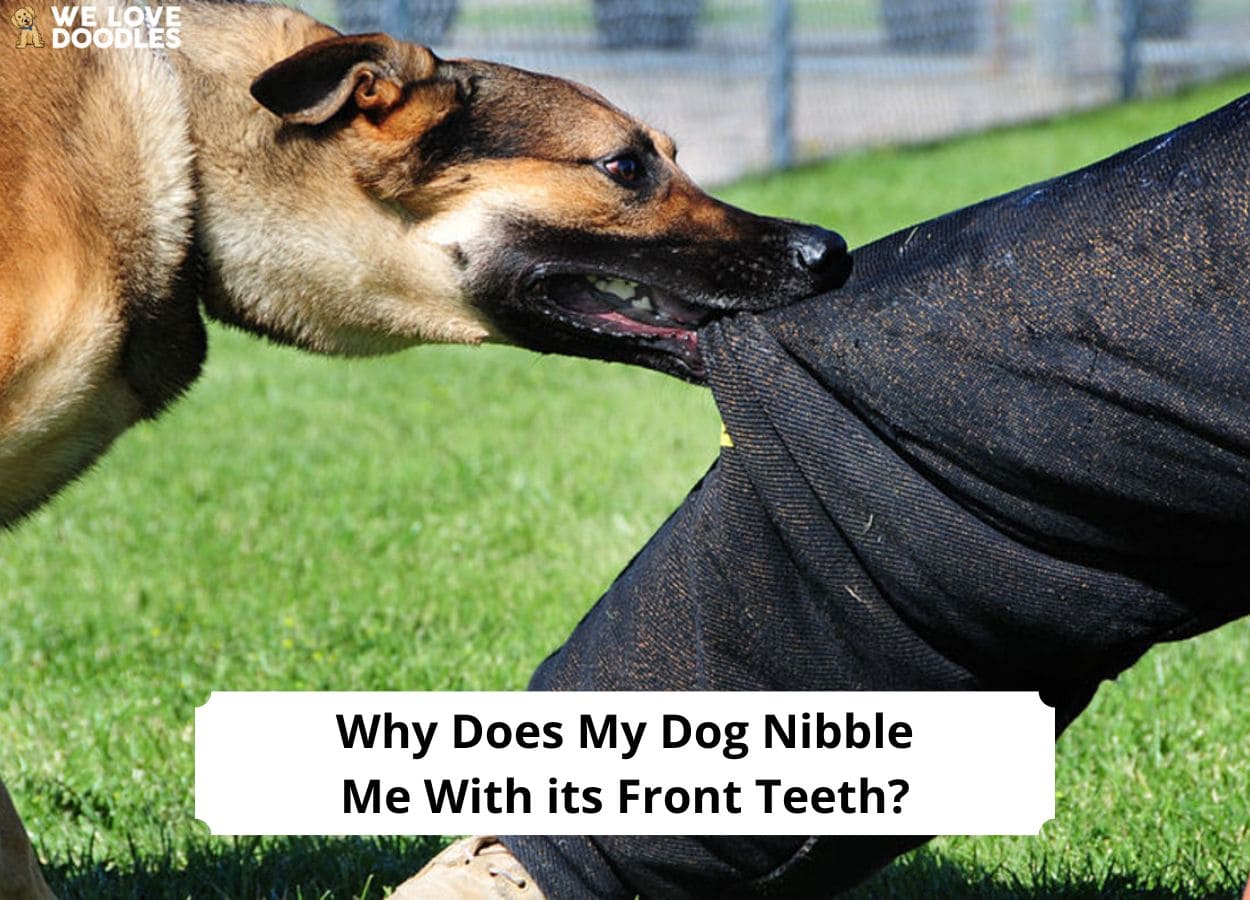
A gentle nibble usually involves relaxed facial muscles, loose body posture, and little or no pressure. A bite is faster, harder, and more likely to occur with stiff posture, a hard stare, raised lips, growling, or snapping.
Still, a dog can cause harm without showing clear aggression. Even playful mouthing can bruise skin or frighten a child. Treat the behavior as a communication signal, not as proof that your dog is being “bad.”
Why Dogs Nibble People
Dogs may nibble a person’s hands, arms, ears, hair, or clothing for social reasons. Your dog may be trying to groom you, gain attention, start play, or respond to the taste and smell of your skin.
Social grooming and affection
Dogs groom members of their social group. Gentle front-tooth nibbling may be your dog’s version of picking debris from another dog’s coat. Some dogs use this behavior during cuddling because close contact makes them feel safe.
This is more likely when your dog has:
- A soft or loose body
- Relaxed ears
- A gently wagging tail
- Normal breathing
- No signs of fear or tension
- Easy response when you move away
The behavior may feel sweet, but you still get to set limits. If your dog nibbles your skin, calmly move your hand away and offer a toy or chew instead. Avoid yelling or hitting, which can increase fear and make mouth-related behavior harder to manage.
Attention and play
Dogs repeat actions that get a response. If nibbling makes you laugh, talk, push, or play, your dog may learn that it works.
To reduce attention-based nibbling:
- Stop moving the body part being nibbled.
- Keep your voice calm.
- End interaction for a few seconds.
- Offer a toy when your dog settles.
- Praise calm contact and toy play.
Everyone in the home should use the same response. Mixed rules can confuse a dog. If one person allows hand nibbling and another reacts strongly, the dog may continue testing the behavior.
Taste and scent
Sweat, lotion, food smells, and salt on the skin can attract a dog. Clothing may also carry strong scents from food, outdoor activity, or other animals.
Do not allow your dog to lick or nibble skin covered with medication, sunscreen, essential oils, nicotine products, or cleaning chemicals. Some human products can be harmful when swallowed. Call your veterinarian or the ASPCA Animal Poison Control Center if you think your dog consumed a toxic substance.

Why Dogs Nibble Their Own Fur or Skin
When a dog repeatedly nibbles its own body, itching or discomfort becomes more likely. The dog may be using its incisors to scratch, pull, or remove something from the coat.
Common medical causes include:
- Fleas or flea allergy dermatitis
- Mites or other external parasites
- Environmental allergies
- Food-related allergic reactions
- Bacterial or yeast skin infections
- Dry or irritated skin
- A wound, hot spot, or insect bite
- Pain in a joint or body area
- Anal gland discomfort when the dog focuses near the tail
Look at the exact spot your dog targets. Part the fur in good light and check for redness, scabs, moist skin, hair loss, swelling, flea dirt, or a foreign object. Black specks that turn reddish-brown on a wet white paper towel may be flea dirt, but this home check is not a diagnosis.
Do not apply human creams, steroid products, flea medicine, or essential oils unless a veterinarian has confirmed that the product and dose are safe for your dog. Some products made for people or other species can cause poisoning.
What the location may suggest
| Nibbling location | Possible explanation | What to check |
|---|---|---|
| Paws | Allergies, irritation, yeast, a cut, or a foreign object | Redness, odor, swelling, licking between toes |
| Tail base or lower back | Fleas, flea allergy, or skin irritation | Flea dirt, scabs, hair loss |
| Hips or legs | Itching, pain, or habit | Limping, stiffness, sore skin |
| Belly or groin | Allergies, infection, or irritation | Rash, redness, darkened skin |
| One small area | Wound, insect bite, pain, or foreign material | Swelling, heat, discharge, tenderness |
| Near the anus | Anal gland trouble, skin irritation, or parasites | Scooting, odor, swelling, difficulty sitting |
A dog can have fleas even when you do not see live fleas. Dogs with flea allergy may react strongly to only a few bites. A veterinarian can help identify the cause and choose a parasite treatment approved for your dog’s age, weight, and health status.

Why Puppies Nibble With Their Front Teeth
Puppies use their mouths to explore. They may nibble hands, sleeves, furniture, littermates, and their own fur. Teething can make this behavior more frequent because chewing may help relieve gum discomfort.
Puppy nibbling is not always aggression. It often happens during excitement, tiredness, play, or attempts to get attention. Puppies also need to learn that human skin is not a toy.
Use this simple pattern:
- Keep hands still when the puppy nibbles.
- Say a calm marker such as “too bad” or say nothing.
- Redirect the puppy to a safe, size-appropriate chew toy.
- Praise the puppy when it bites the toy.
- Give a quiet rest period if the puppy remains wild or mouthy.
Avoid rough hand games, chasing the puppy, or pulling clothing from its mouth. These actions can turn nibbling into a more exciting game.
Puppies need safe supervision around chew items. Avoid objects that can splinter, break into large pieces, or become lodged in the throat. Your veterinarian can help you choose suitable options for your puppy’s size and chewing style.

When Front-Tooth Nibbling May Signal Stress or Compulsive Behavior
Some dogs nibble when they feel anxious, frustrated, overstimulated, or bored. Repetitive behavior may release tension, much like pacing or excessive licking.
Stress-related nibbling may occur after:
- A move or change in the household
- A new baby, pet, or roommate
- Loud construction or fireworks
- Changes in work schedules
- Limited exercise or mental activity
- Conflict with another pet
- Separation from the owner
Watch for other stress signals, such as yawning when not tired, lip licking, hiding, pacing, panting, trembling, tucked posture, or repeated attempts to escape.
First, rule out medical causes. Skin disease and pain can look like a behavior problem. Then improve the dog’s routine with predictable walks, sniffing time, reward-based training, food puzzles, and a quiet rest area.
Do not punish repetitive nibbling. Punishment may raise anxiety and can make the behavior harder to understand. If the dog cannot stop, injures the skin, or spends a large part of the day nibbling, ask your veterinarian for help. A veterinary behaviorist or qualified reward-based behavior professional may also be useful.

How to Stop a Dog From Nibbling You
The best response depends on the reason. Training can reduce social or attention-based nibbling, but it will not cure fleas, allergies, pain, or infection.
If the nibbling is gentle and social
- Move away without making the behavior exciting.
- Avoid laughing, pushing, or wrestling.
- Ask for a simple behavior such as “sit.”
- Reward the sit with calm attention.
- Provide a toy or chew for mouth activity.
- Stop the session if the dog returns to your skin.
If the dog nibbles during play
Use toys between your hands and the dog’s mouth. Tug toys, fetch toys, and food puzzles can provide safer outlets. Keep play short if your dog becomes overexcited.
If teeth touch skin, pause the game. Resume only when the dog is calm. This teaches a clear rule: toys keep the game going; skin ends the game.
If the dog nibbles its own body
Do not focus only on stopping the motion. Find the trigger.
Check:
- Whether parasite prevention is current
- Whether the skin is red, moist, swollen, or smelly
- Whether the dog has a new food, shampoo, medication, or bedding
- Whether the behavior began after an injury or stressful event
- Whether the dog targets one exact spot
Take a short video for your veterinarian. Note the date it began, how often it occurs, the body area involved, and any changes in appetite, sleep, stool, movement, or mood.

When Should You Call a Veterinarian?
Schedule a veterinary appointment when nibbling is new, persistent, or focused on one area. A prompt exam is especially useful when you see skin changes or other signs of discomfort.
Contact a veterinarian soon if your dog has:
- Hair loss, scabs, redness, or open sores
- A bad odor, discharge, or moist skin
- Frequent scratching or licking
- Fleas, ticks, or suspected mites
- Limping or pain
- Swelling near a joint or wound
- Repeated nibbling that interrupts sleep
- A sudden behavior change
- Reduced appetite or unusual tiredness
Seek urgent veterinary care for severe bleeding, trouble breathing, facial swelling, collapse, poisoning, a deep wound, or a dog that appears to be in severe pain. If your dog bites a person and breaks the skin, wash the wound with soap and running water and seek medical advice. Follow local reporting and rabies-vaccination rules in your state or county.
A veterinarian may examine the skin, mouth, joints, ears, and anal area. Depending on the findings, the visit may include skin testing, parasite checks, allergy evaluation, pain assessment, or behavior guidance.

Common Mistakes to Avoid
Assuming every nibble means affection
Gentle nibbling can be social, but repeated nibbling may signal itching or pain. Look at the pattern instead of assigning one meaning.
Treating the skin without a diagnosis
Home remedies can worsen irritation or hide important signs. Human medicines and essential oils may be unsafe for dogs.
Using punishment
Physical punishment can increase fear and may encourage defensive biting. Reward calm behavior and manage access to skin instead.
Ignoring fleas because none are visible
Fleas can be difficult to find, especially on dogs with thick coats. A veterinarian can recommend a safe, effective parasite-control plan.
Waiting too long when the dog causes injury
An open sore can become infected. Persistent licking and nibbling can also slow healing and create a cycle of itch and irritation.

Key Takeaways
- Dogs often nibble with their front teeth as a form of grooming, affection, play, or exploration.
- Gentle, brief nibbling with relaxed body language is usually less concerning.
- Repeated nibbling of the dog’s own skin may point to fleas, allergies, infection, pain, or stress.
- Check the target area for redness, hair loss, scabs, odor, swelling, and parasites.
- Redirect people-nibbling to toys and reward calm behavior.
- Do not use human creams, flea products, or essential oils without veterinary guidance.
- Contact a veterinarian when the behavior is new, intense, persistent, or causes skin damage.
Frequently Asked Questions
Is it normal for dogs to nibble each other with their front teeth?
Often, yes. Dogs may use their incisors during social grooming or play. It is more concerning when one dog tries to escape, cries, becomes stiff, or develops wounds. Supervise play and separate the dogs if the interaction becomes tense.
Why does my dog nibble me but not other people?
Your dog may associate you with comfort, play, food, or attention. Your scent may also be more familiar. If the nibbling is unwanted, use the same calm redirection each time and reward an alternative behavior.
Is front-tooth nibbling a sign of anxiety?
It can be, but it is not proof of anxiety. Look for pacing, panting, hiding, trembling, lip licking, or other stress signals. Rule out skin disease and pain before treating the behavior as emotional.
Can fleas cause a dog to nibble with its front teeth?
Yes. A dog may use its front teeth to catch fleas or soothe itchy skin. Flea allergy can cause intense itching even when only a few fleas are present. Ask a veterinarian about a product made for your dog’s species, age, weight, and health needs.
Should I stop my dog from nibbling my skin?
You should stop it if it hurts, damages skin, involves children, or may expose the dog to unsafe products. Calmly withdraw attention, offer a toy, and reward gentle behavior. If the behavior is hard to interrupt, seek veterinary or qualified behavior help.
Conclusion
A dog that nibbles with its front teeth may be showing affection, grooming behavior, playful curiosity, or a need for attention. The same motion can also be a response to fleas, allergies, pain, infection, or stress.
Start by observing the target, frequency, body language, and skin condition. Redirect gentle people-nibbling, but arrange a veterinary exam when the behavior is persistent, focused, painful, or linked to visible skin changes. The safest solution addresses the cause rather than simply stopping the motion.
Research basis
This guide is based on general veterinary guidance from: