Why Do Dogs Crave Attention: Canine Needs Explained
Introduction
Dogs in U.S. homes often seek attention because people are their main source of safety, play, food, exercise, and social contact. Petting, eye contact, talking, and games can all reward a dog and strengthen the bond between the dog and its family.
Most attention-seeking behavior is normal. It becomes a concern when it starts suddenly, seems frantic, disrupts daily life, or comes with pain, fear, or other behavior changes. The right response is to find the reason, meet the dog’s needs, and reward calm behavior instead of rewarding rude or risky behavior.

Why Do Dogs Crave Attention?
Dogs seek attention because social contact has value to them. Attention may provide comfort, mental activity, play, access to resources, or relief from boredom. In many cases, the behavior also continues because it works: the dog paws, whines, nudges, or barks, and a person responds.
Dogs do not usually think of attention as a human would. They learn through consequences. If a behavior leads to petting, talking, eye contact, food, play, or being let outside, the dog may repeat it.
Common reasons include:
- Social connection: Dogs are social animals and often want to stay near their family.
- Boredom: A dog with too little exercise or mental activity may create its own entertainment.
- Learned behavior: A dog may repeat actions that have earned attention in the past.
- Anxiety or fear: Some dogs seek people when they feel unsafe or distressed.
- Change in routine: A new work schedule, move, baby, pet, or travel can increase clinginess.
- Physical discomfort: Pain, illness, hearing loss, vision loss, or cognitive decline can change behavior.
- Breed and personality: Some dogs are naturally more social, active, vocal, or people-focused than others.
The American Veterinary Medical Association explains that behavior changes can be linked to medical problems, stress, aging, or changes in the home. That is why a sudden change should not be dismissed as simple neediness.
Attention seeking is not the same as separation anxiety
A dog that follows you from room to room may simply enjoy company. A dog with separation anxiety may panic when left alone or when it expects you to leave. Signs can include:
- Destructive behavior near doors or windows
- Repeated barking or howling when alone
- Drooling, trembling, pacing, or frantic movement
- Attempts to escape a crate, room, or house
- House-soiling only when separated
- Extreme distress during departure routines
Separation anxiety is a behavior disorder, not a sign that a dog is being spiteful. The ASPCA recommends behavior treatment that may include gradual alone-time training and professional guidance.
How Dogs Learn to Ask for Attention
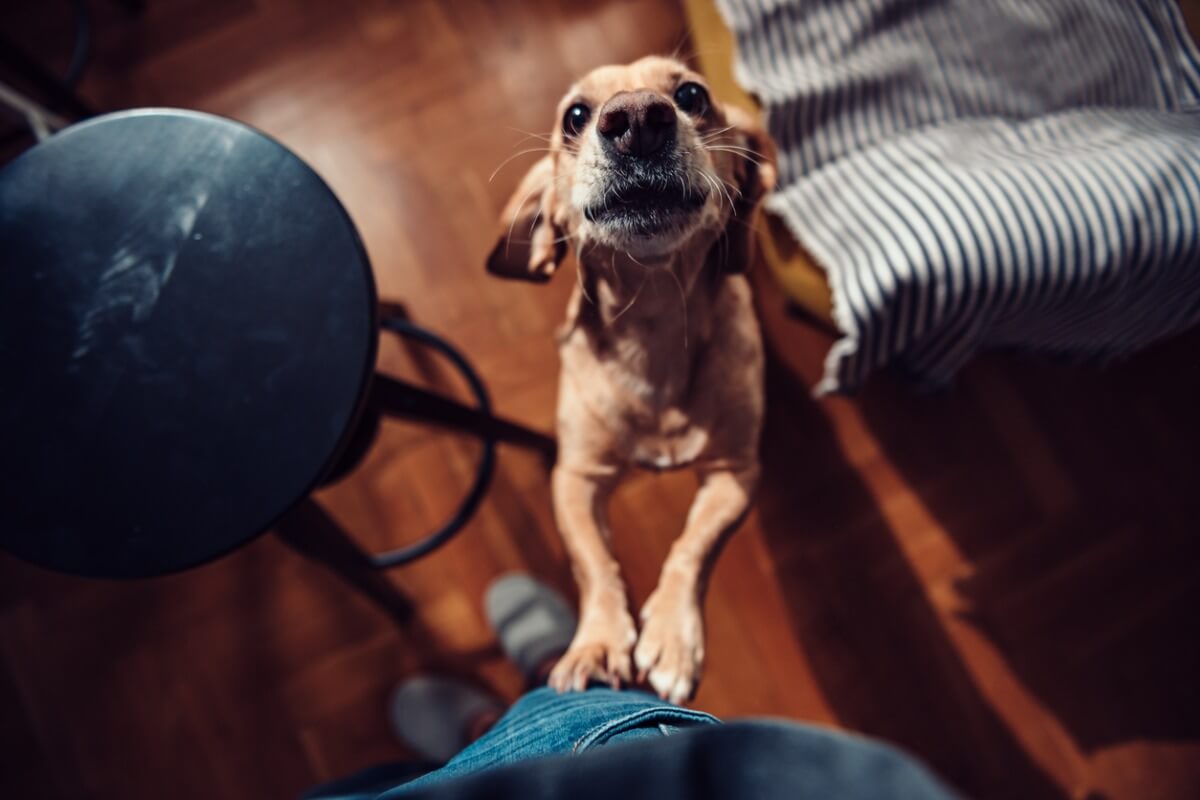
A dog learns that attention-seeking works when a person responds soon after the behavior. Even a negative response can act as attention. Saying “no,” pushing the dog away, or making eye contact may still reward the behavior because the dog got a reaction.
For example, imagine a dog that paws at a person during dinner. If the person talks to the dog, gives a food scrap, or gets up to fill the bowl, the dog may learn that pawing produces results. The next time, the dog may paw sooner or use more force.
This is a form of reinforcement. Reinforcement means a consequence makes a behavior more likely to happen again.
Why inconsistent responses can make behavior worse
Inconsistent rewards can create persistent behavior. If barking works one time out of five, the dog may keep trying because the payoff is unpredictable. This pattern is similar to a slot machine: occasional rewards can make a behavior hard to stop.
A household plan should therefore be consistent:
- Everyone should respond to the same behavior in the same way.
- Calm behavior should earn attention.
- Jumping, pawing, and barking should not earn the desired reward when it is safe to ignore them.
- The dog should have another behavior to perform, such as sitting or resting on a mat.
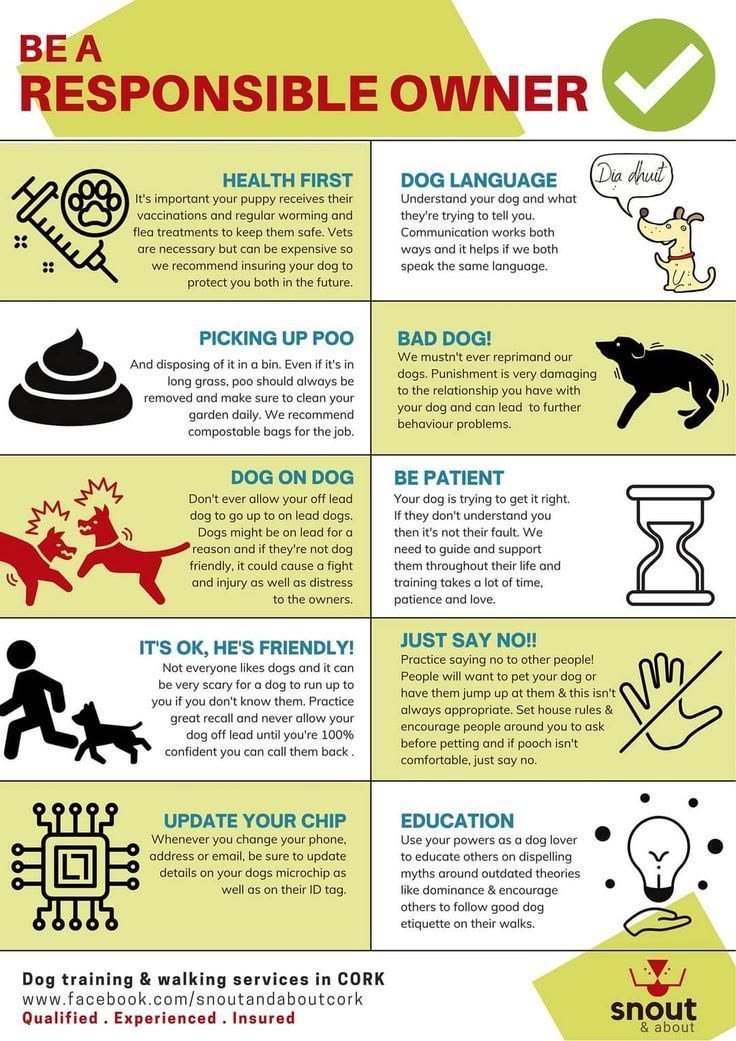
Do not punish a dog for seeking contact. Harsh corrections may increase fear and can make barking, jumping, or defensive behavior worse. The American Veterinary Society of Animal Behavior supports reward-based training and advises against aversive training methods.

How to Tell What Your Dog Needs
The behavior’s timing, body language, and setting can reveal the likely cause. Look at what happens before and after the dog seeks attention.
| What you observe | Possible reason | Helpful first step |
|---|---|---|
| The dog paws at you before walks or meals | Learned request or unmet routine | Teach a quiet sit or mat behavior |
| The dog brings toys and nudges your hand | Play or social interaction | Schedule short play sessions |
| The dog follows you and seems unable to settle | Anxiety, habit, or under-stimulation | Add calm training and assess stress signs |
| The dog suddenly becomes clingy | Pain, illness, sensory loss, or household change | Arrange a veterinary check if the change persists |
| The dog barks when ignored | Reinforced barking or frustration | Avoid rewarding barking and reinforce quiet |
| The dog seeks attention mainly when alone | Separation-related distress | Contact a veterinarian or qualified behavior professional |
| The dog asks to go out often | Bathroom need or medical issue | Check elimination patterns and consult a veterinarian |
Read the dog’s body language
A relaxed dog may have loose muscles, a soft face, normal breathing, and a relaxed tail. A worried dog may show:
- Lip licking or yawning outside normal tiredness
- Pacing or trembling
- A tucked tail
- Flattened ears
- Whale eye, where the whites of the eyes show
- Panting without heat or exercise
- Repeated attempts to stay pressed against a person
Body language must be read in context. A wagging tail does not always mean happiness. Tail movement can also reflect excitement, conflict, or stress.
Check basic needs first
Before changing training, check whether the dog has enough:
- Exercise suited to its age and health
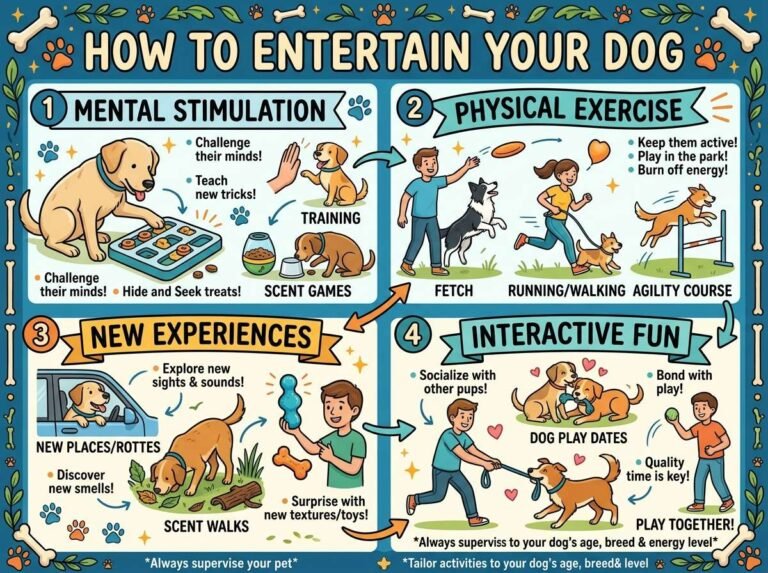
- Mental work, such as scent games or food puzzles
- Sleep and quiet time
- Water and regular meals
- Bathroom breaks
- Safe social contact
- Predictable routines
Puppies, adolescent dogs, working breeds, and highly active dogs may need more structured activity than a calm adult companion dog. Older dogs may need shorter walks, more rest, and easier mental games.

How to Stop Excessive Attention-Seeking
The most effective approach is not to remove attention. It is to teach the dog a better way to request it and then reward that choice.
1. Rule out urgent problems
Contact a veterinarian promptly if attention-seeking starts suddenly or appears with:
- Pain, limping, stiffness, or trouble rising
- Loss of appetite or unusual thirst
- Vomiting or diarrhea
- Trouble breathing
- Confusion or disorientation
- New house-soiling
- Restlessness, repeated vocalizing, or inability to sleep
- Aggression or a major change in temperament
Emergency signs, such as difficulty breathing, collapse, seizures, severe pain, repeated vomiting, or suspected poisoning, require immediate veterinary care. In the United States, contact your veterinarian, an emergency animal hospital, or the ASPCA Animal Poison Control Center for possible toxin exposure.
2. Meet the dog’s needs before training
A dog that needs a bathroom break, exercise, food, or relief from pain may not be ready to learn calm behavior. Start with a predictable daily routine.
A routine might include:
- A morning bathroom break and walk
- A short training session
- Rest in a quiet area
- A food puzzle or sniffing activity
- Another walk or play period
- Scheduled calm contact with the family
Exercise should fit the dog’s health and breed. Do not force strenuous activity on a puppy, senior dog, overweight dog, or dog with a medical condition without veterinary advice.
3. Reward calm behavior before the dog demands attention
Watch for small calm moments. When the dog lies down, sits quietly, or rests on a mat, offer gentle attention, a treat, or a calm “good dog.”
This teaches a clear rule:
Calm behavior makes good things happen.
At first, reward calm behavior often. As the dog improves, gradually increase the time between rewards.
4. Teach an alternate behavior
Choose a behavior that is easy to reward and safe to use. “Sit,” “touch,” or “go to your mat” can replace jumping, pawing, or barking.
A simple mat-training plan:
- Place a mat near you.
- Reward the dog for looking at or stepping on the mat.
- Reward standing or sitting on the mat.
- Give a treat when the dog lies down.
- Add short periods of calm before rewarding again.
- Slowly practice while you read, work, eat, or watch television.
Keep sessions short. Several sessions of two to five minutes can work better than one long session.
5. Avoid rewarding rude behavior
If the dog jumps for attention, turn away and wait for four paws to reach the floor. If the dog paws, stop moving your hand and wait for a calm pause. If the dog barks for play, wait for quiet before starting the game.
This step only works when ignoring is safe and the dog’s needs are already met. Do not ignore frantic behavior, panic, pain, or a dog that may injure itself.
6. Provide planned attention
Scheduled attention can reduce the need for constant demands. Plan short periods for:
- Petting
- Training
- Fetch or tug
- Sniff walks
- Grooming
- Calm time together
Planned contact also helps the dog learn that attention does not have to be obtained through barking or pawing.
7. Build independence gradually
Some dogs need practice being calm without touching a person. Start with a few seconds of distance while the dog has a safe activity, such as a food puzzle or chew approved for that dog.
Return before the dog becomes distressed. Increase time slowly. If the dog panics, the step was too large. Separation-related problems often require a structured plan from a veterinarian or certified behavior professional.

Common Mistakes to Avoid
Giving attention only after the dog demands it
If all petting and play begin after barking or pawing, the dog may learn to demand more. Initiate some attention when the dog is already calm.
Using punishment as the main solution
Yelling, leash corrections, shock collars, or physical punishment may stop a behavior for a moment but can increase fear and stress. They also do not teach the dog what to do instead.
Ignoring every behavior
Ignoring is not a complete training plan. The dog still needs exercise, interaction, clear rules, and a reward for an appropriate alternative.
Changing too much at once
A dog may struggle if its exercise, feeding, sleep, and attention schedule all change on the same day. Make one or two changes, track the response, and adjust gradually.
Assuming clinginess is always emotional
A dog that becomes needy overnight may be sick, painful, confused, or losing hearing or vision. A medical check is especially important for senior dogs.

When to Contact a Veterinarian or Behavior Professional
Talk with a veterinarian when attention-seeking is new, intense, or paired with physical or emotional distress. A veterinarian can check for medical causes and discuss referrals if needed.
Seek behavior help when:
- The dog shows separation distress.
- The behavior includes growling, snapping, or biting.
- The dog cannot settle even after exercise and enrichment.
- The family cannot follow a consistent plan.
- Training attempts cause fear or escalation.
- The dog damages property or tries to escape.
- The behavior affects sleep, work, or safety.
Look for a board-certified veterinary behaviorist through the American College of Veterinary Behaviorists, or a reward-based trainer with suitable credentials and clear methods. Ask what tools and techniques the professional uses before booking.

Frequently Asked Questions
Do dogs crave attention because they are bored?
Sometimes. Boredom is more likely when a dog has little exercise, few chances to sniff or explore, and no mental tasks. However, sudden attention-seeking should not be blamed on boredom until illness, pain, anxiety, and routine changes have been considered.
Why does my dog want attention all the time?
Your dog may have learned that frequent demands work, or it may need more activity, comfort, or structure. The best response is to provide planned exercise and attention, reward calm behavior, and watch for signs of anxiety or illness.
Why does my dog paw at me?
Pawing can mean “pet me,” “play with me,” “feed me,” or “let me out.” The meaning depends on the situation. If pawing is safe to ignore, wait for calm and reward a sit or another behavior instead.
Should I ignore my dog when it wants attention?
Ignore only mild, safe demands after basic needs are met. Do not ignore panic, pain, breathing trouble, illness, aggression, or behavior that may cause injury. Reward a calm replacement behavior as soon as the dog offers it.
Can too much attention make a dog clingy?
Constantly rewarding demanding behavior can make that behavior stronger. Normal affection does not automatically create clinginess. A balanced plan includes affection, exercise, training, rest, and gradual practice with calm independence.
Conclusion
Dogs crave attention because people provide social contact, safety, play, comfort, and rewards. Most attention-seeking is normal, but the cause matters. A dog that suddenly becomes clingy may need medical care, while a dog that has practiced barking or pawing may need a clear replacement behavior.
Start by checking health and basic needs. Then reward calm behavior, provide planned attention, and teach the dog how to ask politely. If fear, panic, aggression, or sudden behavior change is present, involve a veterinarian or qualified behavior professional rather than relying on punishment or guesswork.