Why Are Big Dogs So Friendly: The Real Reason
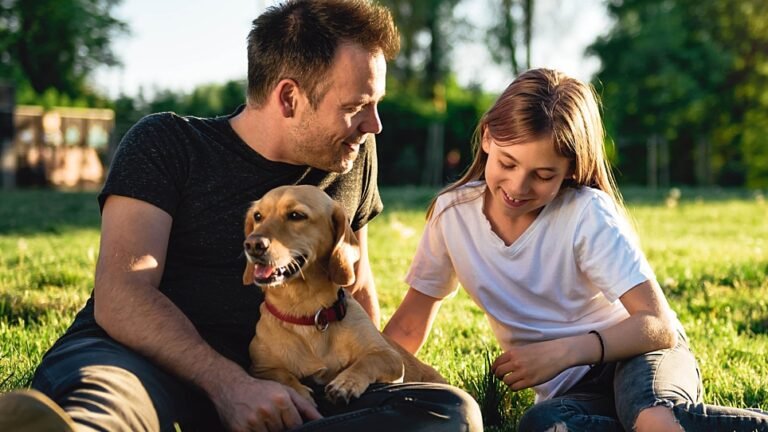
Big dogs are often friendly because many of them were bred to work closely with people, stay calm around handling, and use cooperation instead of aggression. In the United States, that friendly image is also shaped by the large dogs people commonly meet at parks, in neighborhoods, and in families where dogs are treated as companions first. But size alone does not make a dog gentle. Breed tendencies, early socialization, training, and the individual dog’s temperament matter much more.

<figcaption style=”font-size:14px;color:#555;margin-top:8px;”>
Source: tededer.com
What “friendly” really means in a big dog
A friendly big dog is usually one that is social, relaxed, and comfortable around people and other animals. That can look like tail wagging, loose body language, leaning in for attention, or calmly accepting petting. It does not always mean the dog wants everyone to touch them, and it does not mean the dog is harmless in every situation.
Size changes how friendliness feels to humans. A 120-pound dog can seem more loving than a 12-pound dog because the contact is bigger, the movements are slower, and the physical presence is more obvious. People often read that calm, heavy body language as warmth, even when the dog is simply laid-back.
Understanding this matters because “friendly” is not the same as “safe with everyone.” A big dog still needs good manners, supervision, and respect for personal space. The best way to judge friendliness is by behavior, not by breed size alone.

Why many big dogs were bred to work with people
Many large breeds were selected for jobs that required cooperation with humans. That history often favored dogs that could follow direction, stay steady under pressure, and tolerate close contact. In practical terms, dogs that were easier for people to live and work with were more likely to be kept and bred.
Common work traits that can look like friendliness
Some large dogs were developed for tasks such as:
- guarding property with control rather than panic
- pulling carts or hauling loads beside people
- herding livestock with focus and restraint
- serving as hunting companions
- assisting in rescue, protection, or farm work
Those jobs often rewarded calmness, patience, and responsiveness. A dog that could not stay near people or accept handling was less useful. Over time, that helped create many large dogs that appear easygoing today.
This does not mean every big breed is naturally social with strangers. It means many large breeds were shaped to be manageable around humans. That background often shows up as confidence, steadiness, and a lower tendency to act skittish.
Temperament often matters more than size
Size does not create friendliness by itself. Temperament is built from genetics, early experience, training, and daily life. A large dog with a stable temperament may seem sweeter than a small dog with poor socialization, but the reverse can also be true.
What influences temperament
The main influences include:
- genetics from the parents
- early handling and socialization
- the quality of training
- daily exercise and mental stimulation
- stress, pain, or fear
- the dog’s age and life stage
A puppy that meets different people, hears normal household noises, and learns good habits early is more likely to grow into a confident adult. A dog that has repeated scary experiences may become cautious or reactive, no matter how large it is.
This is why the friendliest big dogs are often the ones raised with structure and positive exposure. Good breeding and good care support the behavior people notice as “gentle.”
Why large dogs often seem calmer than small dogs
Many big dogs appear calmer because they often move more slowly and use fewer quick, sharp gestures. That slower pace can make them seem more thoughtful and less intense. Humans tend to interpret that as kindness.
There is also a practical reason: large dogs can be physically expensive in energy. Running wildly in a house or on a leash takes more effort for a giant breed than for a small one. Many large dogs naturally settle into a lower-key rhythm once their exercise needs are met.
That said, calm does not equal well-behaved in every home. A calm 90-pound dog can still pull hard on a leash, knock over a child by accident, or overwhelm a nervous visitor. Friendly behavior must always be paired with training and supervision.
Breed groups that often include gentle big dogs
Some large breeds are especially known for steady, affectionate behavior. These breeds are not guarantees, but they are commonly associated with people-focused temperaments.
| Breed or type | Typical reputation | Why it often seems friendly |
|---|---|---|
| Labrador Retriever | Outgoing, eager to please | Strong human focus and high trainability |
| Golden Retriever | Soft, social, patient | Bred for close work with people |
| Newfoundland | Gentle, calm, protective | Often steady and tolerant |
| Great Dane | Calm, affectionate, easygoing | Large size with a mellow demeanor in many individuals |
| Bernese Mountain Dog | Sweet, loyal, family-oriented | Traditionally worked near people and livestock |
| Standard Poodle | Intelligent, social, trainable | Responsive and people-aware |
These are general trends, not promises. Individual dogs vary widely. A poorly socialized Golden Retriever can be unfriendly, and a well-raised mastiff can be a loving family dog.
Why humans trust big dogs that act gentle
People often trust big dogs that move slowly, keep soft eyes, and seek closeness without pushiness. Those behaviors signal low threat to human observers. In daily life, a big dog that gently rests a head on your knee or lies quietly near your feet feels emotionally reassuring.
There is also a cultural effect. In the United States, many popular family dogs are large, fluffy, and visibly affectionate in movies, commercials, and social media. That repeated image reinforces the idea that big dogs are naturally kind. Real life is more complicated, but the stereotype has a strong basis in what many people see.
The result is a feedback loop: people choose large breeds that look friendly, then those dogs get more positive handling and socialization, which can strengthen friendly behavior. That does not mean the size caused the friendliness. It means the environment often supports it.
When a big dog is not friendly
A big dog may not seem friendly if it is scared, in pain, under-socialized, overexercised, or poorly trained. Fear is one of the most common reasons a dog appears unfriendly. A worried dog may avoid people, stiffen, growl, bark, or snap.
Warning signs that matter
Watch for these signs:
- stiff body posture
- tail held rigidly or tucked tightly
- hard stare
- raised hackles
- growling or freezing
- backing away from contact
- sudden snapping or lunging
These are not signs to punish. They are signs the dog needs distance, calm handling, and possibly veterinary or behavioral help. Pain, illness, or anxiety can change even a normally sweet dog’s behavior.
If a large dog has started acting differently, a veterinarian should rule out medical causes first. If the dog has repeated aggressive reactions, a qualified trainer or veterinary behaviorist is the safer next step.
How to raise a big dog to be friendly
A friendly big dog is usually made through consistent care as much as through genetics. The goal is to build confidence, trust, and good habits early. That is especially important because a large dog’s behavior has more physical impact than a small dog’s behavior.
Practical steps
-
Start socialization early.
Expose the puppy to many safe people, places, sounds, and surfaces. -
Use positive reinforcement.
Reward calm behavior, gentle greetings, and attention. -
Teach polite manners.
Train sit, stay, recall, loose-leash walking, and “leave it.” -
Prevent rough habits.
Do not let a young large dog jump on people, even playfully. -
Meet exercise needs.
A tired, mentally engaged dog is usually easier to live with. -
Respect rest and space.
Friendly dogs still need downtime and clear boundaries.
Success looks like a dog that can greet people calmly, recover quickly from new experiences, and settle at home. If the dog becomes reactive, anxious, or hard to control, pause and reassess the training plan.
Common mistakes people make with big dogs
One common mistake is assuming a big dog is friendly because it looks relaxed. Another is assuming a big dog is dangerous because of its size. Both ideas can lead to poor decisions.
People also make trouble by allowing a puppy to jump on everyone “because it’s cute now.” That behavior becomes a serious problem when the dog weighs 80 pounds. Another mistake is skipping socialization because the dog seems naturally easygoing as a puppy.
The safest approach is to treat every dog as an individual. Learn the dog’s signals, build reliable obedience, and supervise interactions with children and strangers. Friendly behavior should be trained, not guessed.
Are big dogs better with kids?
Some big dogs are excellent with children, but that depends on the individual dog and the household. A gentle large dog can be patient and affectionate, yet still accidentally knock a child over. Size creates a safety issue even when the dog has a kind temperament.
Children should be taught not to hug, climb on, or startle any dog. Supervision matters most during feeding, sleeping, and toy play. If a family wants a large dog for kids, the dog should have a stable temperament, a history of calm behavior, and proper training.
The best family fit is usually a dog that is steady, tolerant, and already used to respectful handling. That is more important than finding a breed with a “sweet” reputation.
The short answer: why big dogs are so friendly
Big dogs often seem friendly because many were bred to cooperate with people, many have calm temperaments, and their slow, steady body language reads as gentle. But friendliness is not caused by size alone. The real drivers are genetics, socialization, training, and the dog’s environment.
If you want a friendly big dog, choose carefully, train early, and manage the dog well. If you already live with one, focus on consistent routines, positive reinforcement, and respectful handling. That is what turns a large dog from simply big into truly trustworthy.
FAQ
Are all big dogs friendly?
No. Some are social and gentle, while others are reserved, wary, or protective. Breed tendencies help, but each dog is different.
Why do big dogs lean on people?
Many do it for closeness, attention, or comfort. Some also lean because they are excited or seeking reassurance.
Are big dogs more aggressive than small dogs?
Not automatically. Aggression depends on the individual dog, not just size. Small dogs can be aggressive too, but big dogs can cause more harm if they bite.
What is the friendliest big dog breed?
There is no universal winner. Labrador Retrievers, Golden Retrievers, and Newfoundlands are often considered friendly, but the individual dog matters most.
Can training make a big dog friendlier?
Yes. Training can improve confidence, manners, and social behavior. It cannot erase genetics, but it can strongly shape how a dog behaves around people.