Why Can’t Dogs Eat Human Food? Safe Foods, Risks, and What Dog Owners Should Know
If you have ever watched a dog stare at a dinner plate, you know how hard those eyes can be to resist. A small bite may seem harmless. The problem is that dogs do not process every food the way people do. Some foods that are normal for us can cause mild stomach upset, severe illness, or even a life-threatening emergency in dogs.
So, why can’t dogs eat human food? The short answer is that human food is a very broad group. Some foods are safe in small portions, while others can be dangerous even in small amounts. The risk also depends on the dog’s size, age, health, and the amount eaten.
For U.S. dog owners, this matters most during family meals, holidays, cookouts, and snack time. A dog can grab food from a table, trash can, kitchen counter, or child’s plate in seconds. Knowing the risky foods ahead of time can help prevent an avoidable trip to the veterinary clinic.
Why Can’t Dogs Eat Human Food? The Main Reasons
The question “why can’t dogs eat human food” does not have one simple answer. Dogs have different nutritional needs from people. Their bodies also react to certain foods in ways that can be very different from ours.
Human meals often contain extra fat, salt, sugar, spices, sauces, or ingredients that dogs should avoid. Even when each ingredient seems harmless, a rich meal can upset a dog’s stomach or add far more calories than the dog needs.
Another issue is portion size. A food that is safe as a tiny treat may become a problem when a dog eats a large amount. This is one reason dog owners should think about both the food itself and how much the dog eats.

- ✦ Toxic ingredients
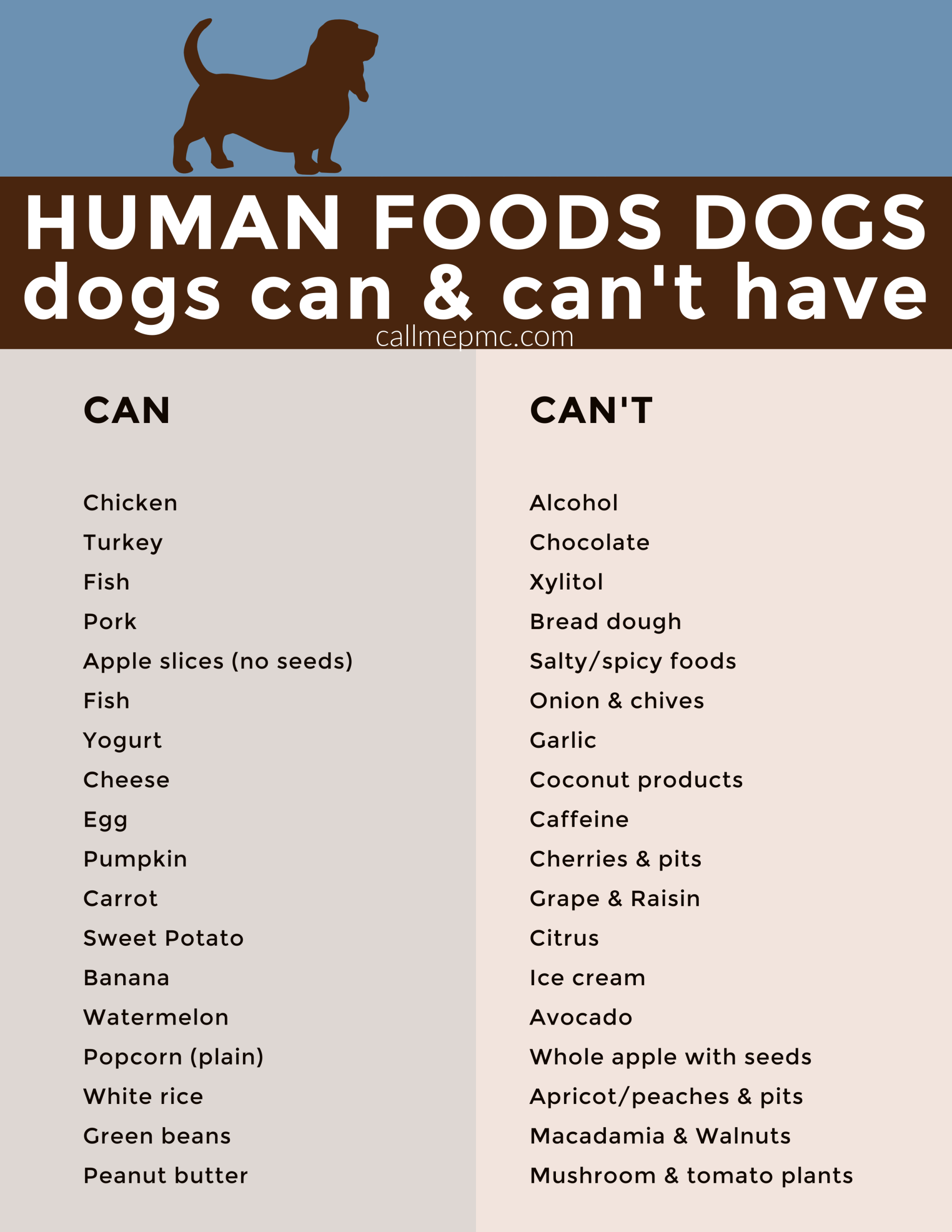
Some foods contain substances that can poison dogs, including chocolate, xylitol, grapes, raisins, onions, garlic, and alcohol.
- ✦ Too much fat
Fatty foods can cause stomach upset and may raise the risk of pancreatitis, a painful inflammation of the pancreas.
- ✦ Too much salt or sugar
Large amounts of salt or sugar are not a good fit for a dog’s diet and can contribute to health problems.
- ✦ Unbalanced nutrition
Human meals are not designed to provide the right balance of nutrients for dogs, so frequent table scraps can crowd out a complete diet.
- ✦ Choking and blockage risks
Bones, pits, large pieces, and some tough foods can become choking hazards or cause an intestinal blockage.
Dogs Have Different Nutritional Needs
Dogs need a balanced mix of protein, fat, carbohydrates, vitamins, minerals, and other nutrients. A commercial dog food labeled complete and balanced is made to meet established nutritional standards for the intended life stage.
A piece of plain chicken does not provide the same balance as a complete dog diet. It can be a treat for many healthy dogs, but it should not replace the main meal unless a veterinarian has created an appropriate diet plan.
A Safe Food Can Still Become Unsafe in Large Amounts
Portion size matters. A few small pieces of plain cooked carrot may be fine for many dogs, while a huge serving can still cause digestive upset. Treats and extras should stay a small part of the overall diet.
This is especially important for small dogs. A food portion that looks tiny to a person can be a much larger amount relative to a small dog’s body weight.
Which Human Foods Are Dangerous for Dogs?
One of the most important parts of understanding why can’t dogs eat human food is knowing which foods should stay completely off the menu. Several common kitchen foods can cause serious poisoning or other medical problems in dogs.
The danger can vary with the food, amount, and size of the dog. Some toxic foods can cause signs within hours, while other problems may take longer to become clear. Never assume a dog is safe just because it looks normal after eating something risky.
- ✦ Chocolate
Chocolate contains methylxanthines, including theobromine and caffeine, which can be toxic to dogs. Dark chocolate, baking chocolate, and cocoa products tend to pose greater risk because they contain more of these compounds.
- ✦ Grapes and raisins
Grapes and raisins can cause acute kidney injury in some dogs. The amount that may cause illness is not reliably predictable, so any known ingestion deserves prompt veterinary advice.
- ✦ Onions and garlic
Onions, garlic, and related allium plants can damage red blood cells and may lead to anemia. Risk can come from raw, cooked, dried, or powdered forms.
- ✦ Xylitol
Xylitol is a sweetener found in some sugar-free foods, gum, candy, baked goods, and other products. It can cause a rapid drop in blood sugar and may also lead to serious liver problems in dogs.
- ✦ Alcohol
Alcohol can be toxic to dogs and may cause dangerous effects on the nervous system, breathing, body temperature, and blood sugar.
- ✦ Macadamia nuts
Macadamia nuts can cause weakness, vomiting, tremors, and other signs of illness in dogs.
Foods That Can Hide Dangerous Ingredients
Some risks are easy to miss because the dangerous ingredient is part of another food. Garlic powder, onion powder, xylitol, chocolate, and certain sauces can appear in foods that do not look dangerous at first glance.
This is why labels matter. If your dog eats a packaged food, keep the package or take a photo of the ingredient list. That information can help a veterinarian judge the risk.
- ✦ Sugar-free products
Check labels for xylitol, which may also appear under other labeling terms depending on the product.
- ✦ Sauces and seasonings
Gravies, spice mixes, and sauces may contain onion or garlic.
- ✦ Desserts
Cookies, cakes, candy, and other sweets may contain chocolate, xylitol, raisins, or high amounts of fat.
Can Dogs Eat Any Human Food?
Yes. The answer to why can’t dogs eat human food is not that every human food is dangerous. Many simple foods can be safe for healthy dogs when served plain and in small amounts.
The key is to avoid foods with toxic ingredients, heavy seasoning, excess fat, added sugar, or unsafe bones and pits. Treat human food as an occasional extra rather than the foundation of the diet.
Before adding a new food, consider your dog’s health. Dogs with diabetes, pancreatitis, kidney disease, food allergies, or other medical conditions may need stricter diets.
- ✦ Plain cooked chicken
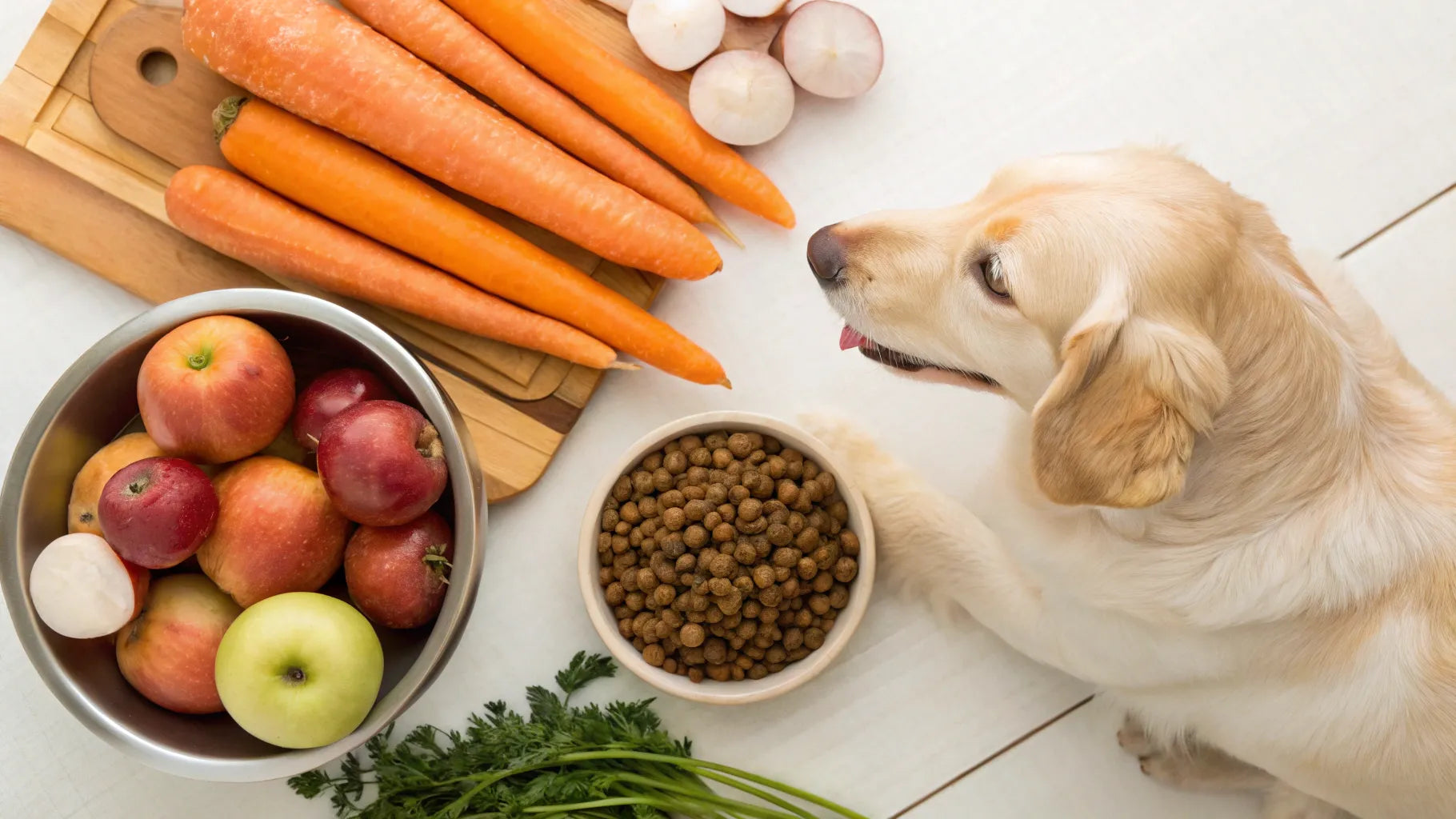
Plain, fully cooked chicken without bones, skin, heavy seasoning, or sauces can be a useful occasional treat for many dogs.
- ✦ Plain cooked turkey
Plain turkey meat can be offered in small amounts when it contains no unsafe seasoning, skin, bones, or rich gravy.
- ✦ Carrots
Plain carrots can provide a crunchy, low-calorie treat for many dogs.
- ✦ Green beans
Plain cooked or raw green beans can be suitable for many dogs when served without added salt, butter, or seasoning.
- ✦ Pumpkin
Plain pumpkin can be suitable in small portions. Avoid pumpkin products made with sugar, spices, or other added ingredients.
- ✦ Blueberries
Plain blueberries can be an occasional treat for many dogs, provided they are offered in an appropriate portion.
How to Offer Human Food Safely
Start with a small amount of one simple food. Watch your dog for digestive changes, such as vomiting, diarrhea, gas, or a change in appetite. If a new food causes problems, stop offering it and ask your veterinarian for advice if signs are severe or persistent.
Wash fresh foods and remove pits, seeds, stems, bones, and other parts that may be unsafe. Serve food plain rather than sharing a heavily seasoned family meal.
- ✦ Keep it plain
Skip sauces, spices, butter, large amounts of oil, and added salt.
- ✦ Keep portions small
Treats and extras should not displace a complete and balanced diet.
- ✦ Introduce one food at a time
This makes it easier to spot a food that causes digestive upset or another reaction.
Why Fatty and Seasoned Human Foods Can Be a Problem
Many dogs love foods that smell rich and meaty. That does not mean those foods are good for them. Fatty leftovers such as bacon, sausage, fried foods, butter-heavy dishes, and greasy meat scraps can cause digestive upset and may contribute to pancreatitis.
Seasoning creates another problem. Foods made for people often contain salt, spices, onion, garlic, sauces, or other ingredients that dogs do not need. A plain ingredient may be suitable while the same ingredient in a prepared dish may not be.
This is a major reason the answer to why can’t dogs eat human food is often about preparation rather than the basic ingredient. Plain cooked meat and a heavily seasoned meat dish are not nutritionally or medically equivalent.

- ✦ Fried foods
They can contain a large amount of fat and may cause stomach upset.
- ✦ Bacon and sausage
These foods can be high in fat and salt and may contain seasonings that are unsafe for dogs.
- ✦ Gravy and sauces
They may contain high levels of fat, salt, onion, garlic, or other ingredients that are not suitable for dogs.
- ✦ Rich leftovers
Large portions of rich food can cause vomiting, diarrhea, or more serious digestive problems.
Pancreatitis and Fatty Foods
Pancreatitis means inflammation of the pancreas. It can cause signs such as vomiting, belly pain, weakness, and loss of appetite. Fatty meals are one known dietary concern, although pancreatitis can have many causes.
If your dog becomes very sick after eating a fatty meal, do not try to treat the problem at home with more food or human medicine. A veterinarian can decide what care is needed.
Why Dogs Beg for Human Food
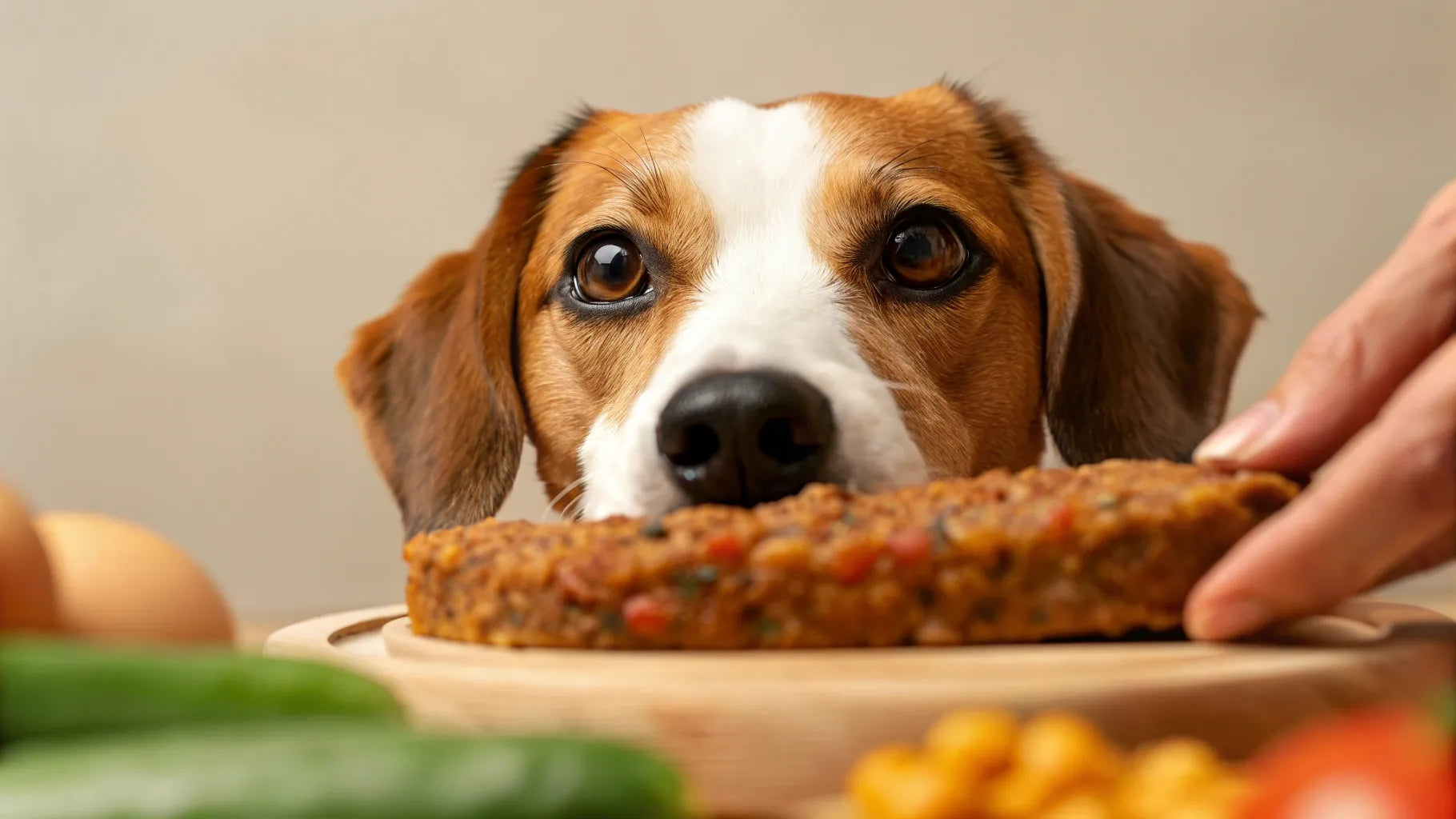
Dogs often beg because human food smells strong, tastes appealing, and has become linked with attention or rewards. A dog may also learn that sitting near the table leads to a tasty bite. That behavior can become stronger when people give food every time the dog asks.
Begging does not mean your dog needs your meal. Dogs are skilled at learning patterns, and a successful begging routine can quickly become a daily habit.
If you want to share food, use planned dog-safe treats rather than giving random bites from your plate. This gives you more control over ingredients and portions.
- ✦ Strong smells
Cooking creates aromas that can be highly attractive to dogs.
- ✦ Learned behavior
Dogs may repeat begging when it has worked in the past.
- ✦ High reward value
Fat, meat, and other rich foods can be very appealing to dogs.
- ✦ Human attention
Begging may also earn eye contact, talking, petting, or other attention.
How to Reduce Begging
Set a clear household rule about table scraps. Everyone in the home should follow it, including children and guests. Mixed rules can make begging harder to change.
You can also give your dog a safe toy, puzzle feeder, or planned treat away from the table. Reward calm behavior rather than demanding behavior.
- ✦ Feed before family meals
A dog that has already eaten may be less focused on the food at the table.
- ✦ Reward calm behavior
Give attention or a planned treat when your dog settles quietly.
- ✦ Keep risky foods out of reach
Use closed containers and keep food away from counters when your dog is nearby.
What to Do If Your Dog Eats Dangerous Human Food
If your dog eats a known toxic food, act promptly. Do not wait for symptoms before seeking advice because some poisons can cause serious harm before obvious signs appear.
Try to identify what your dog ate, how much was eaten, and when it happened. Save the package or ingredient label when possible. Your veterinarian or a pet poison service can use those details to assess the situation.
Do not make your dog vomit unless a veterinary professional specifically tells you to do so. Some substances can cause more damage if they are brought back up, and home remedies can create additional risks.

- ✦ Remove access to the food
Move the remaining food away from your dog so no more is eaten.
- ✦ Save the packaging
Keep the package, ingredient list, or product name if available.
- ✦ Estimate the amount
Try to determine how much was eaten and whether any packaging was swallowed.
- ✦ Contact a veterinarian
Ask a veterinarian or emergency veterinary service for advice as soon as possible.
- ✦ Watch for symptoms
Follow professional advice and monitor for vomiting, weakness, tremors, seizures, breathing changes, unusual behavior, or other signs of illness.
When an Emergency Is More Urgent
Seek emergency veterinary care if your dog has trouble breathing, collapses, has repeated seizures, becomes extremely weak, loses consciousness, or shows other severe signs. Known ingestion of a potentially toxic food also warrants prompt professional guidance even when the dog looks fine.
Do not rely on online symptom lists to decide that a poisoning is harmless. The safest next step depends on the substance, dose, timing, and individual dog.
Human Food vs. Dog Food: What Should Dogs Eat Most?
The main diet should be a food that is complete and balanced for the dog’s life stage and needs. This helps provide the nutrients dogs require in the right amounts and proportions.
Human food can sometimes be used as a small treat or food topper, but it should not slowly replace the dog’s regular diet. Too many extras can add calories and may make it harder to maintain a healthy body weight.
If your dog refuses its normal food but eagerly eats table scraps, avoid solving the issue by offering more and more human food. A sudden change in appetite can have many causes, and a veterinarian can help if the change continues or comes with other signs.

- ✦ Use complete and balanced dog food
Choose a diet suited to your dog’s age, size, health needs, and lifestyle.
- ✦ Keep treats controlled
Treats and table foods should remain a limited part of daily calories.
- ✦ Read labels
Check human foods for ingredients that may be toxic to dogs.
- ✦ Consider individual health
A food that works for one dog may not suit another dog with allergies or a medical condition.
Why Balance Matters
Dogs need more than protein and calories. Their diets must supply many nutrients, including essential amino acids, fatty acids, vitamins, and minerals. A random mix of meat, rice, vegetables, and leftovers may not meet those needs over time.
For dogs with special medical needs, diet changes should be planned with a veterinarian. A therapeutic diet may be part of treatment for some health conditions.
Common Myths About Dogs and Human Food
Confusion about dog-safe foods is common because advice online can mix safe foods, unsafe foods, and foods that are only safe in limited amounts. Understanding a few common myths can make everyday feeding decisions easier.
The key point is simple: do not judge a food only by whether a person can eat it. Judge the ingredient, preparation, portion, and the dog’s individual health needs.
- ✦ Myth: All human food is toxic to dogs
False. Many plain human foods can be safe as occasional treats. The concern is that some foods are toxic or unhealthy, not that every human food is poisonous.
- ✦ Myth: If a dog ate it once, it must be safe
False. A dog may show no immediate signs after eating a risky food. Some toxic effects can take time to develop.
- ✦ Myth: Natural foods cannot hurt dogs
False. Grapes, raisins, onions, garlic, and macadamia nuts are natural foods, yet they can cause illness in dogs.
- ✦ Myth: A little of everything is healthy
False. Dogs need a balanced diet, and frequent extras can add too many calories or expose them to unsafe ingredients.
- ✦ Myth: Dogs know which foods are dangerous
False. Dogs may eagerly eat foods that can harm them, so owners must control access to risky foods.