Why Do Dogs Exist? The Evolution, Domestication, and Role of Dogs
If you look at a Labrador resting on a U.S. living room floor, it can be hard to imagine that its distant ancestors were wild canids. Yet the answer to why do dogs exist starts with natural evolution. Dogs are living animals that arose through generations of change, survival, reproduction, and selection.
The story then took a major turn when some ancient wolf-like animals began living near human groups. Over many generations, humans and these animals influenced each other. This long process helped create domestic dogs, giving us animals that can work, hunt, guard, herd, assist, and live closely with people.

What Does It Mean to Ask Why Do Dogs Exist?
The question why do dogs exist can have more than one meaning. Someone may ask about their biological origin, their role in nature, or the reason humans have dogs as pets. Science gives different answers to each part.
From a biological view, dogs exist because their ancestors reproduced and passed genes to later generations. Traits that helped animals survive or reproduce could become more common over time. Human choices later added another strong force to this process.
It is also important to separate a cause from a purpose. Evolution does not need a planned goal. Dogs are here because their ancestors survived, reproduced, changed, and became part of a long relationship with humans.
- ✦ Biological reason
Dogs are the result of evolution, reproduction, inherited traits, and natural selection.
- ✦ Historical reason
Ancient human groups and early dog ancestors formed relationships that helped shape domestic dogs.
- ✦ Modern reason
Today, people keep dogs for companionship, work, assistance, sport, protection, and many other roles.
Where Did Dogs Come From?
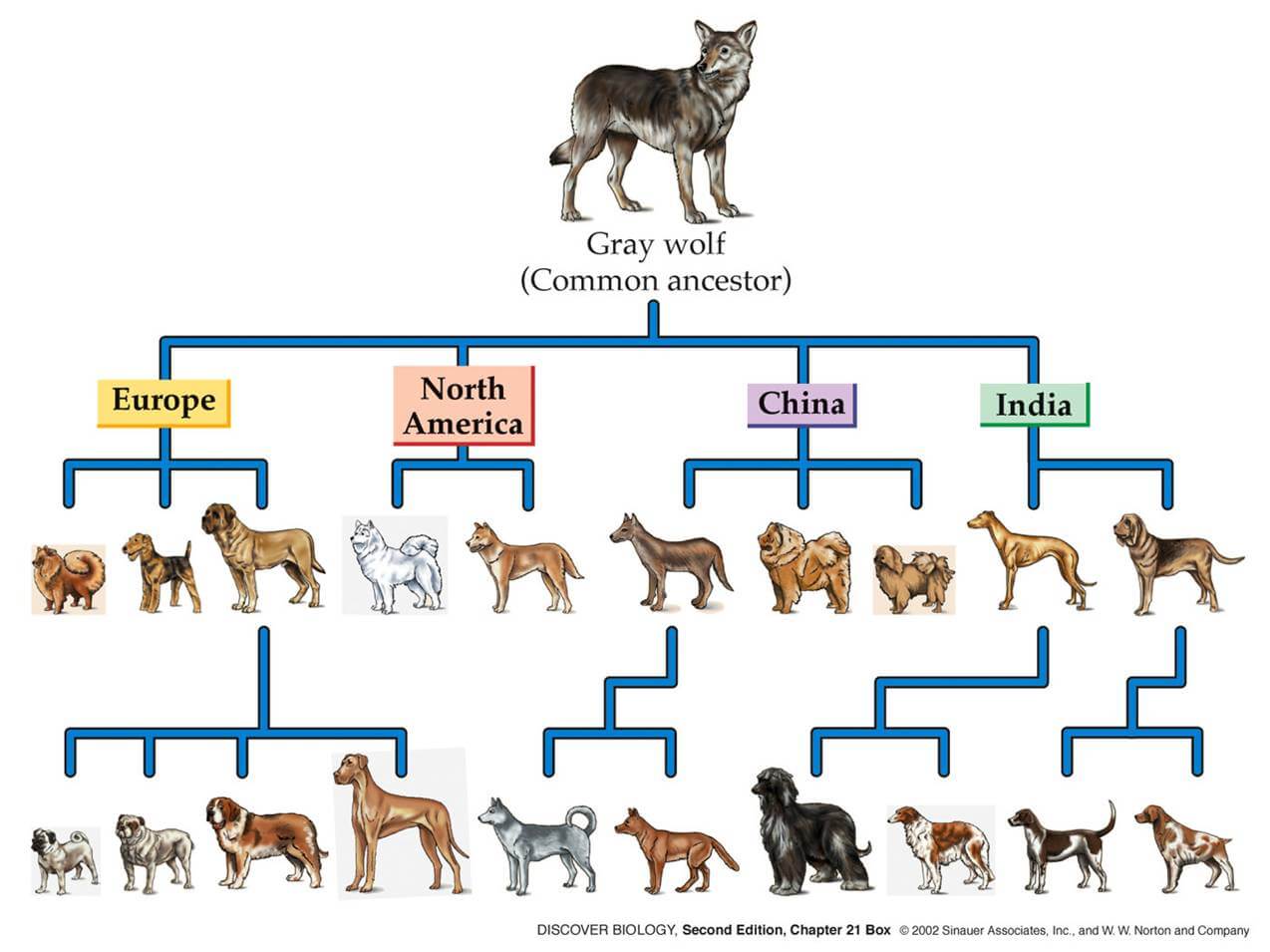
Dogs belong to the canine family, which includes wolves, foxes, coyotes, and other canids. The domestic dog is classified as Canis lupus familiaris, and scientists generally agree that dogs have an evolutionary connection to ancient wolf populations.
The exact origin of dogs is more complex than a simple story in which a modern wolf suddenly became a pet. Ancient dog remains and genetic studies point to a long process that involved populations of ancient canids and humans.
Because the earliest stages of dog domestication happened thousands of years ago, scientists cannot observe the process directly. Instead, they study fossils, DNA, archaeological sites, and changes in dog anatomy.
- ✦ Canine family
Dogs are members of the Canidae family and are closely related to other living canids.
- ✦ Ancient wolf connection
Modern dogs trace their ancestry to ancient wolf-like populations rather than to a single modern wolf.
- ✦ Long process
Dog domestication developed over many generations rather than happening in one event.
Did Dogs Evolve From Wolves?
In broad terms, yes. Dogs are closely tied to ancient wolves, and genetic evidence supports a shared ancestry between dogs and ancient wolf populations. However, modern gray wolves should not be treated as the simple direct parents of today’s dogs.
This distinction matters because both dogs and modern wolves have changed since their shared past. The ancestor of dogs was part of an older wolf population, and the precise population history remains an active area of research.
- ✦ Not a modern-wolf-to-dog swap
Domestic dogs did not simply descend from the modern wolves living today.
- ✦ Shared ancient history
Dogs and wolves share ancestry, with dog evolution linked to ancient wolf populations.
How Did Dogs Become Domesticated?
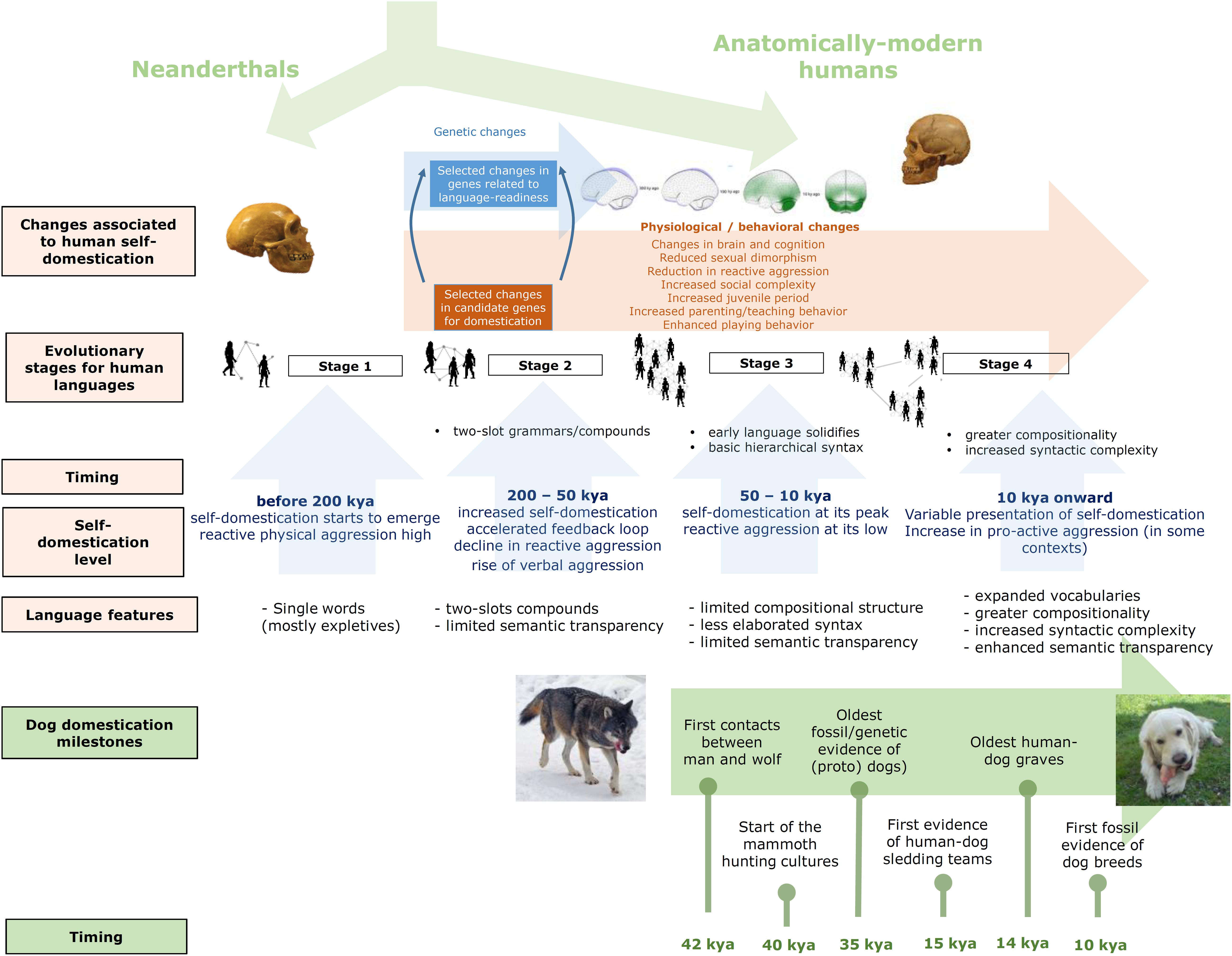
One of the biggest clues to why do dogs exist as domestic animals is their relationship with early humans. At some point in prehistory, some wild canids began using human camps or settlements as sources of food and opportunity. Animals that were less fearful of people may have gained an advantage in those settings.
Humans could also gain something from these animals. Early dogs may have helped with warning, hunting, tracking, guarding, waste removal, or other tasks. Friendly and useful animals were more likely to remain near people and reproduce around them.
Over many generations, this relationship could change both behavior and appearance. Human selection favored certain traits, while life around people created new conditions for survival. The result was a population increasingly adapted to living with humans.

- ✦ Food opportunities
Early human settlements may have offered food sources that attracted some wild canids.
- ✦ Lower fear
Animals that tolerated people could live closer to human groups than highly fearful animals could.
- ✦ Mutual benefits
Humans and early dogs could gain useful benefits from living near each other.
- ✦ Generational change
Repeated selection across generations helped create animals better suited to life with humans.
Was Dog Domestication a Single Event?
Scientists do not have a complete, universally agreed story in which dog domestication happened at one exact place and time. The archaeological and genetic record suggests a complicated history with ancient dog populations appearing in different regions and periods.
That uncertainty does not change the larger picture. Dogs have a very old relationship with humans, and domestication was a long process rather than a quick transformation.
- ✦ Ancient evidence
Archaeological sites show that dog-like animals lived alongside humans thousands of years ago.
- ✦ Ongoing research
Researchers continue to use ancient DNA and fossils to refine the history of dog domestication.
Why Did Humans Keep Dogs Around?
The answer to why do dogs exist today is closely linked to what dogs could do for people. Dogs have an unusual mix of social skills, physical ability, learning ability, and sensitivity to human behavior. These traits made them useful long before they became common household pets.
Different communities used dogs in different ways. A dog could help find game, alert people to danger, move livestock, guard a home, or carry out other tasks. In modern America, dogs still work in many roles, from service animals to detection dogs.
Companionship also became a major part of the relationship. Dogs can form strong social bonds with people, respond to human cues, and fit into family life. That combination helps explain why dogs became much more than working animals.

- ✦ Hunting
Dogs can use scent, hearing, speed, and learned behavior to help people find or track animals.
- ✦ Herding
Selected dogs can control the movement of livestock through instinct and training.
- ✦ Guarding
Dogs can notice sounds and changes in their surroundings and alert people.
- ✦ Assistance
Some dogs are trained to help people with disabilities and perform specific daily tasks.
- ✦ Companionship
Dogs live closely with people and can become important members of a household.
Why Are Dogs So Good at Living With Humans?
Dogs are highly social animals. During domestication, traits that supported communication and cooperation with people could become especially valuable.
Dogs also learn from human actions and signals. A well-trained dog can follow words, gestures, routines, and social cues, which makes daily life together easier.
- ✦ Social behavior
Dogs are social animals and can build close relationships with humans.
- ✦ Learning
Dogs can learn many behaviors through repetition, rewards, and clear training.
- ✦ Human communication
Many dogs are skilled at noticing human gestures, tone, movement, and routine.
How Did Humans Create So Many Different Dog Breeds?
Modern dogs show an enormous range of size, shape, coat, color, and behavior. A Chihuahua and a Great Dane look very different, yet both belong to the domestic dog species. This diversity is largely the result of strong human selection over many generations.
People chose dogs with traits that matched certain jobs or preferences. For example, some dogs were selected for herding, some for hunting, some for guarding, and others for companionship. Repeated breeding made these traits more common within particular populations.
This process helps answer why do dogs exist in such different forms today. Dogs did not need to evolve every modern breed on their own. Humans played a major role in shaping breed traits through selective breeding.

- ✦ Working traits
Breeding programs favored skills such as herding, retrieving, tracking, guarding, and pulling.
- ✦ Appearance
Humans also selected traits such as body size, coat type, ear shape, and color.
- ✦ Companion traits
Some dogs were selected mainly for behavior and suitability as household companions.
Why Can Dogs Look So Different?
Dogs have been shaped by selective breeding for a relatively short period compared with the full history of their species. Strong selection can make visible traits spread quickly within a breeding population.
Modern breed standards can further reinforce these traits. However, breed labels do not describe every individual dog, and mixed-breed dogs can show a wide range of inherited features.
- ✦ Size
Selective breeding produced dogs ranging from very small to very large.
- ✦ Coat
Breeding produced many coat lengths, textures, and patterns.
- ✦ Behavior
Different breeding goals helped shape tendencies linked to particular jobs and lifestyles.
Do Dogs Have a Purpose in Nature?
It is tempting to ask what purpose dogs serve, but evolution does not assign animals a fixed job. Wild animals survive when their traits help them reproduce in their environment. Domestic dogs live in an environment shaped heavily by people.
Dogs can still affect the world around them. Free-roaming dogs may hunt, compete with other animals, spread disease, or change local wildlife behavior. Well-managed companion dogs, by contrast, live within human homes and depend on people for food, shelter, health care, and safety.
So why do dogs exist from a natural-history view? They exist because dog ancestors were successful enough to survive and reproduce, and because humans later became a powerful part of their environment.
- ✦ Evolution has no fixed goal
Natural selection favors inherited traits that improve reproductive success in a given environment.
- ✦ Domestic life is different
Most companion dogs depend on people rather than living as independent wild predators.
- ✦ Dogs can affect ecosystems
Free-roaming dogs can interact with wildlife and may have ecological effects.
Why Do Dogs Exist as Pets Today?
The modern answer to why do dogs exist includes companionship as well as work. In the United States, many people share their homes with dogs as family members. Dogs may live in apartments, suburban homes, farms, and rural areas, and their daily roles can vary greatly.
Dogs also remain important working partners. Service dogs can assist people with disabilities, while trained detection dogs can help locate substances, scents, or people. Therapy and facility dogs may also support people in carefully managed settings.
The modern dog is therefore the result of both ancient evolution and recent human choices. People continue to shape dog populations through breeding, adoption, training, veterinary care, and decisions about where and how dogs live.

- ✦ Family companions
Many dogs live as household companions and take part in everyday family routines.
- ✦ Service dogs
Some specially trained dogs perform tasks that help people with disabilities.
- ✦ Detection work
Dogs can use their strong sense of smell for carefully trained detection tasks.
- ✦ Farm work
Dogs continue to help with livestock, property, and other farm tasks.
Are Dogs Still Evolving?
Yes. Evolution does not stop when an animal becomes domesticated. Dogs continue to experience genetic change through reproduction and selection.
Human breeding choices are still a major force in many dog populations. At the same time, natural selection can influence dogs that live and reproduce with less direct human control.
- ✦ Breeding choices
People continue to select dogs for particular physical and behavioral traits.
- ✦ Changing environments
Different living conditions can create different pressures on dog populations.
Why Do Dogs and Humans Bond So Well?
A major part of why do dogs exist in human homes is the unusual social bond between the two species. Dogs are sensitive to human voices, gestures, routines, and emotional signals. Humans also tend to respond strongly to dog behavior and facial expressions.
Thousands of years of close living likely helped shape this relationship. Dogs that could cooperate with people had opportunities that less social animals did not, while humans gained animals that could work and interact with them.
Today, this bond can be seen in simple routines. A dog may wait by the door, follow a family member from room to room, learn household rules, and seek contact after a long day. These behaviors are part of what makes dogs unusually successful as human companions.

- ✦ Shared routines
Dogs can adapt to regular human schedules for meals, walks, rest, and activity.
- ✦ Social cues
Dogs can respond to many human gestures, voices, and movements.
- ✦ Mutual interaction
People also learn to read dog body language, sounds, and habits.
- ✦ Long history
The human-dog relationship has roots that reach far back into human history.
Why Do Dogs Exist Instead of Staying Wild?
Domestic dogs exist because their ancestors entered a different ecological and social path from other wild canids. Living with humans offered access to food, shelter, social contact, and new opportunities. Humans also changed these animals through intentional and unintentional selection.
This does not mean dogs lost all their wild traits. Dogs still have strong senses, social instincts, hunting behaviors, play behaviors, and other traits inherited from their ancestors. Training and environment can change how these traits appear in daily life.
The best answer to why do dogs exist is therefore not that humans simply invented them. Dogs emerged through evolution, then changed through a long partnership with humans. Both biology and human history are needed to explain the modern dog.

- ✦ Evolution came first
Dog ancestors were part of the natural history of canids before humans shaped domestic populations.
- ✦ Domestication changed the path
Life near people created new selection pressures and opportunities.
- ✦ Wild traits remain
Modern dogs still retain many behaviors and physical abilities inherited from their ancestors.
What Makes a Dog Different From a Wild Canid?
A domestic dog is adapted to life with people in ways that most wild canids are not. Dogs can rely on human food, shelter, care, and social contact, although some free-roaming dogs live with much less direct human support.
Domestic dogs also show huge variation in appearance and behavior because humans have selected them for many different roles. That diversity is one of the clearest signs of the long influence of domestication.
- ✦ Human dependence
Many companion dogs depend on humans for basic care and resources.
- ✦ Wide variation
Dogs show more visible variation in size and shape than most closely related wild canids.
What Can the History of Dogs Teach Us?
The history of dogs shows how powerful long-term relationships can be. A wild animal does not need to become completely different to form a close partnership with humans. Small changes across many generations can produce major differences.
It also shows why the answer to why do dogs exist should include both nature and culture. Evolution supplied the biological foundation, while humans helped guide the direction of dog populations through food, shelter, breeding, work, and companionship.
For dog owners, this history has a practical lesson. Dogs are not simply small versions of people. They are domesticated canids with inherited needs for movement, social contact, learning, rest, and appropriate behavior. Understanding that history can help people care for dogs in ways that fit their biology.

- ✦ Respect canine needs
A good home should provide suitable food, exercise, rest, social contact, training, and veterinary care.
- ✦ Understand behavior
Many dog behaviors make more sense when viewed through their evolutionary and domestication history.
- ✦ Use training well
Clear and consistent training can help dogs live safely within human households.