Why Did Humans Domesticate Dogs? The Real Story of Our Ancient Bond
Why did humans domesticate dogs? The answer is more complex than the idea that ancient people simply decided to keep wolves as pets. Dogs came from ancient wolf populations, and the change took many generations. Some wolves were better able to tolerate people and live near human camps. People could also benefit from having these animals close by.
The partnership likely grew because both sides gained something. Wolves could find food around human camps, while humans could gain from the animals’ sharp senses, tracking skills, warning calls, and help during hunts. Over time, the friendlier animals were more likely to stay close to people and reproduce.
Modern research also shows that dog domestication has no single, fully settled origin story. Ancient DNA and archaeology point to a long and complex process, with early dog populations spreading and changing alongside human groups. This makes the story of why humans domesticated dogs less like a single invention and more like a long partnership.

What Does Dog Domestication Mean?
Domestication is not the same as taming. Taming changes the behavior of one wild animal. Domestication changes a population over many generations. The animals become better suited to life with people, and their genes can change as people and the animals shape each other’s lives.
This difference helps explain why did humans domesticate dogs. A person could tame a wolf, but that would not create a new domestic species. Dog domestication needed a lasting relationship between human groups and wolf-like animals across many generations.
Modern dogs also show how far this process went. Dogs vary greatly in size, shape, behavior, and working skills, yet they all belong to the same domestic species. Most modern breeds are quite recent compared with the much older history of dog domestication.
- ✦ Taming
Taming changes an individual wild animal so it becomes easier for people to handle.
- ✦ Domestication
Domestication changes a population over generations as animals adapt to life with humans.
- ✦ Cooperation
Dog domestication involved a long relationship in which humans and canids could both gain benefits.
Dogs Came From Ancient Wolves
Genetic evidence strongly links domestic dogs with ancient wolf populations. The exact wolf population that gave rise to today’s dogs is still difficult to identify because many ancient wolf groups disappeared or mixed with other populations.
This matters because the wolf of the distant past was not exactly the same as a modern gray wolf. Ancient wolf populations lived in different places and changed over time. Some of the ancestors of dogs may have belonged to wolf populations that no longer exist.
Why Would Wolves Stay Near Humans?
One leading idea is called the commensal pathway. In simple terms, some wolves may have moved toward human camps because food waste was easy to find there. The less fearful animals could feed near people without attacking them or fleeing at the first sign of danger.
This could create a gradual cycle. Wolves that were calmer around humans had better access to food, while humans had animals nearby that could detect danger and movement. Over many generations, selection could favor animals that were less fearful and more comfortable around people.
This idea does not mean every wolf wanted to become a dog. Most wild wolves would still have avoided humans. The key was that a small part of an ancient wolf population may have had the behavior needed to live close to people.

- ✦ Food near camps
Human camps created food scraps and other resources that could attract some less fearful wolves.
- ✦ Lower fear
Wolves that reacted less strongly to people could remain closer to human groups.
- ✦ Repeated contact
Regular contact gave humans and wolves many chances to adapt to one another.
A Partnership Could Start Without a Plan
Humans may not have planned to create dogs. The first steps could have happened without people understanding genetics or animal breeding. A useful relationship can begin through repeated contact before anyone tries to control reproduction.
This is one reason why did humans domesticate dogs is best answered as a process. Natural selection, human choices, animal behavior, and chance could all have played roles at different stages.
How Dogs Helped Early Humans Hunt
Hunting was likely one of the most important reasons dogs became valuable to people. Wolves already had strong senses, fast movement, teamwork, and the ability to track prey. These traits could make early dogs useful partners for human hunters.
A dog could detect a scent long before a person could. It could also follow a trail, locate animals, chase prey, or help keep an animal moving in a chosen direction. Humans could then use their own tools and skills to finish the hunt.
This does not prove that hunting caused the first stage of domestication. Dogs may have become close to humans before people used them as specialized hunting partners. Still, hunting likely strengthened the relationship once dogs were already living with human groups.

- ✦ Tracking
Dogs have powerful noses that can help find and follow animal scent trails.
- ✦ Detection
Dogs can hear and notice movement that may be hard for people to detect.
- ✦ Pursuit
Dogs can help chase or control the movement of prey during a hunt.
- ✦ Teamwork
Dogs can work with people and respond to human signals, making cooperation possible.
Why Hunting Was a Strong Advantage
For hunter-gatherers, food could be uncertain. An animal that helped people find prey or detect danger could provide a real advantage. Dogs did not need to replace human hunting skills. They could add another set of senses and another set of legs.
The same basic idea can still be seen in working dogs today. Search dogs, detection dogs, and hunting dogs use skills that grew from traits shaped over a very long history.
Dogs Could Warn Humans About Danger
Another likely benefit was early warning. Dogs have strong hearing and smell, and they can react to sounds, scents, and movement that humans may miss. A dog that became alert when strangers or predators approached could give a human group extra time to respond.
This benefit did not require a dog to attack anything. Barking, staring, freezing, or moving toward a sound could all signal that something had changed nearby. In a world without modern lights, cameras, fences, or alarm systems, animal senses could be useful.
Protection may therefore have strengthened the human-dog relationship. People could provide food and shelter, while dogs could provide awareness and a form of security.

- ✦ Hearing
Dogs can detect many sounds and may notice movement before humans do.
- ✦ Smell
A dog’s sense of smell can detect scents that people cannot easily perceive.
- ✦ Alert behavior
Changes in barking, posture, or movement can alert people to something unusual.
Protection Was Useful Even Without Aggression
It is easy to imagine ancient dogs as attack animals, but protection does not require aggression. A dog that notices a stranger and makes noise can be useful without fighting.
In fact, excessive aggression would make close living harder. Animals that could stay near people, respond to danger, and remain manageable would have been easier partners.
Humans and Dogs Shared Food and Shelter
Food was central to the early relationship. Human camps created scraps and other edible material, while dogs could also help people find food. Over time, people may have started feeding selected animals more directly.
Shelter could matter too. A dog living near people gained protection from some environmental threats. Humans gained an animal that was already close enough to watch, follow, and work with them.
This exchange helps explain why did humans domesticate dogs even though wolves could be dangerous competitors. A wolf that learned to cooperate with humans could occupy a different role from a wild wolf that competed with people for prey.

- ✦ Food access
Human settlements could provide scraps and other food sources.
- ✦ Safety
Living near humans could protect some dogs from threats and provide a stable food source.
- ✦ Human care
People could protect, feed, and later breed animals that were useful and easy to live with.
The Relationship Was Not Always One-Sided
It is tempting to describe domestication as humans taking control of nature. The dog story shows something more complex. Both humans and canids had their own interests, and the relationship could work because those interests sometimes matched.
That mutual benefit is why scientists often describe early human-dog relations as a form of mutualism. Each species could gain something from living close to the other.
The Social Bond Between Humans and Dogs
Practical benefits alone do not explain the modern human-dog bond. Dogs became unusually skilled at reading human behavior. They can learn gestures, follow attention, respond to voices, and form strong social attachments.
This social ability may have developed because animals that were comfortable with people were more successful around human groups. Humans also preferred animals that were easier to handle and more willing to cooperate.
Over many generations, selection for social tolerance could have changed dog behavior. The result was an animal that was not only useful but also unusually comfortable sharing space with people.
- ✦ Social tolerance
Dogs became better able to live close to humans without showing the strong fear expected from many wild animals.
- ✦ Communication
Dogs can respond to human sounds, gestures, gaze, and routines.
- ✦ Attachment
Dogs can form strong social bonds with people, which supports close cooperation.
- ✦ Learning
Dogs can learn tasks and adjust their behavior based on human feedback.
Why Friendliness Mattered
A useful dog had to be more than strong or fast. It also had to be safe enough to live near people. An animal that was too fearful might run away, while one that was too aggressive could be dangerous.
This balance may have favored calmer animals. Research on domestication in other species also shows how selecting for reduced fear and greater tolerance can produce broad changes in behavior and body traits over generations.
When Did Humans Domesticate Dogs?
There is no single date that answers when humans domesticated dogs. Archaeological evidence shows that clear domestic dogs were present at least about 15,000 years ago, while some disputed canid remains are much older. Ancient DNA also shows that dogs already had several major lineages by around 11,000 years ago.
Some very old remains have been called early dogs, but scientists still debate whether certain specimens were true domestic dogs, unusual wolves, or extinct wolf lineages. This makes the earliest date hard to fix.
The safest view is that dog domestication was a long process that began deep in prehistory. It likely involved several stages of contact, selection, movement, and mixing rather than one simple event.

- ✦ At least 15,000 years ago
Clear archaeological evidence shows domestic dogs were present by this time.
- ✦ Older claims remain debated
Some remains older than 20,000 years may represent early dogs, but their status is not always certain.
- ✦ Ancient lineages
Ancient DNA shows that several major dog lineages had already developed by roughly 11,000 years ago.
Why Scientists Cannot Give One Exact Date
Domestication leaves no simple marker in the fossil record. A wolf can look much like an early dog, especially during the first generations of change. Teeth, skull shape, body size, burial practices, and genetic evidence must all be considered.
Ancient DNA has improved the picture, but it has also shown that dog history was complex. Old dog populations moved, mixed, disappeared, and sometimes left little genetic trace in modern dogs.
Did Humans Intentionally Domesticate Wolves?
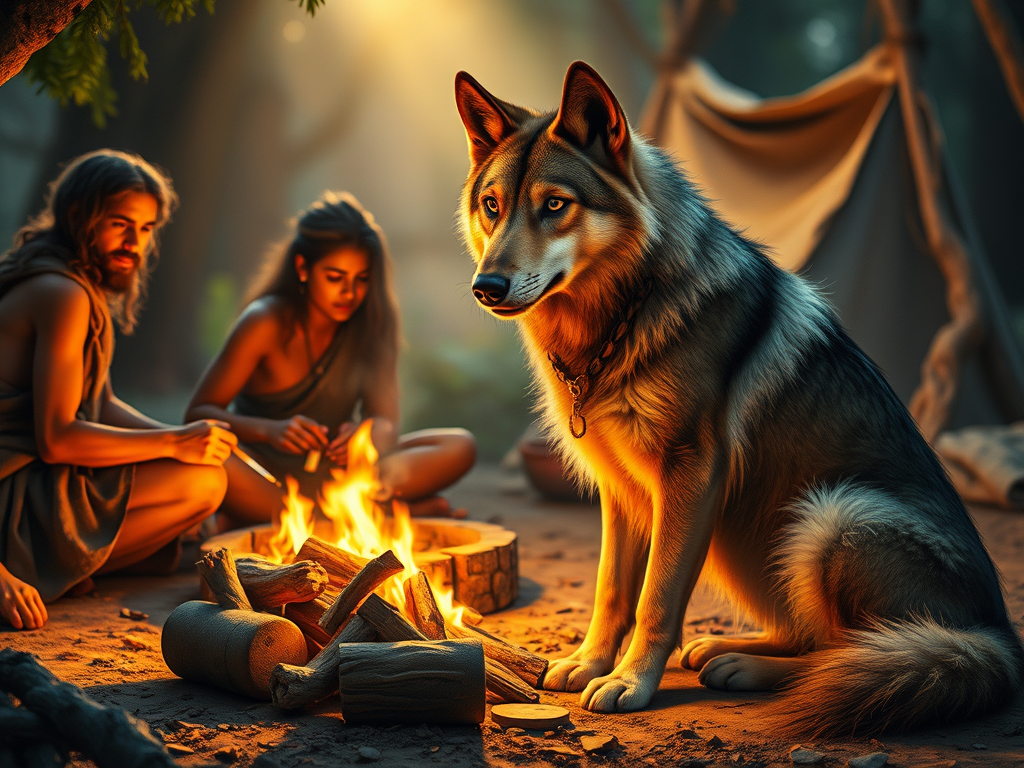
Probably not in the way people often imagine. Early humans did not have modern genetics or planned breeding programs. The first stages may have happened through repeated contact between people and less fearful wolves.
Later, humans likely became more active in choosing which dogs to keep and breed. Dogs that were useful for hunting, guarding, carrying, herding, or living with families could receive more care and have more chances to reproduce.
This gradual shift from loose association to deliberate selection helps explain the huge variety of dogs today. The earliest process and later dog breeding were related, but they were not the same thing.
- ✦ Early stage
Less fearful wolves may have approached human camps without deliberate human breeding.
- ✦ Growing partnership
People could begin to tolerate, feed, protect, and keep animals that were useful and easy to handle.
- ✦ Deliberate selection
Much later, humans increasingly selected dogs for specific jobs and physical traits.
Modern Dog Breeds Came Much Later
The Labrador Retriever, German Shepherd Dog, Chihuahua, and other familiar breeds are not ancient in their modern form. Most formal dog breeds were shaped in the last few centuries, with intense breed standards becoming especially common in the last 150 years.
Ancient dogs were often more general-purpose animals. They could help hunt, guard, travel, carry loads, or stay with families without belonging to a tightly defined breed.
What Jobs Did Early Dogs Perform?
As the human-dog partnership grew, people could use dogs for many tasks. The exact jobs varied by place, climate, culture, and available prey. Dogs were not simply pets in the modern sense.
Some likely roles included hunting and tracking. Dogs could also guard camps, alert people to danger, help manage other animals, and later assist with transport and herding. Their value came from combining physical ability with a willingness to work with humans.
The important point is that usefulness could strengthen domestication. When a dog performed a task well, people had a reason to feed it, protect it, keep it close, and allow it to reproduce.
- ✦ Hunting partners
Dogs could track scent, locate prey, chase animals, and help humans during hunts.
- ✦ Guard animals
Dogs could notice strangers, predators, and unusual sounds around human groups.
- ✦ Herding and livestock work
Later societies selected dogs to control and move livestock.
- ✦ Transport and labor
In some cultures, dogs were used to pull loads or help people travel.
- ✦ Companionship
Social bonds became an important part of the relationship as dogs adapted to close human contact.
How Dog Domestication Changed Both Species
Domestication changed dogs, but humans also changed their own way of living. Dogs could affect hunting methods, travel, settlement life, and later livestock management. The relationship became part of human culture in many regions.
Dogs also changed physically and behaviorally. Compared with wild wolves, domestic dogs show a wide range of body shapes, skull forms, coat types, reproductive patterns, and social behaviors. Some of these traits came from deliberate selection, while others arose through the wider process of domestication.
The changes did not happen all at once. Different dog populations followed different paths as humans moved, traded, migrated, and formed new communities.
- ✦ Behavioral change
Dogs became more tolerant of humans and better suited to close social contact.
- ✦ Physical change
Dogs developed diverse body sizes, coats, skull shapes, and other physical traits.
- ✦ Cultural change
Dogs became part of human work, travel, hunting, protection, ritual, and daily life.
- ✦ Genetic change
Selection, population movement, mixing, and genetic drift shaped dog populations over thousands of years.
Ancient Dogs Traveled With Humans
Ancient DNA shows that dog populations moved with human communities and sometimes changed as those communities expanded. In some parts of Europe, dogs arrived or changed alongside Neolithic farming populations.
This shared history is one reason dogs are useful for studying human history. Their genes can preserve clues about ancient movement, contact, and population change.
Why Did Humans Domesticate Dogs Instead of Other Wolves?
Not every animal can become a close human partner. Wolves already had several traits that made cooperation possible. They are social animals, learn from group members, communicate through many signals, and can work together during hunts.
Their social structure may have helped them understand cooperation. Humans could become part of a dog’s social world, while dogs could learn to respond to human signals. This made dogs especially suited to a partnership that depended on trust and teamwork.
That does not mean wolves were destined to become dogs. The successful relationship depended on behavior, environment, human choices, and chance. But the wolf’s social nature gave early humans a useful starting point.
- ✦ Social animals
Wolves naturally live in social groups and use complex communication.
- ✦ Cooperative hunters
Wolves already had skills for coordinated movement and pursuit.
- ✦ Strong learning ability
Social learning helped canids adjust behavior based on other group members.
- ✦ Human compatibility
Some individuals could tolerate people well enough for a lasting relationship to develop.
The Dog Domestication Story Is Still Evolving
Scientists once hoped that genetics would reveal one exact place and date for the birth of the dog. Ancient DNA has instead shown a much richer story. Different dog populations existed early, moved with humans, mixed with one another, and sometimes disappeared.
The exact location of the first domestication remains debated. Researchers also continue to study whether the process began once or involved more than one population of ancient wolves followed by later mixing.
This uncertainty does not weaken the main conclusion. Humans and dogs have shared a deep relationship for thousands of years, and the evidence strongly supports dogs as one of the earliest animals domesticated by humans.
- ✦ Ancient DNA matters
Genomes from old dogs help researchers trace lineages that cannot be understood from modern breeds alone.
- ✦ Archaeology matters
Bones, burials, settlements, and artifacts show how dogs lived alongside people.
- ✦ The evidence is complex
No single study has answered every question about where, when, and how dog domestication began.
What We Can Say With Confidence
Dogs descended from ancient wolf populations and became closely linked with humans long before most other domestic animals. Clear domestic dogs existed thousands of years ago, and ancient dog lineages were already diverse by the early Holocene.
The relationship was useful to both species. Humans gained a social animal with strong senses and useful working skills, while dogs gained access to food, protection, and a stable place within human communities.